Paris Day 13-16

April 13-16

The next four days except for three hours of French at the Alliance Francaise were spent flaneuring with a friend visiting from Ireland.  Lunch took place at the Irish College in the residence’s hall: good cheese, radishes, olives, and bread.  Without plates and only one fork and knife, it was a tasty but messy affair.

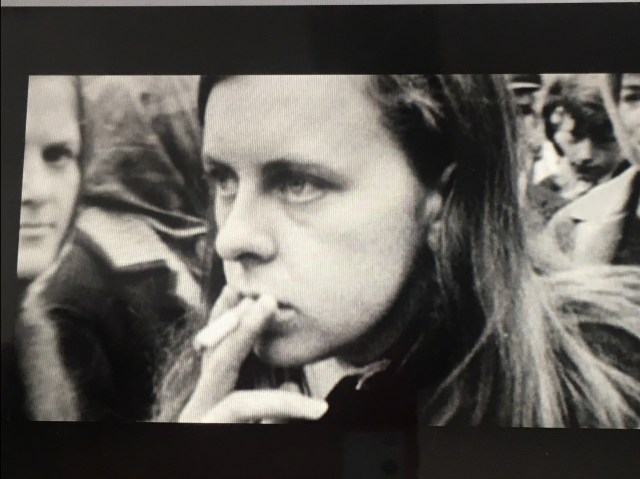
She decided on a walk along Rue Mouffetard.  The day was cold and rainy calling for a stop at a cafe.  Ordinarily, my friend doesn’t smoke but Paris called her and at a tabac she purchased a pack.

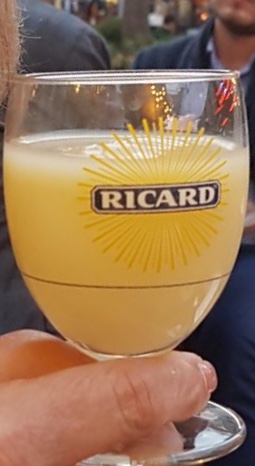
As we had origianlly met in the south of France, a pastis seemed in order. I loved watching her smoke as we lingered over our Ricard’s.  Although I have never smoked, I have tried.  Seventeen years ago when I was about to go on to France for a sabbatical, I asked my husband to teach me.  For several hours, he lit up one after another but it didn’t take.  We even tried the small black cigars favored by Mme. Brenot.  No go. Yet the mystery of watching a smoker deep in its pleasure intrigues me.  For the next few days, that voyuerist pleasure was saited.
EE1078C4-B799-4D91-AC4E-3EEDE542F99F.jpeg


Paris Diary  My 21st. summer

Michel and I walked all over the Latin Quarter.  We had cous cous spread out on newspapers.  He knows everyone at the restaurant.  Then to the Pantheon under an almost autumn sky.  Finally to Chausseurs on Rue Mouffetard, a tiny restaurant specializing in frites.  The waiter, a friend of Michel’s from Columbia, tells me, “You have the eyes of my country.”  I’m smitten with him, with Michel, with myself, with Paris.

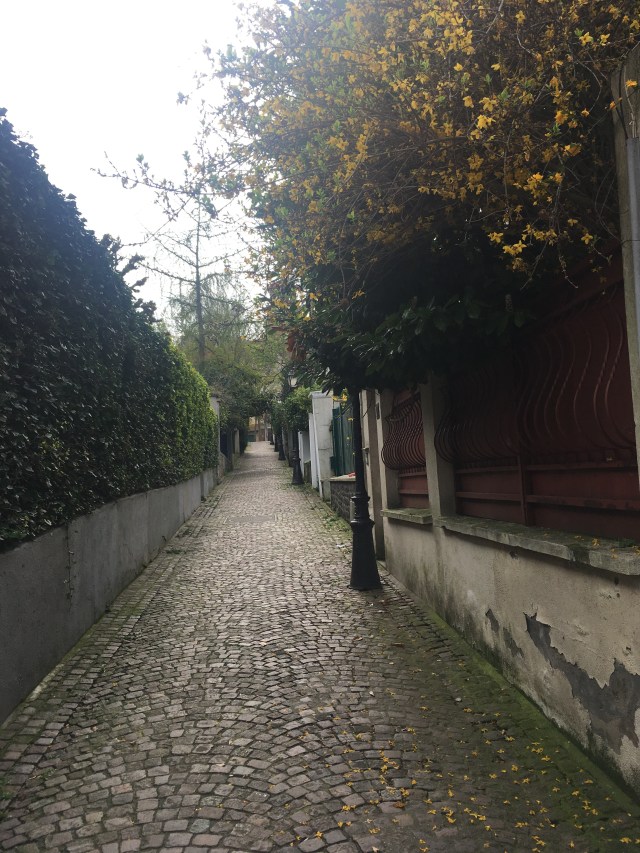
Another day with the help of the painter from Toronto, we wandered up and down the narrow walkways in Belleville, stepping back to the 19th century.
CBC23BDE-850A-4081-9BE0-EB7B25BC0972

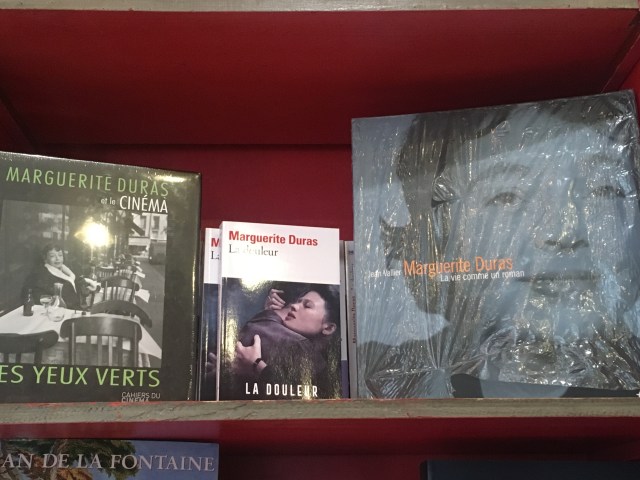
From there , we traveled to Montmartre and discovered a small bookstore where the owner engaged in lively conversations with returning customers.  One shelf was devoted to Marguerite Duras.  I found her again. I selected a small book entitled La Malade de la Mort, which I interpreted to mean that death was like an illness and seemed in keeping with the theme of this trip.  I glanced at the first page and thought I might be able to understand a good part of the novel.  The accurate translation of the title is The Malady of Death.
BFDBB83D-BA81-43F7-9F9F-5DC751EF2E55

Later, I began making my way through the text.  When I got to “au hasard de ton sex dresse dan la nuit,” I realized I was in for some erotica.  The name of the publishing house made me wonder if there was a connection, Les Editions de Minuit or Midnight Editions.  However, Alain Robbe-Grillet was one of it’s founders.  The book, at least as far as I got, is a rumination on the sexual relationship between a man and a woman.  Sometimes, he likes to watch her sleep.

According to her biographer Laure Adler, writing this short novel gave her great joy while she drank 6-8 litres of wine a day.  “She was 68. She no longer had a man who wanted to teach her how to love, but she could image one.”
042647C5-35ED-43CD-B995-C36069CA3D8B

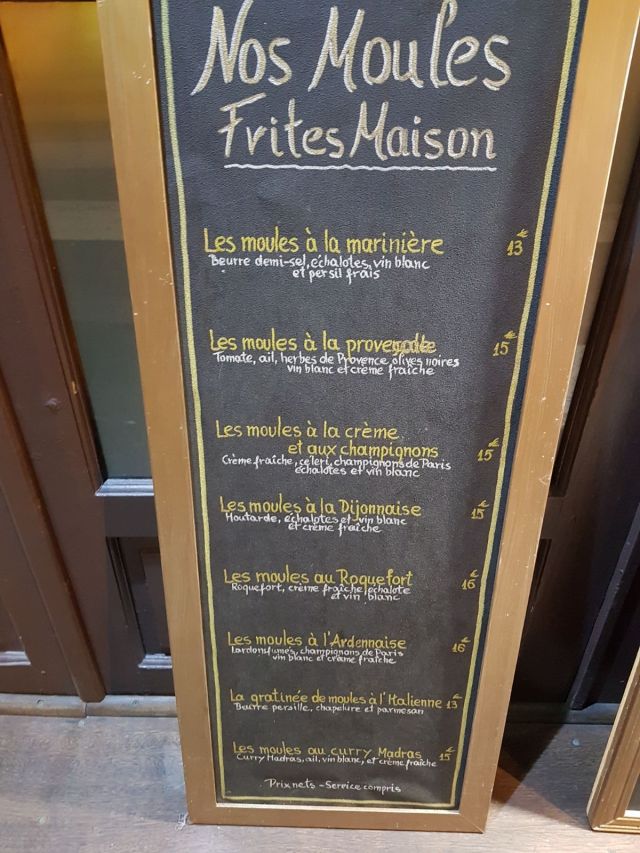
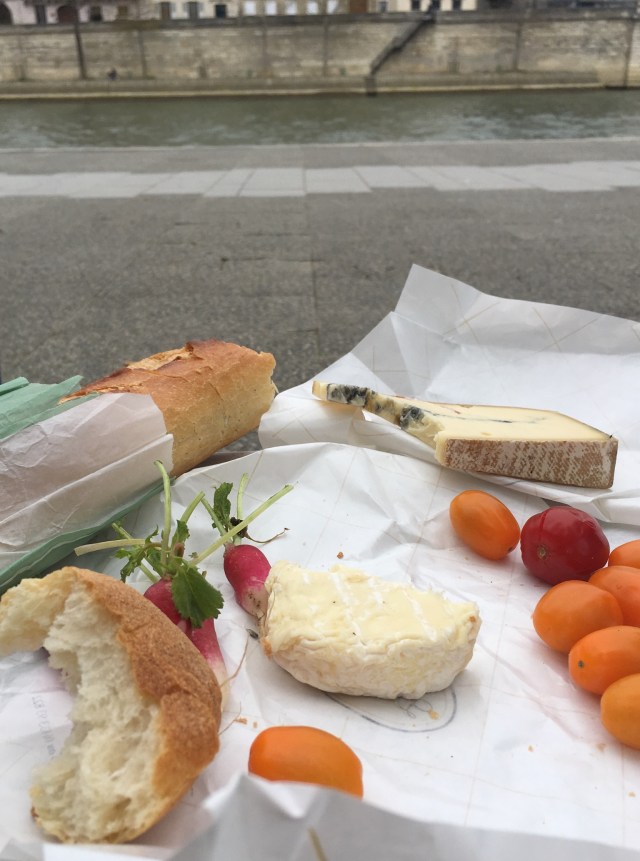
That night we went back to Rue Moufetard for moules frites and Sunday returned to Marche Bastille. Perhaps because it was Sunday, I couldn’t find the cheese monger with the special versions of raclette.  We settled for a creamy goat cheese and a delicious Mourir. Again, good olives from the same stand, a bunch of radishes, blood oranges, and a baguette. We took our lunch to the Seine descending from Pont D’Austerlitz.  Unable to finish our bounty, we left the bread for the pigeons.  Two men seated not far from us were astonished we didn’t eat it ourselves and when we told them the bread was for les oiseaux, they smiled in agreement.  We wondered if they wanted it for themselves. Sometimes, we can’t escape the ignorance of privalege.
C2D766B7-F5F4-4714-9547-893E9DDC52D3

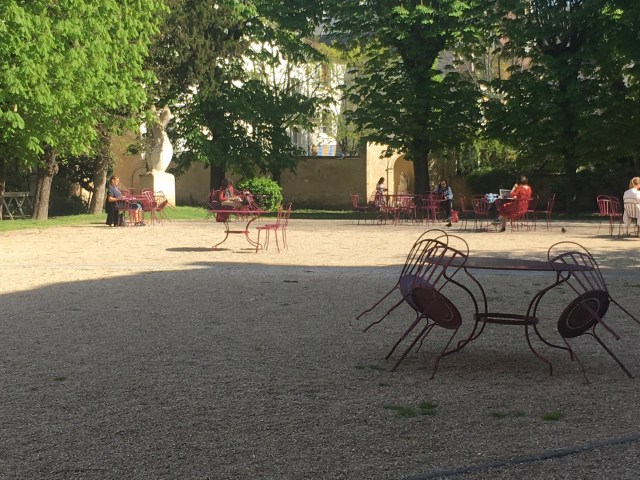
Monday, my first day at the Alliance, then a meander through the Jardin des Plantes, around the Marais, and to Place des Vosges where we came upon a tea emporium, Dammann Freres.  Along the shelves samples of tea leaves sat in small containers for sniffing: roses, bergamot, violet, a complete flower garden.   Then, coffee at Cafe Hugo.
Paris Day 12

April 12 Paris

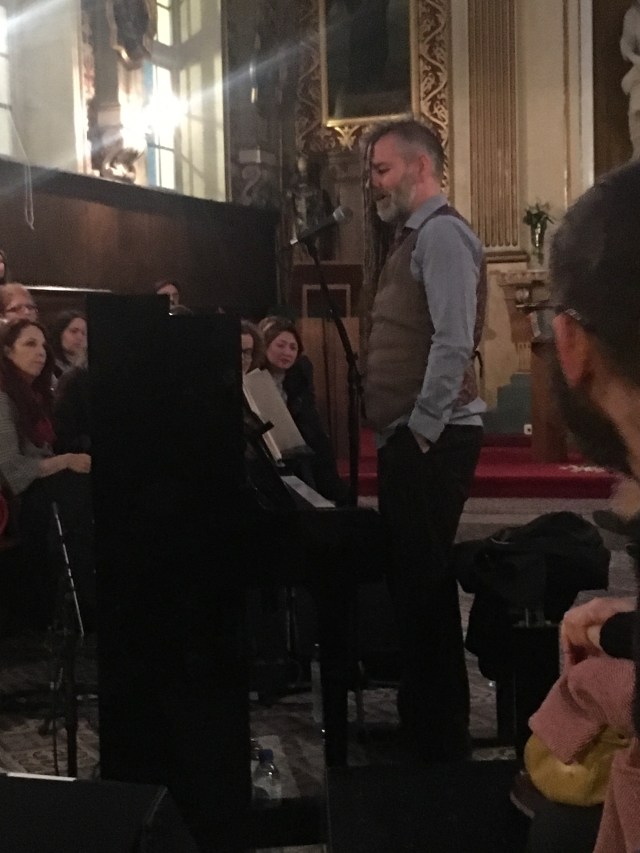
Duke Special, a musician from Northern Ireland, played in the chapel here at the Irish College.  He has adapted several of Michael Longley’s poems.  Longley has been described along with Seamus Heaney as a poet ot the troubles and so it continues, this exploration of national trauma and, perhaps, healing.

With just a piano and his voice, he filled the space with hope, humor, loss, redemption. I barely moved during the entire concert, mesmerized, enthralled.

777347F5-2EC7-4A31-8F09-ADF61ABAC712

Duke Special’s music and Michael Longley’s words continue to reverberate . Krista Tippet, host of the radio show and podcast, On Being, interviewed Longley in 2016 with this introduction “To dwell on beauty and normalcy- to assert the liveliness of ordinary things, precisley in the face of what is hardest and most broken in society- this has been Michael Longley’s gift to Northern Ireland….”

062AE12B-CF5B-49BB-ABF0-2A79ABD4DC63

One poem that is part of these adaptations is “The Ice Cream Man” which refers to an ice cream man murdered during the troubles. Longley’s daughter, who frequented the store, used her own money to buy carnations to place on the pavement.  In the poem, Longley pairs the names of flowers with the flavors of ice cream of which is daughter knew every one. The mother of the murdered man wrote to Longley: “The fact that there were 21 flavors of ice cream in the shop and you wrote 21 flowers in the poem was coincidental. I do bless you for your kind thoughts and may God bless you.” She signed it, the Ice-Cream Man’s mother…”

“The Ice Cream Man”

Rum and raisin, vanilla, butterscotch, walnut, peach:
You would rhyme off the flavors. That was before
They murdered the ice-cream man on the Lisburn Road
And you bought carnations to lay outside his shop.
I named for you all the wild flowers of the Burren
I had seen in one day: thyme, valerian, loosestrife,
Meadowsweet, tway blade, crowfoot, ling, angelica,
Herb robert, marjoram, cow parsley, sundew, vetch,
Mountain avens, wood sage, ragged robin, stitchwort,
Yarrow, lady’s bedstraw, bindweed, bog pimpernel.

Who will give such gifts to America?

Paris Day 9 Night

Paris April 9 con’t.

After the discussion of the troubles, some of us, the poet, the food bloger, another poet, the singer, his partner and me, ended up in the aritist’s kitchen fordinner where talk continued. Colonialism robs creativity was considered.  Did a lack of imagination plague my immigrant grandparents, uncles, aunts causing them to deny or invent thier histories?  What did thier children, grandchildren inherit?

FB9396F9-F18D-4656-AAD5-E4730B2F5202

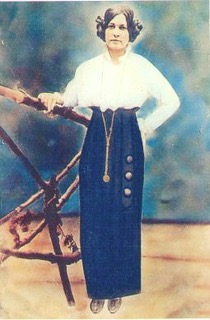
My grandmother claimed she was from France, from an enobled family.  Some of this was true: some was not.  Like Marguerite Duras, my grandmother grew up on a French colonised island, Saint Lucia.  Her family name, de Jorna, did have some notable characters in it’s history: a nobleman, a musketeer, a head of the milice in Martinique- his charge, keeping the slaves in order.

There are relatives in France, but the Caribbean de Jorna’s who left the Netherlands in the 1400’s, then, settled in France for 200 years, had been in Martinque and St. Lucia since the late 1600’s.

A5983056-B20B-4EC5-ACBA-61EBD82503C2

My grandmother Germaine, Noel’s daughter

My great grand mother Noel de Jorna was described as “colored” in her death certificate. Her ethnic description was a porous secret in the family, a family of talents in music, in mathematics, in engineering, their creativity sacrificed to “fitting in,” “to not being found out.” Aunts scrubbed nieces with bleach to lighten their skin.  During the summer,  my father insisted I cover up lest my skin got any darker.

The singer mentioned identity which I guess my search is all about, maybe not identity, maybe a place in the world.  He and his partner found my project interesting to which I replied “I’m afraid it may be ridiculous.”  That got a laugh.  But their interest boosted me.  I needed it.

Paris Day Nine

April 9 Paris

After several days of sun, the rain and the cold were back.  I decided to return to Rue Daguerre.

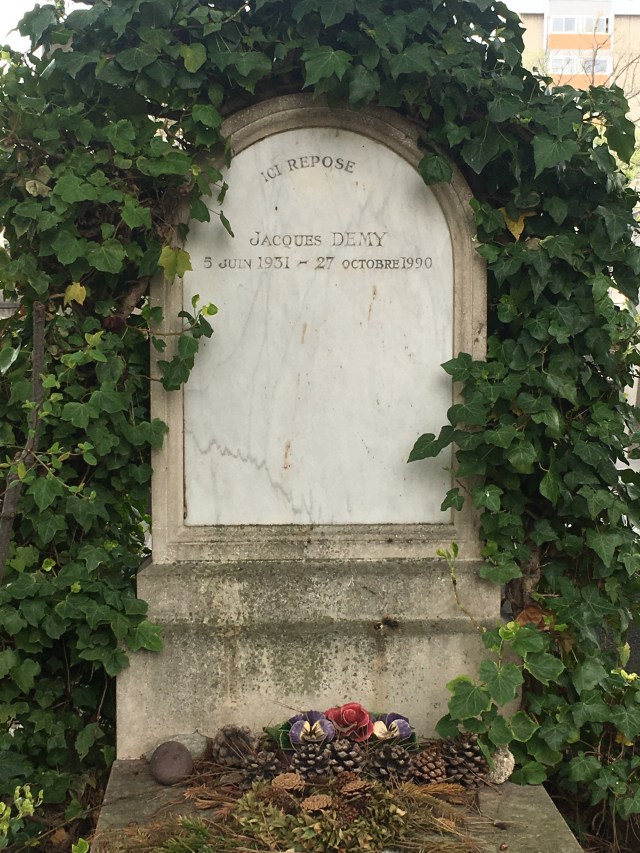
On my way, I stopped at the Cimetiere Montparnasse: at least, I could find Agnes’ husband Jacques Demy, the director of The Umbrellas of Cherbourg.  He rests in a serene site in Division 9 protected by a small tree.

062CCE73-F55C-4EEF-B3F3-839212586CC4

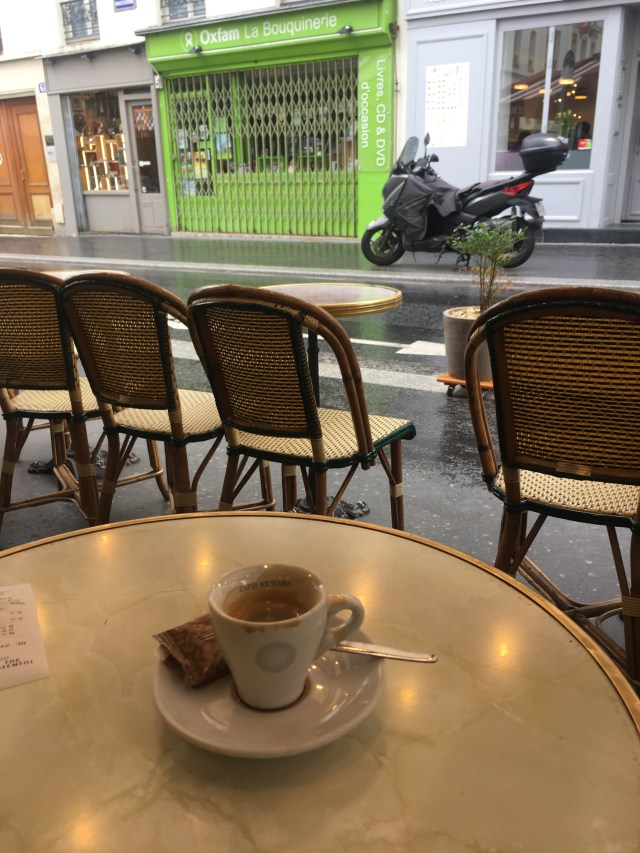
Once the rain started up again, I made my way to Rue Daguerre and found a cafe that offered sanctuary, a view of the street, and is, seemingly, a hang out for locals- a man seated at the bar was reading a newspaper.

I drank my coffee and watched the street, but reckoned my vigilance would not be rewarded. Why would a 90 year old women come out at noon to walk in the rain? Why had I?

B8A7A817-1673-405F-9483-94D21B0437BB

Nevertheless, I persisted and walked up and down the street  but no discoveries. I did see two Vietnamese restaurants- a link to Marguerite Duras.  Making connections between disparate ideas, people, even places that have no relationship can be a symptom of pyschosis.  The troubled mind may be trying to make sense of a chaotic world, to find meaning as I am.

87D525B6-434B-453B-9F54-A7A48A9DB9DD

That evening at the Irish College, Declan Long presented his book, Ghost-Haunted Land which looks at the art of Northern Ireland since the troubles.  My neurons bounced against each other in a explosion of ideas and feelings.

The art opened up deep reservoirs of empathy for the suffering that took place. A photo of Bernadette Devlin haunts me.  During the discussion afterwards, despair  over our inhumanity surfaced. One artist who had gone to art school during the troubles spoke of a tutor questioning why people were wearing black arm bands.  Dismayed at his insularity, she explained that they honored the men who had died in the hunger strikes.

image

Still of Bernadette Devlin by Dublin Artist, Duncan Campbell

At first, I thought America should have such an art show, one that would help us embrace the other whether a Trump supporter, a person of color, a white person, an immigrant. But the country is so vast.  Who would be affected?  Anyone?  The discussion also touched on whether someone who isn’t from Northern Ireland can really produce art that authentically represents the situation.  It reminded of whites coopting Black art, their language, their music.

Two words bedevile me: authenticity and relevancy.  What the hell am I doing? And who cares? These questions circulate frequently. I try to remember this is an experiment, a possibility, an opening, a making, perhaps, as I follow these women, follow my younger self, live again in Paris.


Paris Day 6

April 6

332895D1-B77B-4B8E-8419-4B9C0B7EC74D

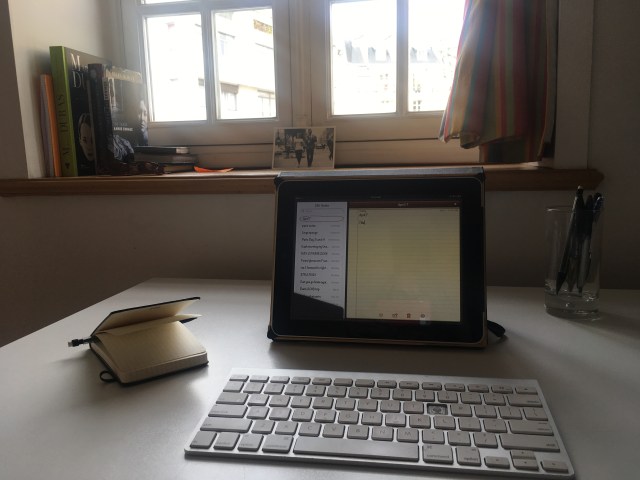
I had invitations for a variety of activities , but I needed some time to myself.  Decided to do wash and try a language school. I did get through to one and was advised to take the test immediately if I wanted to start next week.  I did as I was told, and, with great difficulty, took the test on my phone.  It corrected the spelling for almost every word, forcing me to begin again, and again, and again- a 30 minute test done in an hour and a half. Using my phone for everything digital such as maintaining this blog takes forever.  Using the computer in the Mediatheque means using a French keyboard, another frustration.  After those grueling experiences, the washing machine skipped the spin cycle: everything had to be rung out by hand.

I had to get out.

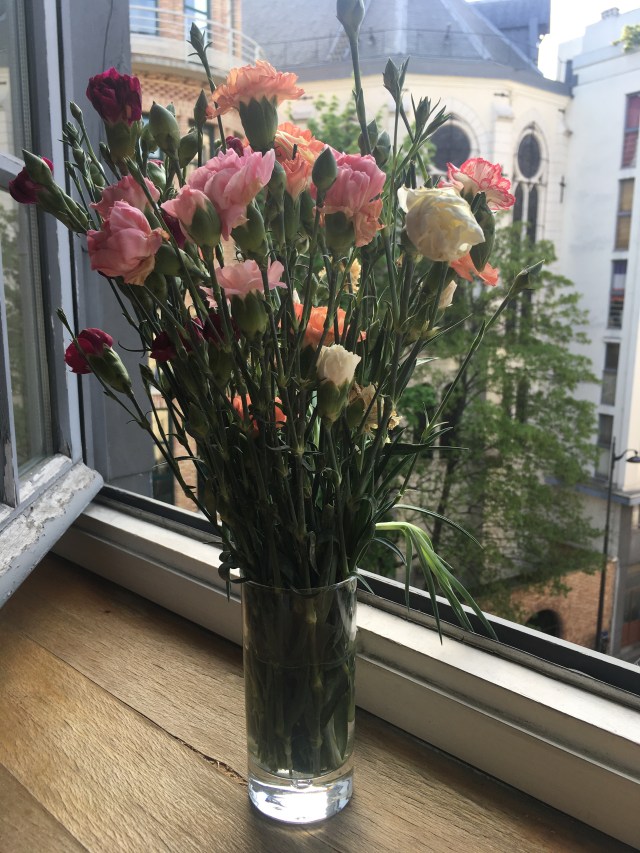
More chores. I went to the Monoprix on Boulevard St. Michel in search of a few glasses (one for drinking, one for flowers, one to hold pens and pencils), a soap dish, and some basic utensils. I forgot to bring my swiss army knife. Not a successful experience, certainly it isn’t anything like the Monoprix I frequented in Aix: no glasses, no soap dish, no utensils. I walked out with a bar of soap and a dried out palmier, as again, I forgot to eat lunch.

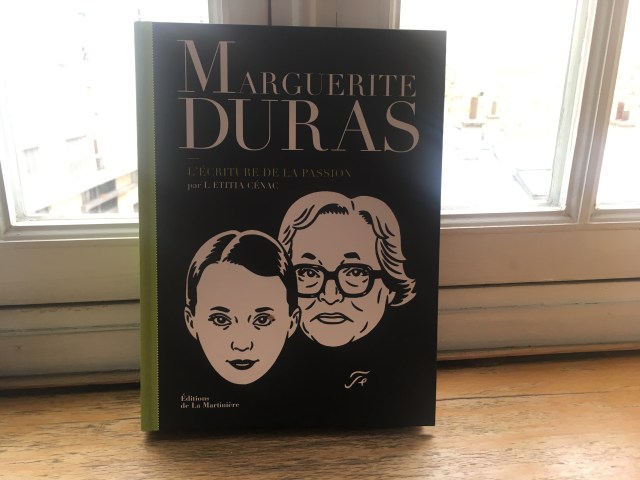
The day was saved on my way home.  Carts of sale books surrounded the front of Librairie Gilbert Joseph, a bookstore on Boulevard St. Michel.  Marguerite  Duras stared back at me.  Surely a sign.  The first in three days.  Lack of water, technical challanges, and searching language schools saboutaged 72 hours.

F09AB177-D6EE-4E31-ADD9-8EBF682D24C3

Finally, I bought some glasses at a local hardware store, some wine, nuts, and a bottle opener at the local Franprix, retrieved the luque olives purchased at Marche Bastille, and sat in the Irish College’s courtyard reading my newly purchased book on Duras in French. Pas Mal.

EA7EBF4D-D08F-43AF-A3F7-2806D6866B66