Paris Day Three and Four

Monday  February 17

Attacked by delayed jet lag.  After writing a bit, I had to go to sleep.  Several hours later, I roused myself.  My plan was to sit in a cafe on île Saint Louis and read Paris Creole, but I couldn’t move.  Finally, I  decided on a chore for which my body might be capable- finding the illusive drinking glasses.

I asked one of the administrators to direct me to the housewares shop he had introduced me to last year.  An inexpensive shop.  Instead he sent me to one around the corner.  Tres cher, very expensive.  Since I had very little energy, I forked over 6 euros for 2 small glasses.  Even the clerk agreed they were “chers.”

Back in my room, I was tempted to return to bed, but I knew several  hours later, I’d be hungry and bored.  I went to the Médiathèque, the library of the Irish Cultural Center, to do a bit of research.  The “book” will include a discussion of my Irish grandmother’s immigration experience.  She lived in the center of Ireland from 1893 to 1906.  Uncovering primary sources about life in rural Ireland has proven difficult.  I found three books all written by men but at least they cover the right period.

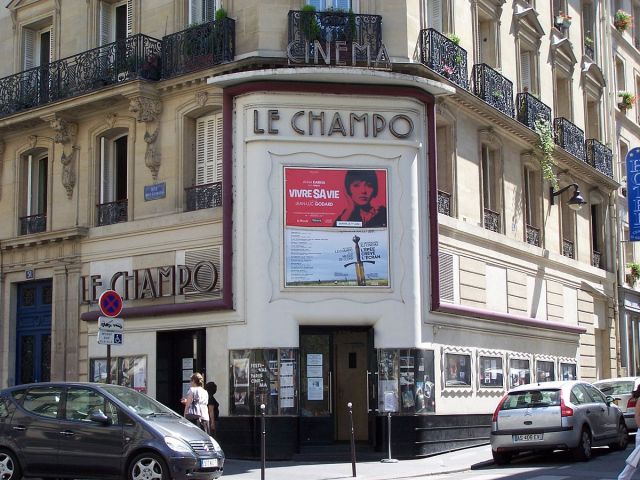
Then, I took myself off to the Champo cinema where I’ve been going since I was 21.
020B3718-0E20-4879-A469-74ED6B7DB0E3

Tonight was Jean Renoir’s The Southerner with Randolph Scott.  I needed an English speaking film.  I didn’t have the stamina to try understanding French for two hours.  In 1946, the film won the Oscar for best director and was shown at the Venice Biennale.  Why I asked myself.  The characters are stereotypes of poor farmers, almost caricatures, the acting is often wooden or over the top especially Beulah Bondi who plays the grandmother, and the cinematography is forgetful.  Some mise-en-scenes seemed directly copied from the film Grapes of Wrath.  And by God when I left the theatre, it was raining again.  This time, no umbrella.

 
2F96BD7A-5F9E-4494-A6B2-5B7725EAA06A

Like a bad penny, I returned to La Méthode for dinner.  I ordered dessert  realizing too late, it was unnecessary.  With my coffee came a small piece of cake, comme d’habitude.  In France, a small sweet often accompanies an order of coffee.  I returned home to some reading and the jet lag reversed on me.  I was up most of the night.  Not one bit tired until the next morning.

Tuesday  February 18

I continued to write about not writing as I‘ve been doing, then, spent the afternoon with yet another nap.  And like yesterday, I forced myself to get out.  This time to Luxembourg 3 off Boulevard Saint Michel for Tu Mourras a 20 Ans, You Will Be Dead When You Are 20.  Using my limited French, I bought a ticket and asked in which “salle” (room) the film was being shown.  Still no one attempts English with me.  Is it because there are so few tourists?

42DE9A10-6D35-4BB7-989C-15C2E43B716C

The film is Sudanese, so it was subtitled in French.  I understood most of what I read except when the sous-titres passed by too quickly.  The film follows a young man coming of age in a small Sudanese village while living alone with his mother.  It reminded me of Satyajit Ray’s 1956 film, Aparajito, in its pace, cinematography, it’s focus on a mother, even the emphasis on doors, physically and metaphorically.  Quite beautiful and moving.

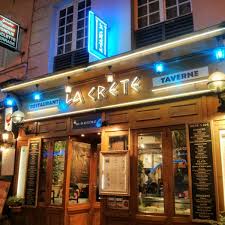
Where to have diner.  Should I continue my “residence” at La Méthode?   I could walk over to my old neighborhood, Odeon, and eat at the highly rated Le Comptoir.  Yet, for all it’s casualness, it seems full of itself.  Aux Délices du Liban, a Lebanese restaurant, around the corner from the Irish Cultural Center, seemed a good choice.  It was closed, so I walked down Rue Mouffetard to La Crete, a Greek restaurant, and enjoyed a lamb and pasta dish redolent with cinnamon.  I considered dessert.  The waiter and I discussed the absence of loukimades, so I settled on a coffee.
3CF75AED-954C-4700-A7C5-E771F7FC183F
What can distract me tomorrow or is it all grist for the mill?

Return to Paris Day 20-21

Saturday April 20

On my way to buy gifts at Bon Marché, still trying to trace Mayotte Capecia’s life in Paris, I strolled along Rue Mayet where she had lived with her sister in 1947.  The small street runs between Rue de Sevres where Bon Marché is located and Rue du Cherche-Midi, I didn’t know the number so I used my imagination to guess where she might have hung her hat.  Could one of these have been her building?

IMG_6205

I’m anxious to buy an important birthday gift for an interesting four year old.  Last year, I discovered that Bon Marché replaced their extraordinary notions department on the top floor with an equally extraordinary children’s department.  Another disappointment.  The department pour les enfants has been drastically reduced.  As I told a salesperson, “C’est dommage,” that’s a shame.  Nevertheless, I manage to spend over 50 Euros.  After dropping more money at Zara’s located across the street, it was time to make my way home.  Back on Rue du Cherche-Midi, I passed Le Nemrod and stop for lunch.  I should have done more of this: sit outside with a delicious salad, a glass of rose, and watch the French go by.

IMG_6224

On my back through the Jardin du Luxembourg, a young man approached me and said in French how beautiful “it” is.  Assuming he was referring to the espaliered apple trees we were next to, I readily agreed.  He realized that I was an American and continued in English, making niceties as we strolled together.

IMG_6228

He suggested we exchange phone numbers.  I declined, graciously, I hope, and he wandered away unsuccessful at snagging  what he may of thought was a woman of a certain age with a comfortable income.  Is this a Jean Rhys moment from the pages of her novel, Good Morning Midnight?  In the evening, her protagonist, having returned to Paris after years away, wanders up the Boulevard Saint Michel confronting her age, her older status.  And like me this is a location where she has walked often.  Two men approach her and one asks, “Pourquoi etes-vous si triste?”  Why are you so sad?  She tells them she’s not sad although she admits to herself she is:

”Yes, I am sad, sad as a circus-lioness, sad as an eagle without wings, sad as a violin with only one string and that one broken, sad as a woman who is growing old.”

Because she discovers they are Russian, she accepts their offer for a drink.  Is she braver than me, sadder than me, less cynical?

I arrive back at the Centre Culturel Irlandais by late afternoon.  It’s cooled off and the courtyard is almost empty.  A good time to write, to consider answers to those questions.

IMG_6230


Sunday April 21

It’s Easter Sunday and Jean Rhys is still with me.  Parallel walks, parallel observations.  In the novel, she describes an earlier time in Paris when the protagonist worked in a dress shop, and got off the metro at Rond Point at 8:30 every morning just as I had years ago hawking newspapers.  Her character Sophie must face the dilemma of Sunday in Paris.  “…Sunday – a difficult day anywhere.  Sombre dimanche….”

I feel compelled to go to La Brasserie de L’Isle Saint-Louis for lunch.  I’ve sent people here for supposedly the best sauerkraut in Paris.  In order to get there, I had to negotiate every inch of Pont de Tournelle as hundreds crowded the bridge to photo the blackened Notre Dame.  Hot and sweaty, it was seventy-six degrees, I managed to get a seat on the terrace overlooking the Seine.  When I ordered choucroute garni, the waiter asked if I was sure that is what I wanted, a dish piled high with different cuts of ham, sauerkraut, and potatoes.  I wondered myself.  An odd choice for a hot April day,  But I stubbornly proceeded.  I like it but ate only half.

Unknown

After a stroll around the L’Isle Saint Louis and some ice cream I noticed crowds forming by the Pont L’Archeveche and watched an enchanting escape from the charred remains of Notre Dame fully in view.  A group of professional skaters lifted spirits as they graciously danced along the bridge.


Return to Paris Day 16-17

April 16 Tuesday

A day spent reviewing my options.  If Capecia didn’t write the novels, she did live that life, so the depiction of Martinique could represent some similarity to my grandmother Germaine de Jorna’s experience.  In Je Suis Martiniquaise, she describes a young girl free to wander, to explore a paradise of sorts:

“On arriving at our chosen destination, we undressed and bathed in the nude, boys and girls mixed, but with no thought of wrongdoing.  In the distance, we could still hear the washer women beating their clothes against the rocks.  Our spot was filled with moss, ferns and giant palms that rose like strange birds when the wind swirled them about.”

and later as the group decides to go on an “expedition,”

“Young bamboo shoots adorned the mountain with a soft green velvet; palm trees beckoned to us, bending and undulating with the suppleness of a serpent as they danced among the giant ferns.”

northern_forest_martinique_001

Northern Forest, Martinique

Perhaps, my grandmother had moments such as these, but maybe her life was closer to the character’s sister, Francette, sent to live with an aunt who restricted her freedom in order to be “proper.”   In Caribbean households that held themselves above the “fray,” young women often stayed indoors, sewing, reading, changing their clothes morning, afternoon, and evening to fit a social protocol.  According to my father, his mother also changed her children’s clothing three times a day.

Mckeon 3

Germaine’s daughters

Perhaps, Germaine was cocooned behind closed doors in Saint Lucia, imprisoned as was Francette.

Unknown-2

Morne Coubaril Estate, Soufriere, Saint Lucia

Her sister Yia, my great aunt, imposed similar restricitions on their niece Adria who lived with her in New York.  When guests came to the apartment to visit, to play cards, Adria was hidden behind the closed door of her bedroom,  lest she betray her colonial mixed race roots.

Photo- Adria2

Adria de Jorna

Late afternoon I visited the San Francisco Book Store on Rue Monsieur Le Prince looking for Jean Rhys that other creole.  I found two books, a collection of short stories and Quartet.  On my way home I walked past Librarie du Cinema du Pantheon Cinelitterature next to Cinema du Pantheon on Rue Victor Cousin.  A bookstore specializing in film, they had original copies of Cahiers du Cinema for 10 euros and less.  I bought one from February 1964 with reviews by Godard and Truffaut and another from June 1963 with a discussion of Jean Rouch, anthropologist, filmmaker, and a founder of cinema verite.

IMG_6169        IMG_6168

I finished my outing with a cafe alonge at Cafe du Nouvelle Marie.  This time I was greeted warmly and understood the necessity of an additional container of water.

image


April 17 Wednesday

The restaurant Mokonuts was on the agenda.  On my way, I crossed in front a small square which last year held a statue of Rimbaud, but he’s gone, replaced with greenery as at Bastille.  As I continued on Avenue Ledru-Rollin, I noticed several books on a building’s window sill, free for the taking, one by Annie Ernaux, considered France’s memoirist extraordinaire.  Relevance is fleeting.  How could Rimbaud and Ernaux be discarded?

Mokonuts fed me well: a delicious lamb stew with fresh peas served by the charming owner who runs the front of the house.  When I commented on her excellent English, she retorted that she had better be able to speak her native tongue.  She hails from one of the outer boroughs of New York.

My way home took me to Pont Sully from where I could view the back of Notre Dame: she’s not herself, reduced and darkened.

IMG_6183

Return to Paris Day 10,11,12

Wednesday April 10

At breakfast, a resident asked why I was drawn to this project.  I told him I had a keen sense of injustice especially concerning “the other” first expressed at the age of seven when my father forbid me to go to my friend’s house: she was black.  Then, I explained my personal interest, the family secret.  He didn’t buy it.  According to him, I hadn’t been affected.  Stunned, I agreed, considering my privileged life.  But no.  He’s wrong.  My father worked tirelessly to overcome his secret heritage, to fit in, to make sure I didn’t get too dark in the summer, to aggrandize his history, to be prejudiced himself as a false means of elevation.  Yes, it affected me.

I live in a country whose MO is oppression, destruction of the other: Native Americans, African Americans, any immigrant of color, any non-Christian.  The land of opportunity mostly works if you are white and male and, sometimes, if you can pass.

Since last night I had been thinking about violence committed by American police mostly against men of color.  While I was enjoying my aperitif, four French soldiers dressed in camouflage, cradling machine guns walked past me.  I asked my breakfast companion if he knew what they were doing: he writes about military matters.  He said it’s a strategy against terrorism.  Small groups of armed military pop up unexpectedly and, by their presence, deter possible attacks, a Macron strategy not entirely embraced his citoyens, (citizens).  When I was 21 living in Paris, soldiers with machine guns stood in corners on Boulevard Saint Michel.  I was told they were there to protect “us” from Algerians, yet another colonized group.

Unknown-1

Thursday April 11

At the end of class, I told the teacher I wouldn’t be returning.  She wondered did she speak too quickly.  I reassured her.  I rushed home, dropped off my books, and met a woman introduced to me by mutual friends.  We had a noisy and interesting lunch in the Marais at Miznon, an Israeli import.  Afterwards, we meandered along Rue de Montorgrueil, a mostly pedestrianized street in the 2nd, got a cup of coffee at L’Arbre a Cafe, sat on a wall in a small square and continued our conversation from lunch, mostly about the state of the world.

Unknown-2

She has a few concerns about life in Paris: people in big cars thinking they own the road, ignoring pedestrians and their safety.  I watched her take a few to task and applaud her.  She’s also concerned about the yellow vest movement.  She understands their situation but believes the destruction in Paris doesn’t make their situation better and abuses a city that is theirs to enjoy.  When we parted, she asked how I would get home.  Walking, I told her.  She directed me to go towards the Seine-her only advice.  Without any additional navigational aids, I found my way home.

Friday April 12

Nose to the grindstone.  Using the Mediatheque, the library that is part of the Irish Cultural Center, I unsuccessfully searched for the location of Mayotte Capecia’s grave and failed to locate any Caribbean groups.  I’ve written to the Christiane Makward the scholar and author of the book, Mayotte Capecia ou l’Alienation selon Fanon and asked for help. A long shot.

IMG_6342