Return to Paris Day 6

Saturday, April 6

I decided to go to Cemetiere Montparnasse in search of Mayottte Capecia’s grave.  A listing of prominent residents hangs outside the guardhouse facing the Boulevard Edgar Quinet entrance.  She’s not listed, perhaps not seen as important, not seen at all.

Frantz Fanon, prominent psychiatrist and philosopher from Martinique, thought so and even worse, describing her novel, Je Suis Martiniquaise  (I Am A Martinque Woman) in his book Black Skin, White Masks as “cut-rate merchandise, a sermon in praise of corruption.”  Both the protagonists in her novels prefer white men.  Frantz Fanon saw her preference as a form of self-hatred.  Maryse Conde, revered Guadeloupian author and Professor Emirita of Columbia University, believes Fanon ignored the context in which the novel was written (1948), that is, a time of racial difficulties and identity confusion, perhaps, what W.E.B Dubois called “depersonalization,” “two heritages,” “two identities.”

My great aunt made similar choices, insisting her family’s, my family’s African “blood” be kept secret.  When her brother’s children came to live with her in Washington Heights, only the niece was allowed to stay.  The nephew deemed too dark had to leave.  Stories were told about his joining the merchant marines and living abroad although Everard de Jorna spent most of his life in Manhattan never to be seen again.

I asked the guard to look for her name: he came up empty.  I gave him an alternative, Lucette Ceranus, as Mayotte Capecia is a pseudonyme. No luck.  He asked me for the date of her death.  When I answered 1955, he said he didn’t have the lists for that year and suggested I look on the internet.  I told him I would try to find her using my eyes.  I perused several rows but realized I was on a fool’s errand.  The cemetery holds over 40,000 graves.

9E3EBF22-5A1E-4FF3-8C7F-787C89BE6704

Perhaps, I could pay homage to Agnes Varda who had died just days ago.  Would she have been buried so soon with her husband, Jacques Demy?  I had no trouble finding it: the gravesite was awash in flowers.

4868DE0A-B768-4758-BD0B-8013A68EDB96

Last year, when she was still alive, I visited him, sitting on the small bench flanking the grave.  Now that bench is almost invisible.  Many of the  messages to Mme. Varda seem so intimate.  There was even one from the merchants of Rue Daguerre where she lived and that she documented in the film Daguerrotypes.  

D45C7431-E027-48E2-8E4B-09407D640897

I intended to visit that street one more time but managed to get completely tangled up, losing my way as I seem to be doing literally and metaphorically, and so, instead, made my way home.

Every night I’ve been eating alone in my room.  Enough is enough.  I had seen a little restaurant on Rue Pot au Fer with a menu that appealed to me: entree, grenouille, plat, sole meunière, dessert, tarte tatin.  All my favorites.  The street tends to be commercially “charmante,” so I had my doubts.  I began with a pastis: this time a large Ricard.  When I ordered my dinner, the waiter discouraged me from getting a pichet of vin ordinaire.  I hesitated,  wondering if this was a scam.  He showed me the demi bouteille of white Bordeaux and, then, bought me a glass of the vin ordinaire to taste.  He was right: il n’etait pas bon.  The frog’s legs were fried not sautéd so not great.  However, the sole was fresh with good flavor.

Two hours of decent food, being a bit tipsy, watching pedestrians traipse up and down the street.  Pas mal.

Return to Paris Day 5

Friday, April 5

I went in search of La Colonie, described as a meeting place for the exploration of decolonization through discussion, art, music, dance.  I haven’t been successful at finding or contacting any French West Indies groups: I hoped to talk to someone who’s might connect me.

Most of this long walk was spent on Rue Saint-Martin, originally an old Roman road, which passes by the Pompidou Center alive with pedestrians, cafes, art galleries, and entrepreneurs.

35EAB743-D1C7-4C6B-9D8C-26FDF3BA8E1D.jpeg

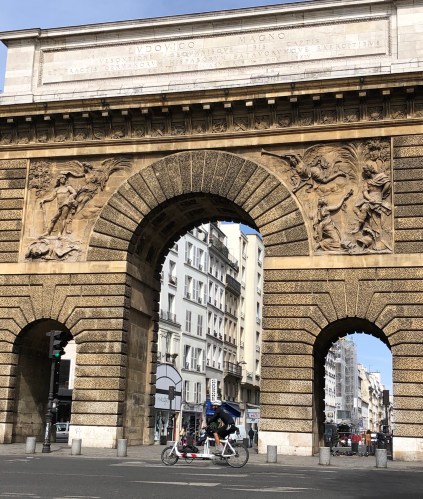
Eventually, I reached Porte Saint-Martin, where Rue Saint-Martin crosses Boulevard Saint-Denis.  Built in 1674 under the orders of Louis XIV, the monument commemorates his victories in the Rhine and France- Comte.  It replaced the medieval gate from the 1300’s, part of the fortified city of Charles V.

86A6DFBB-274D-4A3E-B081-1555BCB09F00.jpeg

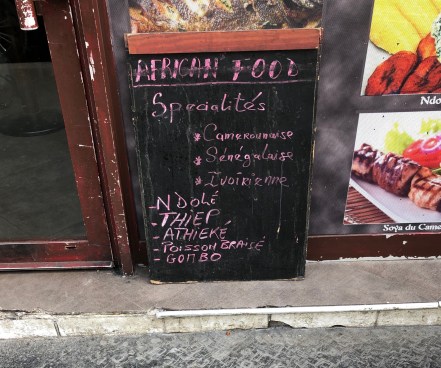
Once through the arch,  the atmosphere changes: more run down, more faces of color, more African restaurants. 

0F0D1F45-3171-4469-8639-14E0146035C2.jpeg

After almost four miles, I arrived.  Nothing outside indicated what I would find inside: a large two story room lit by skylights, filled with couches, tables, plants, and a bar.  Each table held a list of events for the month.

16A7AA1A-6B64-4152-8DEA-AC561D74FEF2

Stacks of flyers from various groups lined one long wall.   A few people sat together on couches while I put myself at one of the small tables in the middle of the room.  The bartender brought me a coffee.  I lingered.  Later, when I went to pay, in French, not good French, I explained I was researching the Caribbean experience of living in Paris, then, asked if he could direct me to someone who might know.   He gave me the email of the Cultural Director for La Colonie.  Finally, success!

Later, disappointment.  No matter how I formatted the address, il ne marche pas, it  didn’t work.  As an alternative, I used the cafe’s website to request an event space, hoping he’ll respond.  Fingers crossed.  I wonder.  Is this search of mine star-crossed?

Yet, Paris rarely disappoints.

0726C797-8051-446E-89BF-90C790331549

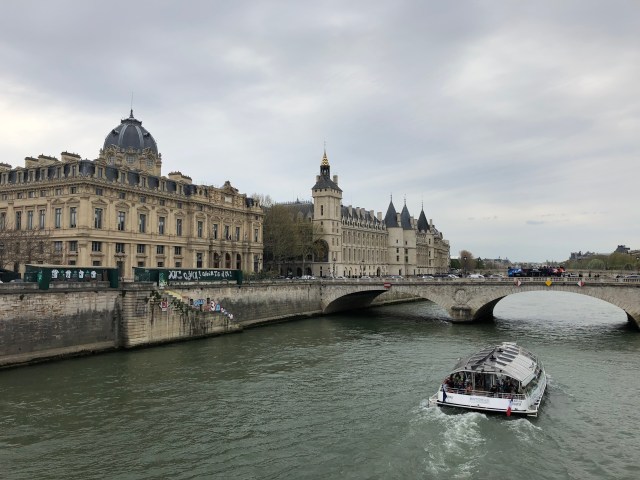
View from Pont Notre-Dame

Return to Paris Day 3 and 4

Wednesday, April 3

8441C290-B993-4D2E-999A-2C58020D164F

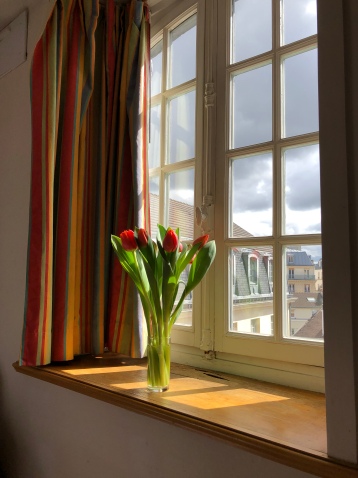
A good beginning.  At breakfast, someone who was here last year remembered me as part of the poet’s group.  Being seen and heard makes a difference: my mood has shifted.  Yet, I couldn’t make myself visit the cafe for another aperitif or sit alone for dinner.  But flowers are in my room again. 

Thursday, April 4

Declan O’Rourke performed in the chapel tonight.  He began by asking the audience to let the songs wash over them and emerge as if in dream but a dream that changed us.  The program was a series of songs under the title, “Chronicles of the Great Irish Famine” (1845-49), a horror story of the other, the profound dehumanizing of the Irish by the English: land grabbing, families segregated from each other in work houses, starvation and death. 

994B5ADA-C1F7-4C3B-9CF2-E0A646532C47

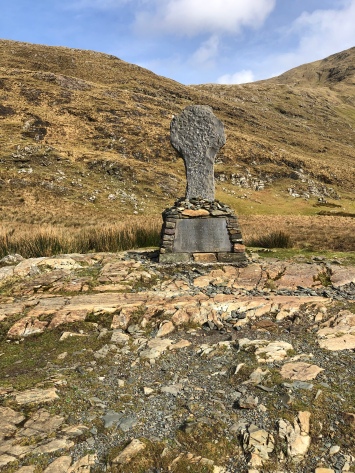
Cuimhneachan Dhumha Locha, The Doolough Memorial

The Plaque reads,

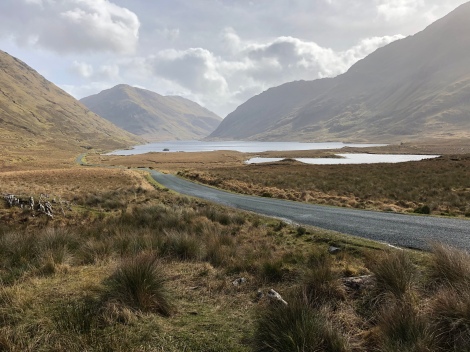
“This valley witnessed one of the darkest moments of the great famine.  On a bitterly cold day in 1849, up to 600 people gathered in Louisburgh seeking food or a ticket to the Westport workhouse.  They were told to apply to the Poor Law officials who were meeting the next day in Delphi, over ten miles away.

Some died overnight.  The rest struggled across the mountains following sheep tracks and wading streams.  When they arrived in Delphi, the Poor Law officials rose from lunch, refused to help and told them to return.  No one knows how many died by the wayside of cold, hunger, and exhaustion.  Some were buried where they fell.

The sighing of the winds above their nameless graves forever sings their requiem. James Berry, c19”

50FF789F-C31E-4573-BFBC-38E3AF781E85

Doolough Valley

My  great grandmother came to the states.  Is this why?  

23195A65-AB07-4FAD-88FA-5345959278FA

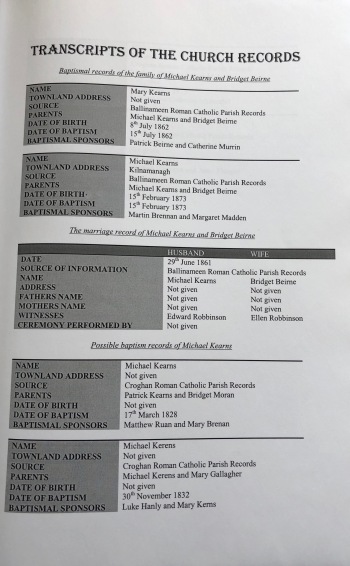
Compiled by the Roscommon Historical Society, Roscommon, Ireland

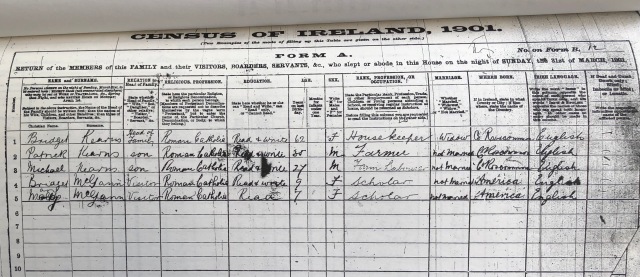
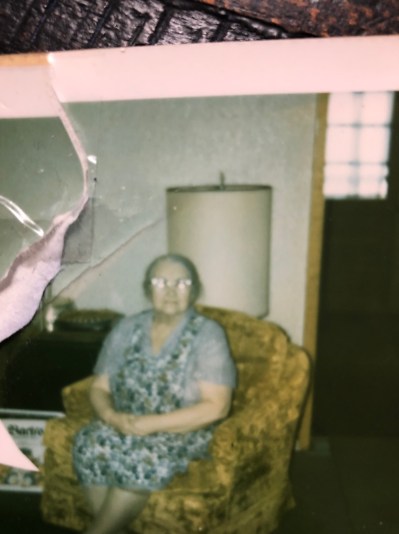
Great grandmother Mary Kearns was born in 1862 almost 20 years after the Great Famine, but her mother and father lived through it.  There couldn’t be much to share even in 1862.  In America where she emigrated, she was soon widowed, sending her children back to Bridget Kearns, her widowed mother, as she struggled to make ends meet working as a maid in Llewelyn Park, West Orange, New Jersey, the gated community and home to Thomas Edison.

3DD46F53-39A2-4C6B-846D-017E7ABB99B5

Irish Census Records, 1901


Return to Paris Day 2

Tuesday, April 2

Days of adjustment.  I often travel alone and for extended periods of time.  Yet, I  forget how difficult the first week can be.  My second day began with lashing rain, as the Irish call it, arriving for my first class at the Alliance Francaise bedraggled which aptly describes my understanding of French and my ability to communicate with the instructor, indeed, with the class.

I wonder why am I doing this?  I will never master this language.

I consider my ancestors who landed in New York and had to do just that, master a foreign language and a foreign culture.  They had relatives whom they joined, but each encoutered difficulties patching themselves into the fabric of America.  My Greek grandfather eventually spoke, not fluently, seven languages but when he first stepped off the boat, English wasn’t one of them.

F167CD8A-6267-4DC2-8AC7-E973A6312BC3

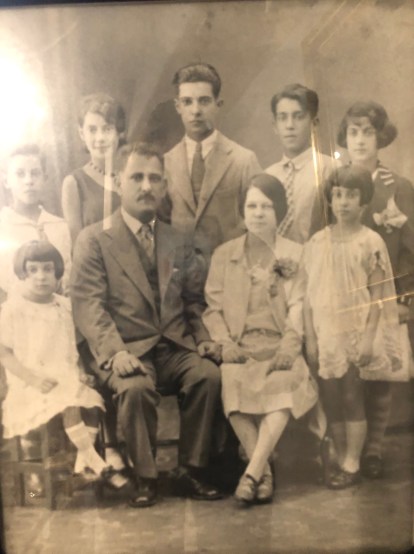
Efstadiou (Tom) Zinis and Germaine de Jorna with their children

My “French” grandmother probably  had some English as Saint Lucia, from where she hailed, had been a British colony since 1832.  Yet, she only spoke French with her sisters or her husband, my Greek grandfather, when they didn’t want the children to understand.  What  kind of French?  The French of Paris or the patois of Saint Lucia?

My Irish grandmother came to the states at age 13 and refused to continue her education.  She didn’t want anyone making fun of her brogue.

A27BC410-1DEB-446B-8A7F-98B4C80B05E0

Molly Daly

Here I am, a privileged American, trying to become part of my heritage, the holy land of France and I’m unable to converse with anyone or to even order food.  I forget the importance of “politesse” that is, the polite way of interacting.  I’m more a bull in a china shop.  In the states, we don’t bother with greetings, with leavings when we are doing business.  We get right to the point.  “I want a coffee” instead of “Bon Jour Monsieur.  Je voudrais un cafe, s’il vous plait.”  “Good day sir.  I would like a coffee if you please.”  And always when leaving “Au Revoir or Bonne Journee.”  “Good bye, have a good day.”

Confusion again.  I stopped at the same cafe as yesterday and ordered a cafe allonge, that is an espresso with a pitcher of hot water to elongate it.  This I understood, but what  was I do with the green bottle of cold water and small glass placed on the table?  I maximized my stay by using all the hot water and never touched the other or inquired about their purpose.  Like my Irish grandmother, I wouldn’t risk being the object of a joke.

These small setbacks create feelings of isolation.  So minimum but so heartfelt.  What could my grandparents have experienced when Greeks were called “Dirty Greeks” and Irish faced “No dogs or Irish allowed?”  Although perhaps, being American today is just as unseemly.


Return to Paris Day 1 con’t

Monday, April 1

The day began with an expensive cab ride to the city: I had too much baggage to manage on public transportation. As soon as I put my bags in my room, I rushed to the Alliance Francaise to buy books for classes I plan to take over the next month. Immediately all the French I had been studying and listening to deserted me. I understood nothing and could only state when necessary, “Je parle un peu francais” and, then, ask meekly, “Est-ce que vous parlez anglais?”  I only speak a litttle French.  Do you speak English?

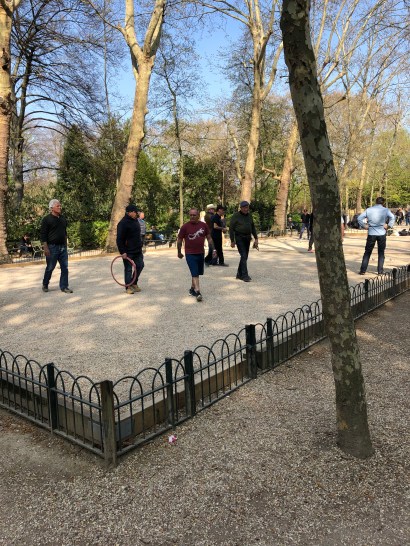
The walk back through the Jardin au Luxembourg heartened me as I passed men playing pentanque.  Here is France on a beautiful day.  It’s okay.

37037740-85DC-4A15-BC0B-C21054A507AE

But not for long.  I hadn’t eaten all day, so I decided on an early dinner.  I walked behind the Pantheon and down Rue de la Montagne Saints Genevieve to a restaurant I remembered as pal mal, not bad, La Methode.  It was a particularly beautiful spring night, almost 70 degrees with a gentle breeze making it’s way along the streets of Paris.  All the outdoor tables were full.  When I sat in the last row, a waiter appeared and asked if I wanted to dine.  I did and was given a menu.  Only then did I notice that I was sitting at the three tables set for dinner.  Everyone else was having an aperitif: it was 6:30, much too early for dinner.  I couldn’t sit there and eat, the only one to be chewing.  I made a hasty retreat, telling the woman behind the bar in English that I’d changed my mind.  I didn’t even try French.  She nodded with disdain.

Now what to do while the rest of Paris laughed and talked and drank?  I decided not to retreat to my room with a sandwich; instead, I went to a nearby cafe and ordered a pastis.  Several times, the waiter asked impatiently what brand of pastis I would like.  Finally I understood and confidently said Ricard. He moved his head side to side in irritation and explained they only had one kind, a kind I never heard of.  I agreed, happy to send him off.

Like most Parisiens that night, I sat for an hour, watching passersby.  As the waiter never appeared, I had to go in the cafe to pay.  Is that allowed?

2D51F010-77CA-48B0-8CCA-0DCCD405E22F

Paris isn’t for the faint hearted.  How did my relatives manage as they tried to slip by unnoticed?