Monday April 15
I met with Christiane Makward to discuss Mayotte Capecia at Le Brelan, a cafe on Rue Beaubourg. On my way, I passed the Pompidou Center: it’s exterior fits this streetscape quite differently than the celebratory atmosphere exuded on the Rue Saint-Martin entrance.

I arrived early and scanned the passersby but realized I had no idea how to recognize her. Then, I noticed a woman standing to my right, smiling wryly, and carrying a book.

When we found a table away from the noise in the cafe, she asked “How did you find Mayotte Capecia?” The question surprised me since I had been “living’ with Capecia for the last two months. It seemed obvious. I unwound my story of exploring the black experience in Paris, in particular, those immigrants from the French West Indies.
I asked about Capecia’s life in Paris. Professor Makward explained that Capecia worked as a cook when she first arrived. Somehow, she met a publisher who became her lover and who encouraged her to write of her life in Martinique. Then, Madame Makward dropped a bomb, “You know, she didn’t really write those novels?” I said no and asked who did. She believes the most likely culprits were her publisher and his assistants. Moreover, much of the second novel, La Negresse Blanche was plagiarized from a diary written by a French Naval officer who had had an affair with Capecia while stationed in Martinique. Before we parted, she gave me a copy of Mayote Capecia ou l’Alienation selon Fanon.
Her book about Capecia revealed this subterfuge: she had had access to Capecia’s sister and children as well as primary sources including the diary. What to do? I thought Je Suis Martiniquaise had given me a window into my grandmother’s early life in the Caribbean.

Although I’d read other portraits of Saint Lucia and Martinique, this was the first that described coming of age from a woman’s perspective. Of course, these were the same comments made by critics supporting Capecia after Frantz Fanon’s dismissal of the novels. Was I on a fool’s errand as I had feared?
I walked home in a daze unsure how to proceed. Each attempt seemed a dead end. I crossed in front of Notre Dame just as the many of the tourist buses were pulling away. Earlier thousands had waited in line in hopes of entering.
Tired and discouraged, I took refuge at La Method, a cafe close to my home, and ordered a Ricard. A minute later, I heard a loud boom; then, green clouds filled the sky. Other patrons and servers came out to watch as more and more clouds emerged. Soon, helicopters circled above us.

My phone had died, so I had no idea what had happened. I malingered for an hour or so attempting to read Makward’s book in French.
When I got back to the Irish Cultural Center, I discovered the reason for the billowing green clouds: Notre Dame was on fire. The first time I left for France at age 21, Notre Dame had been my go to for mass.
The day before I left for France that first time, I made sure I went to confession. After some pointed questioning by the priest, I admitted indulging in “heavy petting” with my boyfriend. He said I had committed a sin: I disagreed as I was in love. How to get absolution? Without it, I would go straight to hell should my plane go down over the Atlantic. We compromised. I didn’t have to agree to sinning as long as I went to mass every Sunday while living in Paris. And each Sunday found me at Notre Dame or Sacre Coeur.
The last time I visited Notre Dame, my husband cried at its grandeur and beauty. At the main alter a book lay open for visitors to name a loved one who had died. I wrote my father’s name: he would have liked being remembered in the family’s “country of origin” even though our de Jorna’s left France in the late 1600’s. Then, the cathedral would have been 400 years old and most likely known to that earlier ancestor.
My father did visit Paris once. My mother told me he used French to get around. His mother’s tongue came back to him. I returned him to Paris in words, his name.

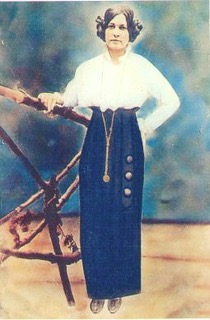
 An Itinerant Woman