Looking For Rachel Day 4

Wednesday, September 5

Today, we took the ferry from Boothbay Harbor to Monhegan Island, over sixteen miles away.  A whale was sighted but I managed to miss it.

In her book, The Edge of the Sea, Carson writes of Monhegan Island, “…which in ancient times must have stood above the coastal plain as a bold monadnock.”  According to Britannica.com, a monadnock is, “an isolated hill of bedrock standing conspicuously above the general level of the surrounding area.”

img_4700

Our first stop was the Fish House noted for it’s lobster rolls.  I remember driving to Wood’s Hole decades ago and stopping at roadside stands.  Two dollars would get a hot dog bun filled with lobster salad; then, small pieces of lobster pieces fit the roll.  Now everything is super sized and doesn’t appeal.  I opted for fish tacos.

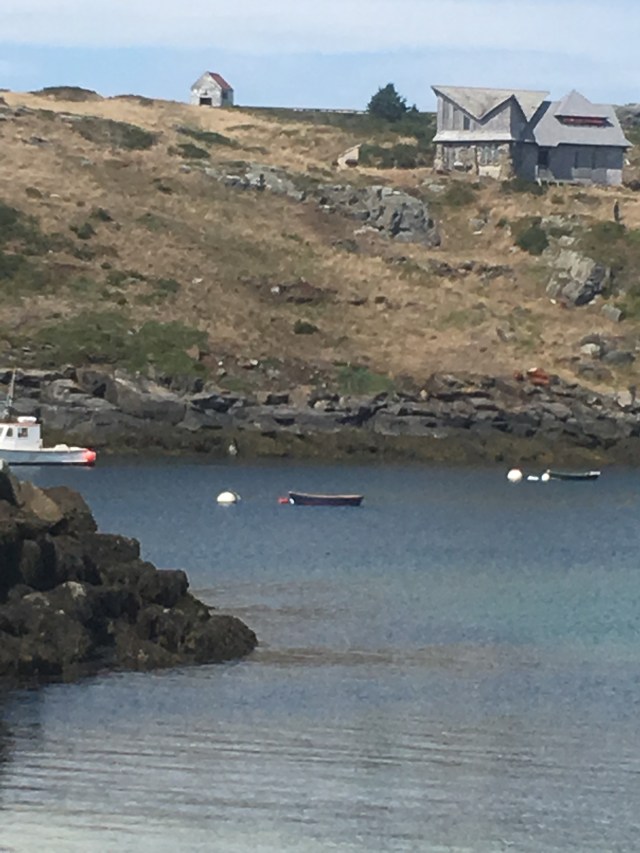
The restaurant, a short walk from the Ferry to Dead Man’s Cove, faces Manana Island where the Manana Island Sound Signal Station is located, sending out fog signals since 1855.

img_4689

From there, we walked to Lobster Cove.  The path reminded me of the difficulty getting to the beach at Rachel’s house.  Narrow trails towards challenging rocks.  I had hoped to see some birds of note but none appeared.  Like Rachel Carson, I’m fond of sighting birds.  Unlike her, I’m inconsistent in my attempts.  My friends ventured further.  I remained cautious.

img_4698

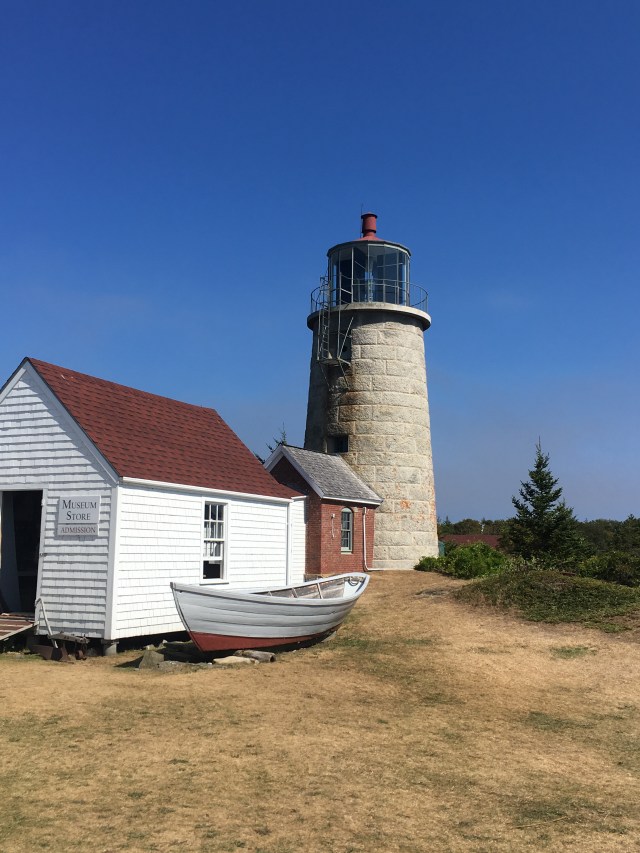
Next the Monhegan Museum of Art and History,  part of the keeper’s house on the Lighthouse grounds.  A real treasure like the museum on Ile Aux Marins across from Miqulon, the French outpost off the coast of Nova Scotia. We stepped back into the past with views that stopped my breath.

img_4734

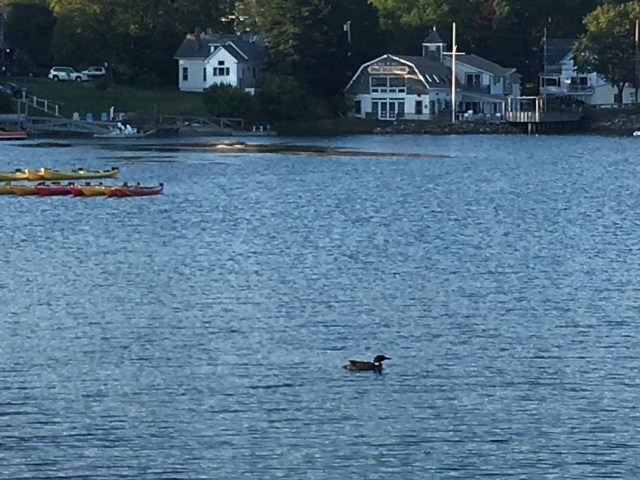
We had to do a quick tour in order to reach the ferry on time.  Once back in Boothbay Harbor, we crossed the Boothbay Harbor Footbridge to the other side and did see a bird of note: a loon.

img_4740

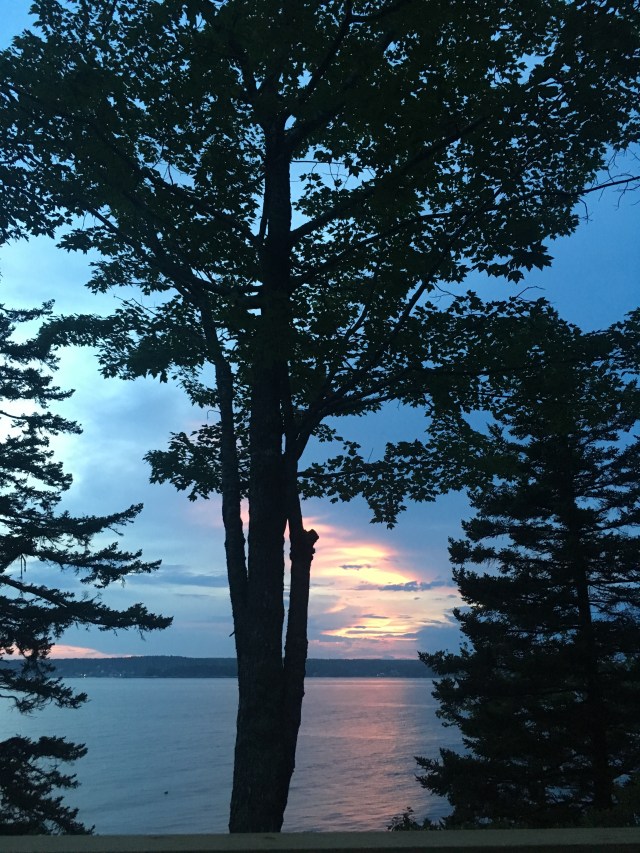
We ended the day with a dinner of beans on toast.  Then a look at the stars while reading aloud James Harpur’s poem, “The Perseids.”  And we were moved.

And in the freckled darkness

the stars looked down on us

and on the gathering of silent animals,

as if they’d willed us there, the ones

they had been waiting for,

ensouling the universe

with our thoughts for sick and absent friends

and wishes for uncertain futures –

the stars saw the meaning of life –

if only for the time it took

to see and lose a prayer

in our evaporating trails of love.

From  The White Silhouette, Carcanet, 2018 

img_4641


Day 34 Paris

Friday, May 4

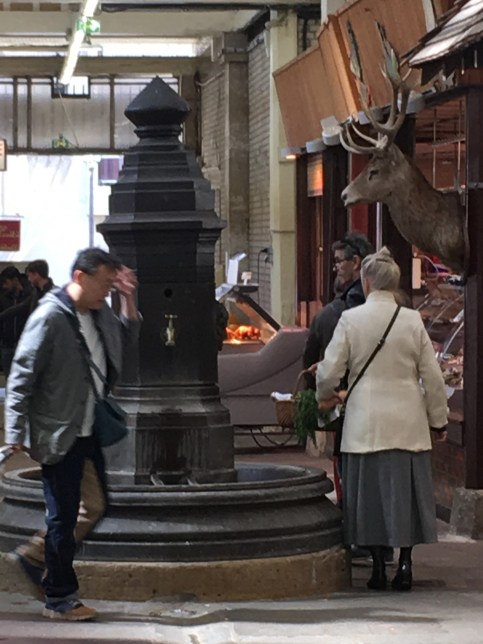
I leave in two days, so I decided on a last visit to market Marché d’Aligre, in search of the raclette cheesemonger: he had many versions including one infused with spring garlic from a Swiss meadow.  Afterwards, I planned to make my way to the Ménagerie du Jardin des Plantes in search of the panther of Rilke fame and mentioned by my friend the poet shortly before he left.

Although this was my third visit to the market, it still overwhelmed.  I perused the “antiques,” more like a large garage sale, in search of faux ivory cutlery.  Found them but too expensive. A decision I would later regret.

IMG_4086

Alas, the cheesemonger was closed.  However, the aroma of an Algerian bakery, Amira, seduced me.  I purchased a mihajeb aux légumes, a semolina bread filled with roasted vegetables, greasy and delicious.

IMG_4099


Returning to the left bank, I crossed the Pont d’Austerlitz, entered the Jardin des Plantes, and meandered towards the Ménagerie.  Unable to tolerate animals in cages no matter how attractive the cage, I hadn’t been to a zoo in decades.

At the entrance, school groups and families entered with me.  I watched them oohing and aahing at the various animals and wondered what they were learning.  That viewing animals was for their entertainment?  That humans have the right to inprison them for our benefit?  Nothing about animal life, nothing about respecting them.

On my way to La Fauverie or the cat house, I passed antelopes whose only outside environment resembled a large kitty litter box, hard dirt with no greenery.  Does that make it easier to clean?

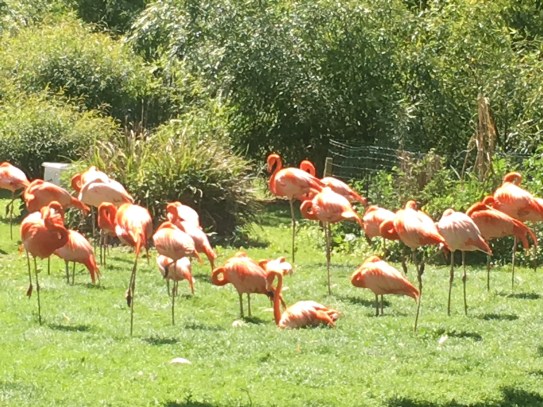
The flamingos looked content, perhaps because they are pretty like their leafy fenced enclosure.

IMG_4119.jpg


As I neared La Fauverie , I passed vultures.  I felt like one as I devoured images of exotic animals, but unlike them, I had the freedom to move about.

IMG_4117


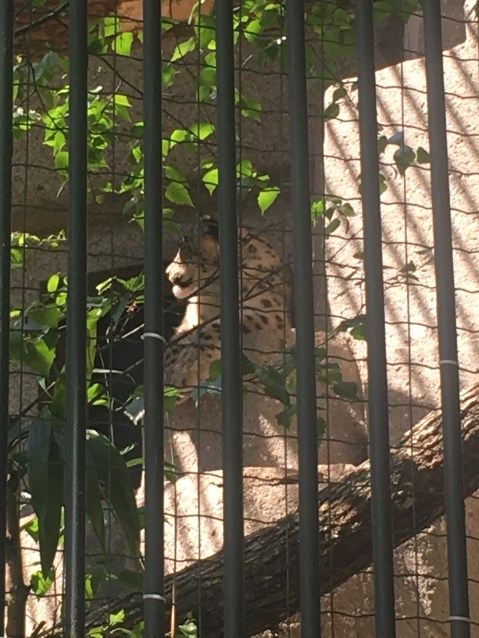
The leopards have an old fashioned indoor cage, but they can escape to the “outside” a large glassed in area where they pace or climb rocks to a door that goes back inside. However, it seemed to be locked. They were on display for our amazement.

IMG_4114

                                          The Panther   Rainer Maria Rilke

                                         His vision, from the constantly passing bars,

                                         has grown so weary that it cannot hold

                                         anything else.  It seems to him there are

                                         a thousand bars; and behind the bars, no world.

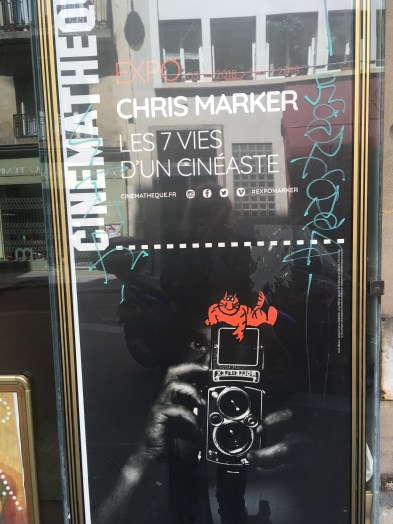
On my way home I passed a poster announcing a Chris Marker exposition, Les 7 Vies D’un Cinéaste, distracting me briefly from the panther.  Then his film, La Jetée, where there is no escape, came to mind.

IMG_4122

Perhaps my view of the Pantheon as I reached the top of Rue Soufflot might provide a refuge.

IMG_4055


Paris Day 26

Thursday April 26

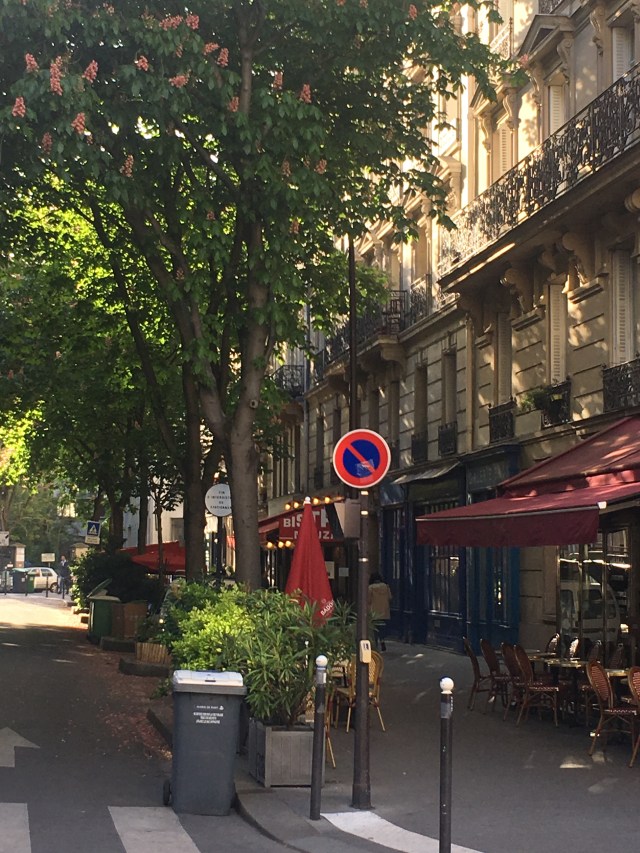
Only twelve days left before I return to the United States.  I don’t have enough time to explore Sophie Calle or even my own family at the National Archives.  Many shoulds.  I feel pressured to squeeze it all in.  An impossibility.  I must remember to take a photo of the charming street I pass every day on the way to the Alliance Française.   I have only today and two more classes.
IMG_3696

Rue de l’Abbé de l’Epée

Given yesterday’s debacle, I decided to approach Duras by visiting Musée D’Orsay.  As part of The Resistance, she often visited Gare D’Orsay working with the BCRA, Bureau Central de Reseignement et d’Action (Central Office for Intelligence and Action) which coordinated intelligence supplied by French networks.  In her memoir The War, she describes her days at the Gare:

 “…I set myself up there by stealth with forged papers and permits. We managed to collect a lot of information…about movements of prisoners and transfers from one camp to another. Also a good many personal messages.”

and after the arrival of French political deportees,

“Orsay.  Outside the center, wives of prisoners of war congeal in a solid mass.  White barriers separate them from the prisoners.  ‘Do you have any news of so-and-so?’ they shout.  Some stay till three in the morning and, then, come back again at seven.  But there are some who stay right through the night.”

6d822e44ff03aefcbec98716e13e6f17                              Returning Prisoners Arriving at Gare de l’Est 1945

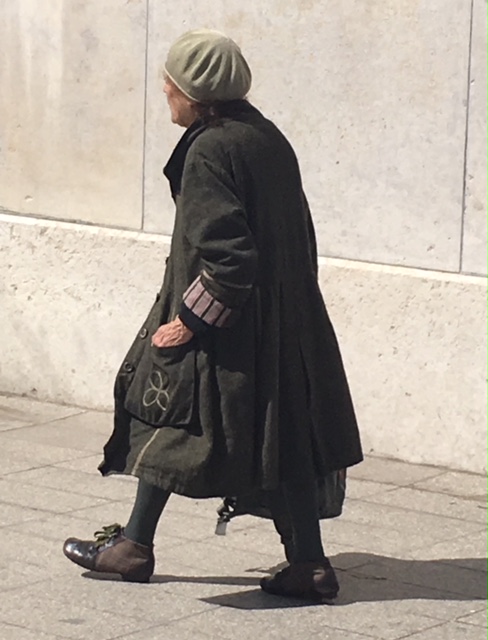
On my way, I passed several sandwich shops: all smelled delicious. I don’t have time for breakfast on the days I go to class, so I was particularly hungry.  While trying to decide which shop to patronize, I passed a woman from a fashion time warp, a thirties coat, 1900’s shoes. Up and down the street she strode.  Maybe this was my Sophie Calle moment.  Sophie Calle, a French multimedia artist, that is, writer, photographer, installation and conceptual artist, followed a man on the streets of Paris and all the way to Venice photographing him without his knowledge.  Later, she had her mother hire a detective to follow and photograph her as she went through her day.
IMG_3709

I walked a few hundred feet behind the woman until she entered a drug store.  When she emerged, I couldn’t maintain the stalking.  I’m not made for artistic ruthlessness where another person unknowingly becomes a source of creative endeavor.  Instead, I got in line at a sandwich shop, which would have been at home in Brooklyn: locally sourced ingredients, minimalist design, lots of grains and vegetables.  I took my lunch to the steps of the Musée d’Orsay.  There she was, my thirties’ prey, standing next to a trio busking in front of the museum.  I can’t seem to escape my country: the group played American blues music.  Then, she came alive, dancing in all her magnificence from one song to the next.  When they took a break, the clarinet player raised the dancer’s hand and said to the audience “Merci, Madeline”
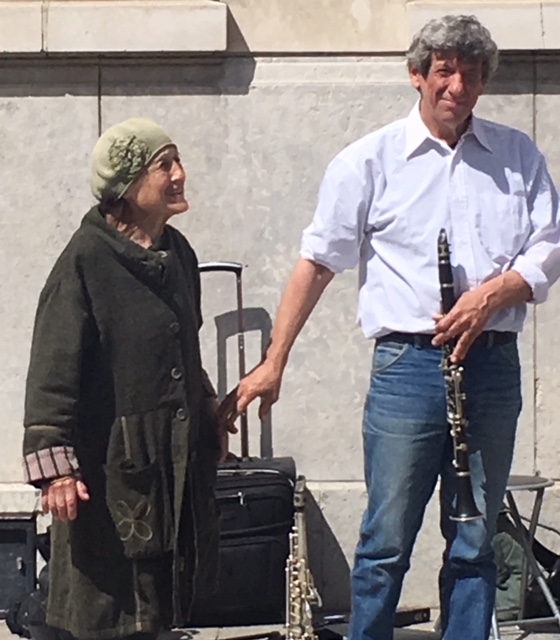
IMG_3725                                                                  Madeline

If I wanted to write, I had to get going.  After a long day, Duras describes her walks home from Gare d’Orsay.

“As soon as I leave the embankment (along the seine) and turn into Rue du Bac, the city is far away and the Orsay center vanishes.”

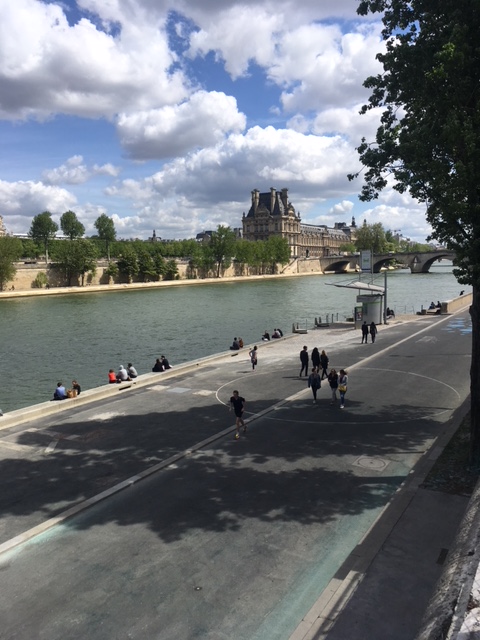
I would do the same.  The sun was shining just as it was for Duras.  The Seine winked blue-green at passers by.  How privileged we are sitting on the steps of the museum, walking along the Seine, having tea in Restaurant du Musée d’Orsay.  In 1945- hunger, fear, despair, loved ones tortured, killed.  But I walk along the Seine undisturbed, unmolested, unafraid.  And just last year, miles away in Calais, a makeshift refugee camp was destroyed.  Even here, the homeless don’t always find shelter.
IMG_3742

Quai Anatole Franc

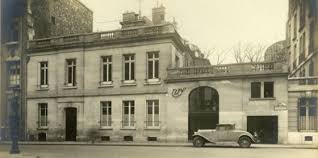
I enjoyed meandering back to the Irish College and decided to forgo writing.  I made one more Duras stop, the office of her publishers for many years, Gallimard, who collaborated with Vichy in order to publish resistant writers, Jean-Paul Sartre and Camus.  When Patti Smith visited Gallimard, her French publisher, she writes:

“My editor Aurélien opens the door to Albert Camus’s former office.”

Did she know it’s history?  Does it matter?  Can we compromise and be ethical?
Unknown

Gallimard Office, Rue Gaston Gallimard

Gallimard is off Rue de l’Université which becomes Rue Jacob and ends at Rue de Seine.  Towards the end of Rue Jacob, I looked right and discovered an empty Place de Furstemberg.  Was I in Paris or Aix-en-Provence where such retreats abound?
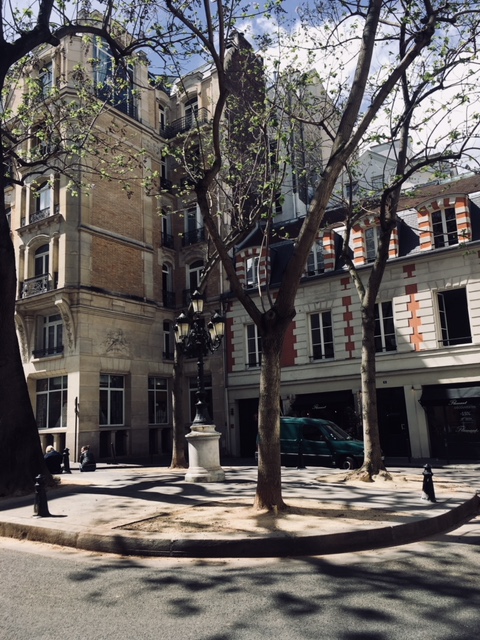
IMG_3784                                                    Place du Furstemberg

On Rue Monsieur le Prince, I passed Les 3 Luxembourg Cinema.  I spotted a connection to Agnes Varda. A film entitled Peau d’Ame sur les traces du film de Jacques Demy (Varda’s husband) was playing that night followed by a discussion with the filmmaker, Pierre Oscar Levy.

Two hours later I was seated.  The film is a tongue in check archaeological exploration of the setting of Jacques Demy’s film Peau d’Ame, a musical based on the Charles Perrault fairy tale of the same name, that is, Donkey Skin, about a King who wants to marry his daughter.  Demy used Michel Legrand for the music and Catherine Deneuve as the lead just as he had in The Umbrellas of Cherbourg.

In the film, made over four years, students brushed dirt from artifacts such as pieces of costumes and colored glass as they would on any archealogical dig.  Demy and Varda’s daughter, Rosalie, was interviewed when a ring worn by Deneuve was discovered. The audience occasionally laughed but I couldn’t get the jokes.  Afterwards, the filmmaker and an archaeology professor from the Sorbonne discussed the authenticity of such an endeavor for well over an hour.  Mon Dieu.  I dozed a bit; then the need to get some dinner overroad politeness.  I departed just in time to get a Lebanese sandwich at Au Vieux Cedre near Place de la Contrescarpe.  While I waited, the owner offered me a glass of mint tea. A graceful gesture to the other who, now, doesn’t feel like the other.
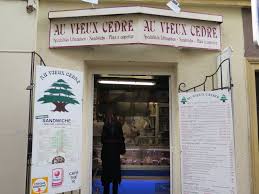
Unknown-1                                                                Au Vieux Cadre


Going Home To Paris?

April First, First Day

258A7C65-B54C-436C-B4AF-809BA5BB1938.jpeg

Is it the Day of Fools or the Day of Resurrection? Am I the fool who slips into nostalgia or can I be “born again” in this home of homes, my first home, Paris.

I packed my wallet- a window into this exploration. My up to date passport is slap up against my old ID card to the French National Archives.

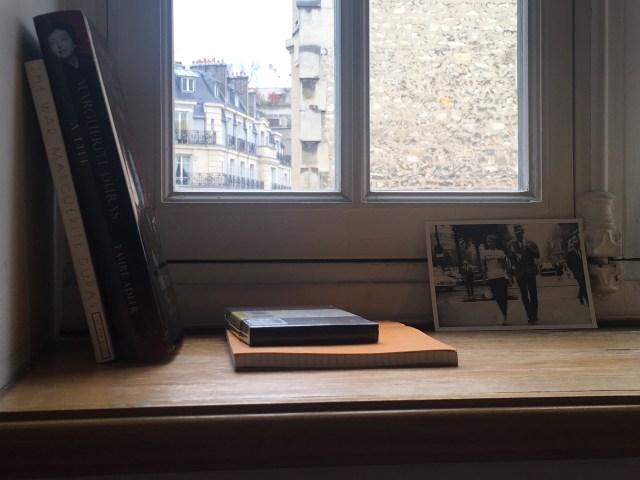
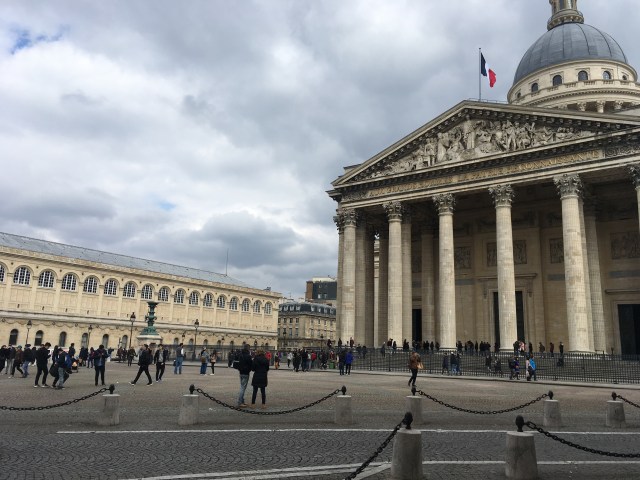
I left my room, now in the 5th: my place of comfort is the 6th and Carrefour Odeon. Feeling disoriented, I headed that way but quel supris: my location behind the Pantheon is to my liking. My heart pounded, my pulse raced not unlike the first time I saw Paris.

A23D4DEA-F96D-4043-AB9A-71A6E9F6180E

Yet, the past confronted me walking away from the Pantheon on Rue Soufflot. What was Rue Soufflot resurrecting? My first time in Paris when I lived with a French family whose daughter was a friend of my mother’s. I don’t think they knew what to make of me. I talked to German young men on motorcycles, wore my jean skirt almost daily, and could only say “Oui,” “Non,” and “C’est beau.” Mme. Brenot, a seamtress and dress designer, decided to take me in hand and bought me a stripped blue and white blouse from a store on Rue Sufflot making alterations so the fit was parfait. I wore it for years.

Jardin du Luxembourg,  Mostly Parisiennes strolled leisurely on this Easter Sunday. I overheard two older women discuss what the statues surrounding La Fountain des Medicis smbolize. Their conversation put me deeper into France where most feel qualified to comment on art, tres serieuse.

In an effort to ground myself, I made for my usual haunts. Or am I just playing it safe? Nostalgia again. First, Cafe de la Marie across from L’Eglise St. Suplice. I sat outside and tried to order a glass of red wine in French but the waiter didn’t understand, so it’s English. The rest of the day had the same language exchanges, a bit of French, a bit of English.

D9CDB3A6-DF89-47F1-A254-CC9BEC58E911.jpeg

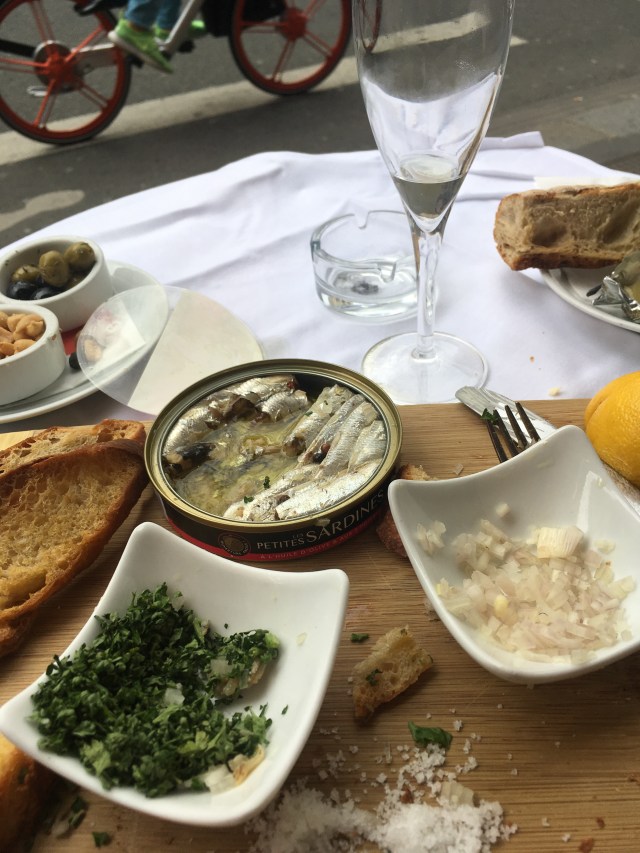
One more stop: Les Editeurs, what had been my local restaurant. It’s only 5 in the evening, so most are drinking coffee, beer, or wine. As I hadn’t eaten for over 12 hours, I ignored convention and ordered a coupe of champagne and sardines. The waiter impressed, arrived with a white tablecloth and, presenting with a flourish, added “A real Paris experience.” My neighbors stared as did most passers-by, intrigued by the spread: baguette with butter, peanuts, olives, toast, sardines on a board with a lemon, salt, chopped onions, and parsley.

67BBE1EB-8789-477B-AFA6-2E303F58E424

Still, I don’t feel tied to the earth, to Paris, to me, to the past or the present, but caught between.

Agnes Varda looked back in her film, The Beaches of Agnes, then in her late 80’s went forward in Faces/Places taking a road trip through France with a young photographer. Tomorrow, I will visit Agnes, or at least her street, Rue Daguerre.

Glasgow, The Search for Charles Rennie Mackintosh and a Good Meal

The River Clyde
The River Clyde

I am not sure what I expected from Glasgow but good food wasn’t necessarily it, yet its what I got beginning with the excellent sea bass my first night.

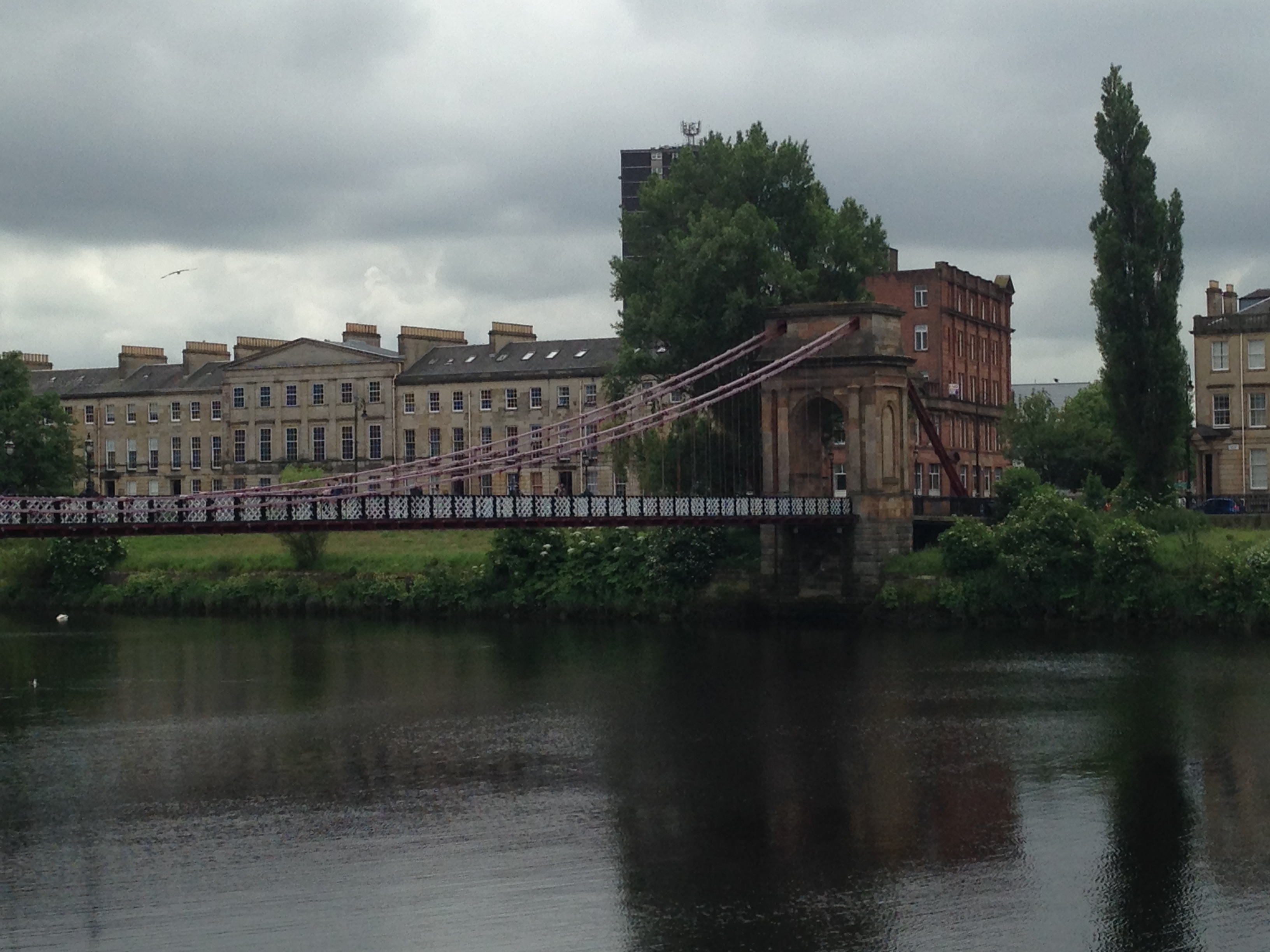
The next day, I made my way to Buchanan Street in search of an Apple store as my iPad went belly up or as it said on the screen “iPad disabled.” The store is an impressive Victorian building and the Ipad was put to rights quickly. I used this first day to get oriented, walking down the pedestrianized Buchanan Street, peeking down alleys at interesting looking pubs, exploring the Royal Exchange Square, and finally ending up at the Clyde River which has a promenade along the its banks reminiscent of the Seine in Paris.

Buchanan Street
Buchanan Street
The Apple Store
The Apple Store

My one plan for the day was to visit the Center for Contemporary Art which I would pass on my way back to the hotel. The exhibit consisted of various forms of animation that switched from one screen to another in a long room strewn with hassocks. It didn’t captivate me; however, the café located in the center did interest me. It was a long room with tables, chairs, and banquettes along one wall. I was tired, hungry, and anxious to take up my blog now that my Ipad was fixed. The café offered free Wi-Fi and seemed ideal. It was.

As I didn’t want to spoil my appetite for dinner, I ordered a warm kale salad. “Oh, that’s very small,” the waitress assured me. “You should order another dish.” I figured she knew best, so I added root vegetable fries. She was wrong. The salad was large and delicious with garlic and ginger lingering on the palate. However, the root vegetable fries of turnips and beets were another happy surprise. The bigger surprise to me, a dedicated carnivore, was that the café is a vegan restaurant which can hold it’s own against any fine eateries.

My last stop before was the Willow Tea Room designed by Glasgow’s renowned architect, Charles Rennie Mackintosh, known for his arts and craft and art nouveau association. At the time, I didn’t know of its fame. I just liked the way it looked.

I ended my second day in Glasgow eating at a well-respected restaurant called The Sisters, an interesting experience in contrasts. Reviews of the restaurant declared it was the “best restaurant in Glasgow.” I put aside my jeans and Birkenstocks, donning a skirt and heels. I was dressed appropriately but was unprepared for the décor and the background music. The dining room was a study in l980’s elegance, all black and white. Although there were white tablecloths and silver place settings, the music demanded a disco ball. Throughout the meal, disco music hummed merrily in the background, irritating to eat by and at odds with the formality of the setting.

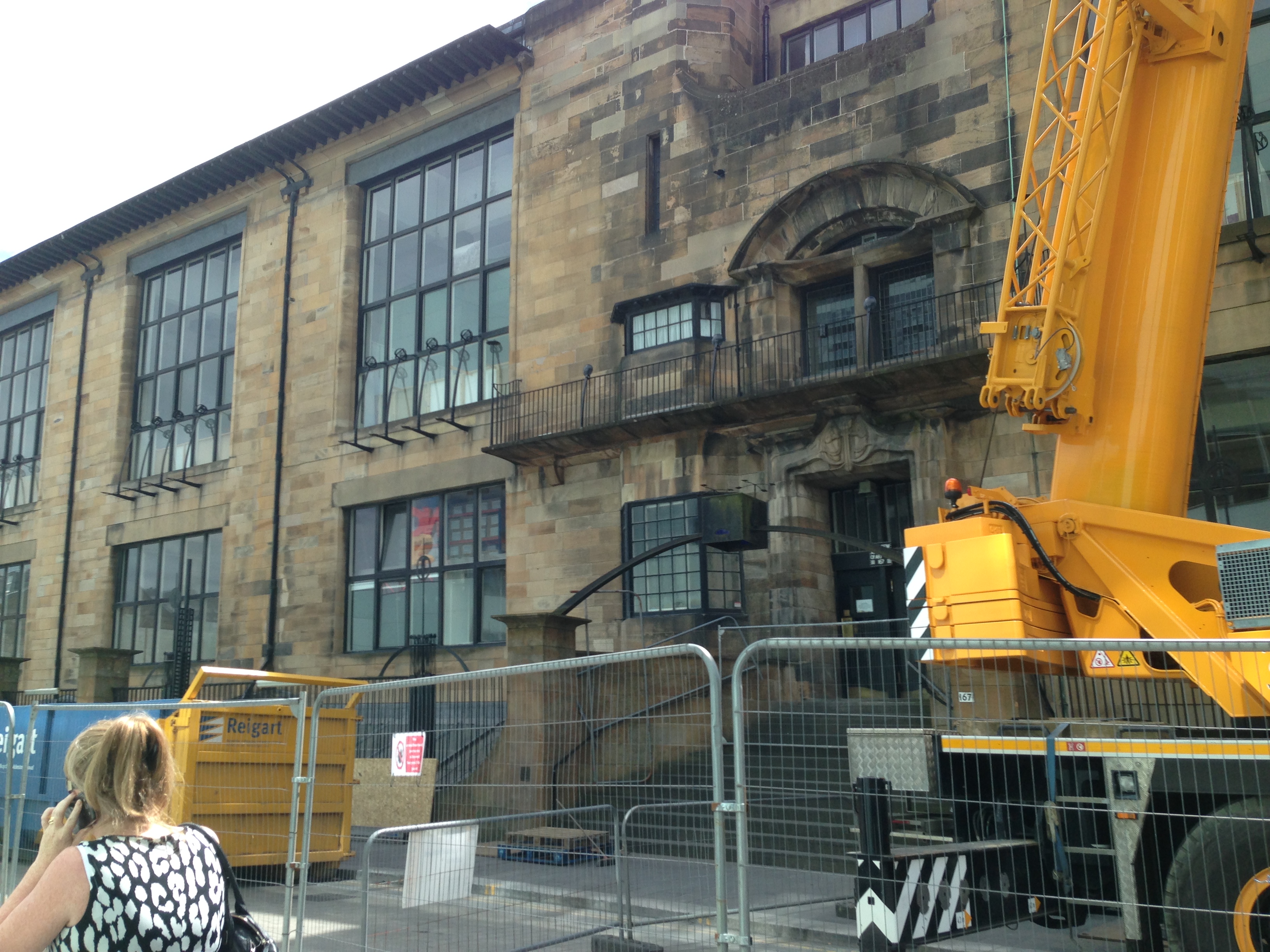
I had no plan for my last day, but after a friend made me aware of Charles Rennie Mackintosh, I decided to devote my day to his accomplishments which I almost did. I visited the Glasgow Herald Building which he designed and is now a center for architecture with a tower that gives a panoramic view of the city; however, the staircase to the tower was closed. I made my way to another of the buildings he designed, the Glasgow School of Art: unfortunately, the front was covered in scaffolding. I had two more opportunities: the Mackintosh House recreated at the Hunterian Museum and Art Gallery at the University of Glasgow and an exhibit at the Kelvingrove Gallery and Art Museum.

Glasgow School of Art

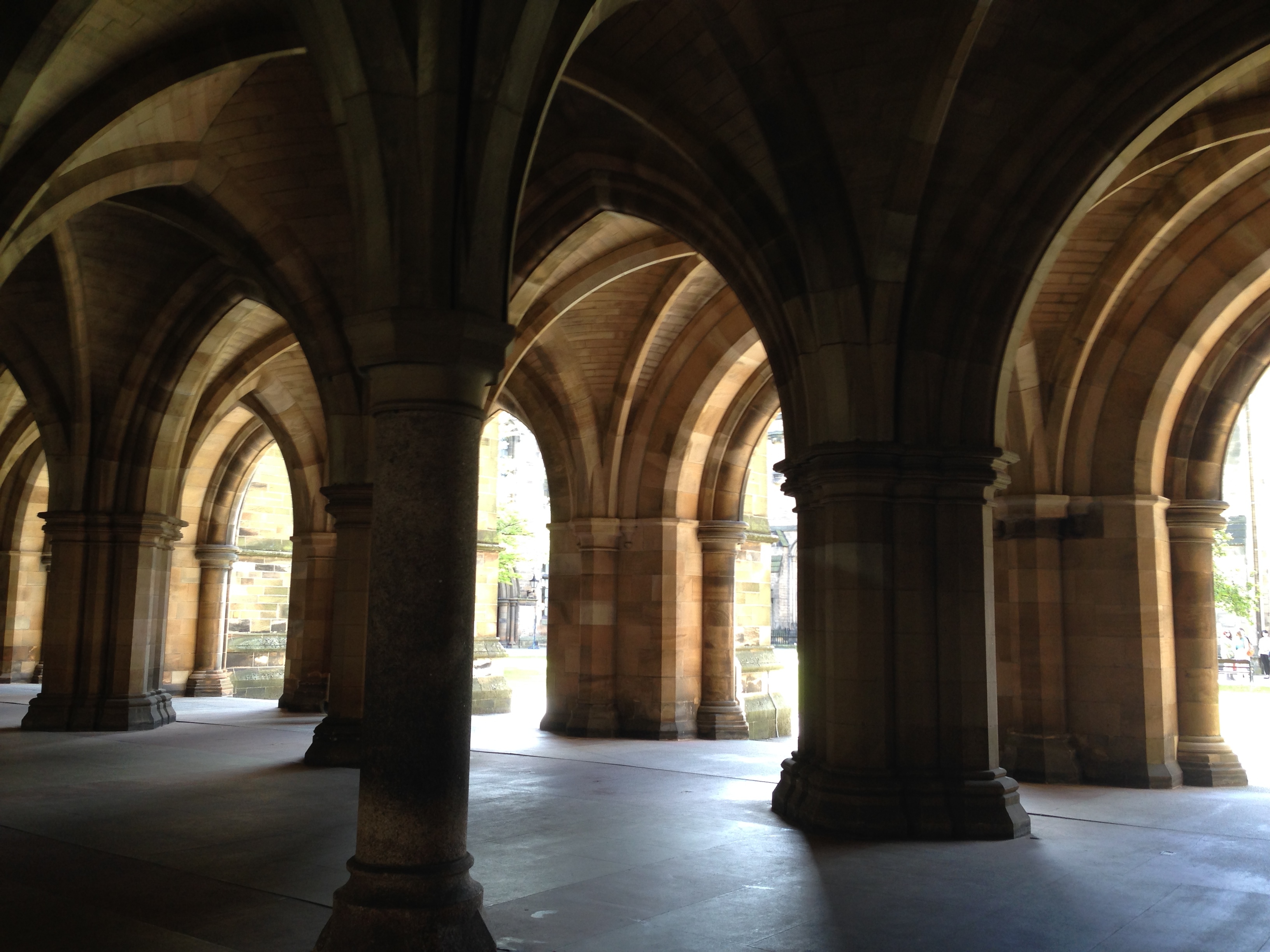
I spent too long at a second visit to the Willow Tea Room, swooning over replications of Mackintosh’s botanical watercolors. I had to have them. I couldn’t make up my mind which three to get as none of them seemed to fit together. Finally, I gave up as it was already 2:30. I sweated my way to the University of Glasgow and was immediately smitten. The buildings, the enclosures, the views over Glasgow were breathtaking.

The Cloisters, University of Glasgow

I forced myself to move inside and get to the museum. The door wouldn’t open. I said to the guard, “But it should be opened until 5.” He told me, “The museum is never open on Tuesdays.” Defeated again. By now, I didn’t think I could make it to the Kelvingrove Gallery and Art Museum, so I decided to go to Ashton Lane, recommended by my taxi driver as a street that hadn’t changed in 200 years. It, too, was within the boundaries of the university. Perhaps it hadn’t essentially changed, but like many restored areas I encountered including the Royal Exchange Square, it worked mostly as an opportunity to eat and drink. The tops of the buildings hinted at history. The bottoms were filled with cafes, pubs, and students drinking.

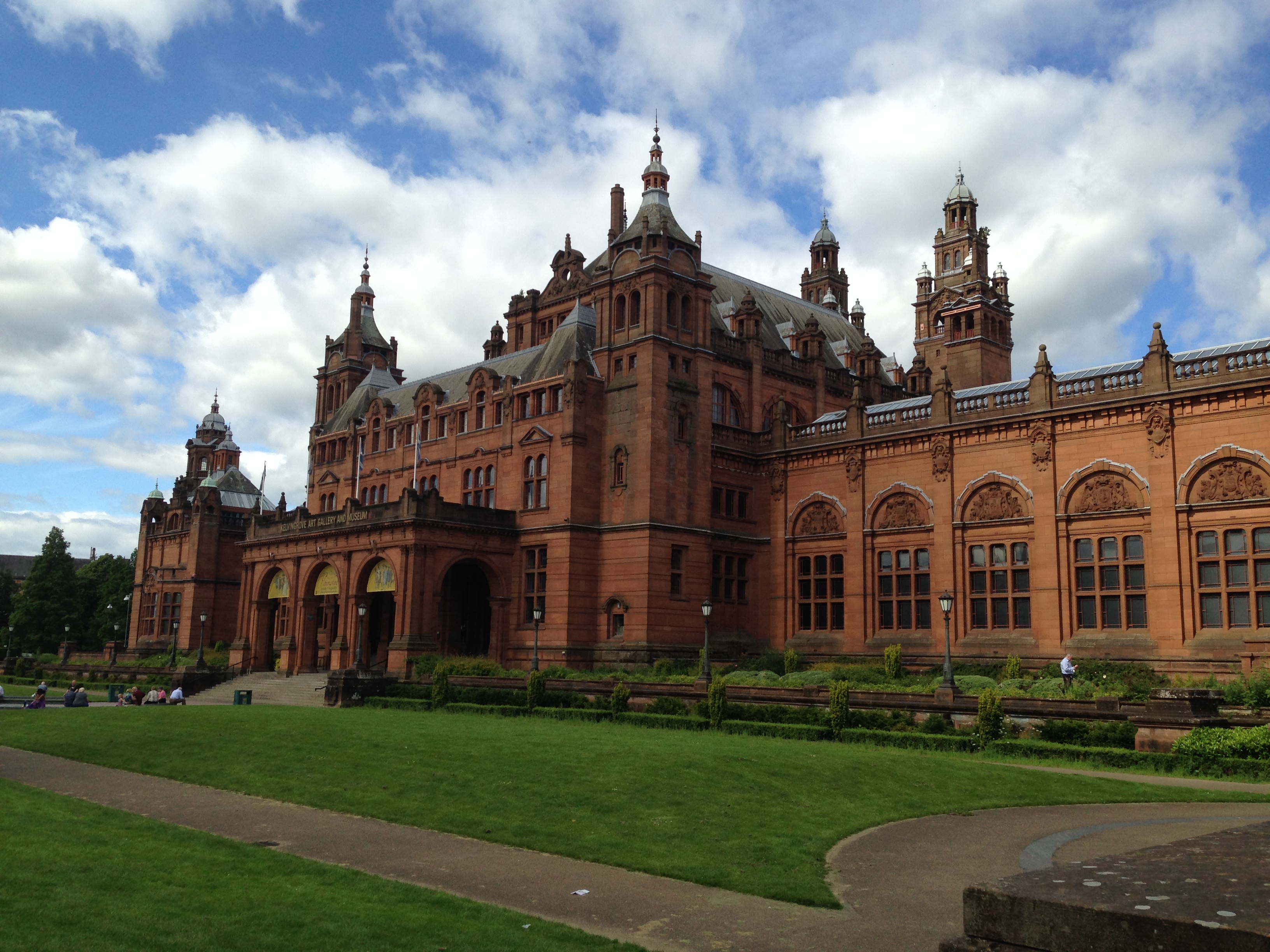
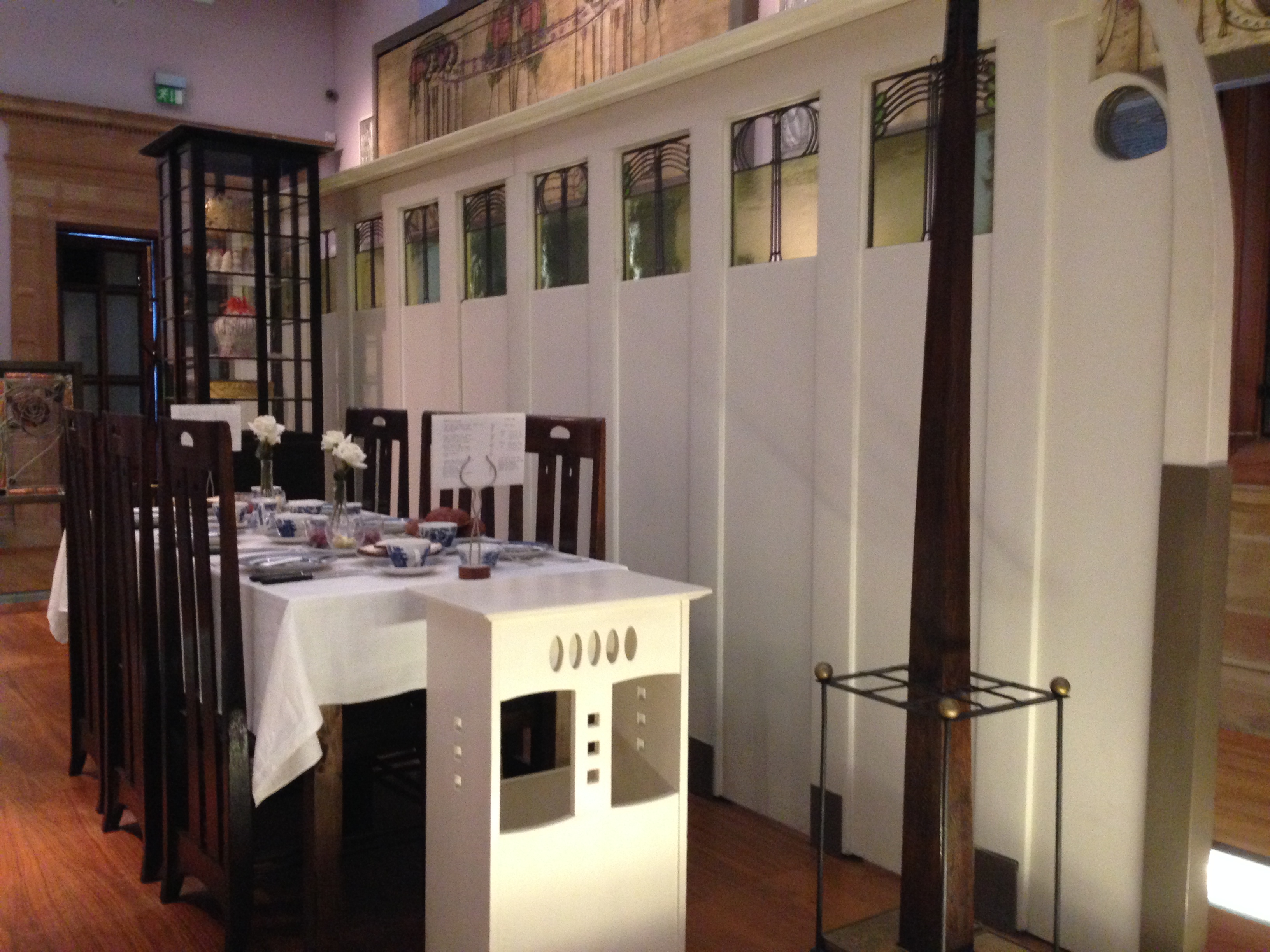
I turned away, walked past the University, down the hill through the Kelvingrove Park, and realized I had a half hour to spend at the Kelvingrove Gallery and Art Museum. Having a limited time in such a vast institution was liberating. I made my way to the rooms devoted to Mackintosh in time to see recreations of the Willow Tea Room and excellent arts and crafts furniture he created.

Kelvingrove Art Gallery and Museum


Willow Tea Room
Willow Tea Room

After a hectic and mostly unsuccessful afternoon, I wanted a leisurely meal. As I did for the rest of my trip, I limited myself to restaurants that were within walking distance of my hotel. Two blocks from my hotel was a tapas style restaurant, The Ox and the Finch. I had a good seat with a view outside as dusk set in; the street was lit in a golden pink reflecting off the brick buildings.

The atmosphere pleased me and would have been good enough; however, the food surpassed my expectations. With a glass of peaty whiskey know as “old salty” straight from the barrel, I had a bowl of large green olives, more than I could finish. Lemon orzo with broad beans and courgette followed. The orzo had bite to it, lemon infused the pasta but didn’t dominate, and the broad beans’ nuttiness complemented the dish. I finished with bass that was firm and sweet like Glasgow, like Mackintosh.