Paris Day Nine and Ten

Sunday  February 23

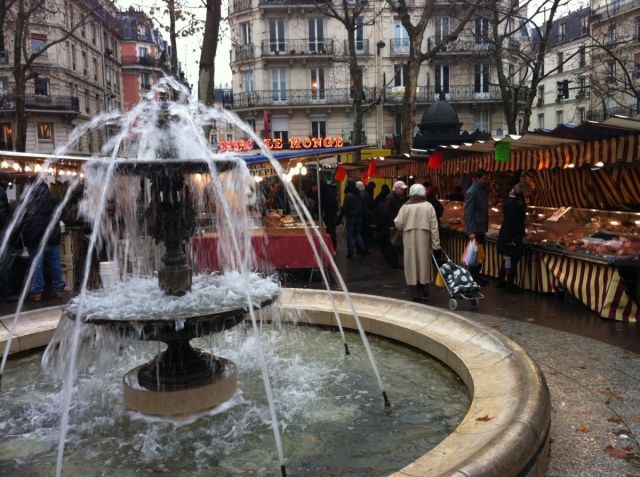
I found the marche!  It was Marche Monge.  I had confabulated several markets and lost my way.  Here were the familiar stalls: the excellent cheese monger, the flower seller, the cous cous stand (not great as I remembered) and the Italian stall.  I had plans for most of the day, so I bought a slice of vegetable lasagna for dinner in my room and two bunches of tiny daffodils.
D3DC87B0-C9C1-4D0B-A62A-7DB94BC7E759
Marche Monge

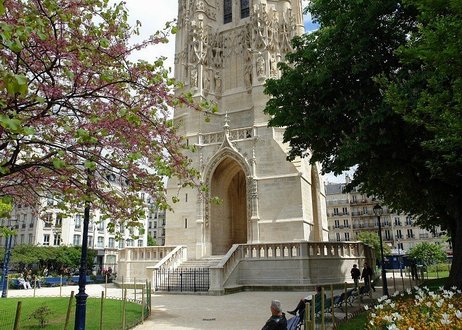
I gave myself an hour to get to Gare de L’Est where I was meeting Christiane.  We were to visit Cimetière de Montmartre in search of a de Jorna grave.  Usually, I walk around Place Tour Saint Jacques.  But today, walking through a park on an overcast day appealed to me.  These small green oases in Paris restore.  As I was exiting on to Blvd. de Sebastopol, I felt myself falling and could see there was no escape.  Flat on my face, bruising my left eye while hitting my right side.
6E135CD5-92E3-4E62-88D2-44823ACDF99C
            Place La Tour Saint Jacques

First, had I ripped my jeans?  No.  Second was there a pharmacist close by, open on a Sunday?  I was in luck.  French pharmacists are excellent sources of advice, almost like going to Emergency Care.  He gave me a cold pack, medication to help oxygen move to the bruise, and a salve.  He told me that every day someone comes in with the same condition as if the street had caused the injuries.  That soothed me somewhat, but this wasn’t the first time I had literally fallen on my face in France.  Last time, I lost four front teeth.

I returned to Place Tour Saint Jacques, found a bench, applied the cold pack, and cancelled my plans.  No one looked at me except by accident and, then, the onlooker’s eyes widened in shock.  I took a selfie and understood their surprise. I had a real shimmer.

I spent the rest of the day in my room: reading, resting, applying cold packs.

Monday February 24

When I woke up, felt the bruises on my face, and got a look at my black eye, I wanted to go home.  Like a child who needs it’s mother, the comfort and familiarity after being hurt, I wanted my house with it’s beautiful light, my cat who loves me, sort of, my garden, my, my.  But this desire to bolt isn’t unique.  The last two times I stayed in Paris, I left early, just a few days, but why?
5B84BE6E-FE64-44FE-B4AF-3A0870EB6BD8
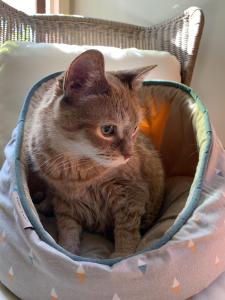
   Milo, the man in my life

What am I looking for?  I always thought I should have stayed in Paris when I was 21 and not come home to do the expected, that is, get a degree.  I felt free, accepted, in control, unburdened.  Well, I can’t get that back.  And what burdens am I looking to unload?  A state of mind unencumbered by expectations, by obligations?  Yet, when I want to leap across the Atlantic, the ties to loved ones, to landscape pull at me.  Aren’t they encumbrances of a sort?  Whether writing or traveling, essentially the same question rears it’s unwanted head.  What the hell am I doing?  Part of the process of making a life, of trying to create something?

After spending part of the day writing, I decided to hide myself in the movies.  Armed with sunglasses, I walked to Reflet Médicis to see Visconti’s White Nights.  I passed the Champo: a line extended along Rue des Écoles, people of all ages waiting to buy tickets to Fellini’s La Notti de Cabiria, Nights of Cabiria.  The scene heartened me: you’ve got to applaud the French love of cinema.

At the ticket booth, I had to remove my sunglasses and felt the need to explain my appearance: Je suis tombe dans la rue ( I fell in the street).  Immediately the clerk asked if I was all right.  Did it hurt?  Scratch the surface and the French can be tres gentils.

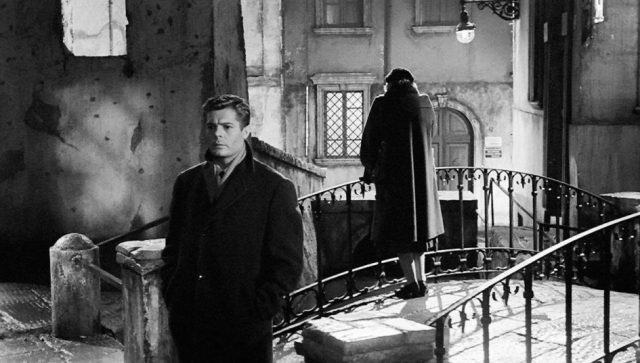
I came to see Visconti’s 1957 adaptation of Dostoevsky’s short story “White Nights” (La notti bianche): the cinematography seemed strangely real and unreal.  The black and white photography reminded me of his La Terra Tréma.  Whereas that film was shot on location in Sicily, this film takes place on a set, a carefully reconstructed section of Livorna.  Disconcerting.  Like the characters, I was thrown off guard.
27712D2F-9F81-4B73-97DB-EFD6E1F365F2
                     La Notti Bianche

Visconti explained,

”It must look as if it is false but when you start to think it’s fake, it must look as if it were real.”

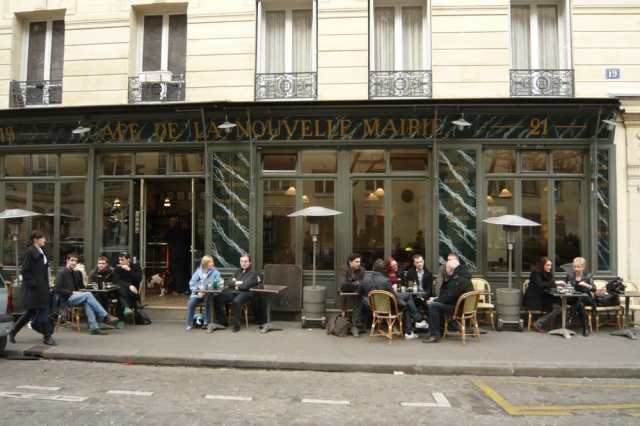
On my way home, adorned with sunglasses, I decided on a pastis at  Cafe de la Nouvelle Mairie.  Again, I felt compelled to explain my shiner to the barman.  Again concern.
199C1BC2-CB32-4C1F-89E0-30EB5D2DF80A
          Cafe de la Nouvelle Mairie

Return to Paris Day 14

Sunday, April 14

Palm Sunday.  I peeked out my window to see how the day would be celebrated.  The church goers had gathered in the courtyard to receive fresh palms.   As a child, I made crosses from dried palms.

IMG_6075

Instead of mass, I went to the market to buy flowers for that very window.

IMG_6078

When I returned, I planned my route to the Musee d’Orsay to see “Le modele noir de Gericault a Matisse” (The Black Model from Gericault to Matisse) which I had first seen at Columbia University.

I liked the route as it took me through my old neighborhood of Odeon.  After crossing Blvd. Saint Germaine to Rue de l’Ancienne Comedie, I turned onto Rue de Buci, a virtually pedestrianized narrow street filled with restaurants, Parisians. and a group of blues buskers.

IMG_6079

I arrived at the museum early enough to avoid long lines. The exhibit had greatly expanded from what I had seen in New York.  At first I’m was in a frenzy: there was so much to see, so many wonders: films of Harlem projected on the walls high enough so everyone can see.

And a film of Katherine Dunham, the choreographer, anthropologist, and metissage (her mother was French Canadian, her father African America) dancing Les Ballets Caribes in Paris.


I tried to photograph much of the text displayed on the wall but had to maneuver around other visitors. At one point I backed into a display and fell on my backside.  It was worth it.  One section entitled “Metissages Litteraires,” Mixed Race in Literature, mentioned Alexandre Dumas.  The author of The Three Musketeers was the grandson of an emancipated slave (Slavery in the French colonies wasn’t abolished until 1832.)   

My grandmother, Germaine de Jorna, nicknamed her sons after the three musketeers.

De Jorna Family

Armand de Jorna married Noeline Noel

Children

Andreid (Yia)  Germaine  James (father of Adria and Everard)

Zinis Family

Germaine de Jorna Married Efstadiou Zinis

Children

Andrew  Germaine  Alma  Louis  Flora  Gabriel  Stella

Louis Zinis married Mary Daly (daughter of Mary McGann)

Children

Judith  Linda  Edward

My father was Porthos, the character who wanted to make a fortune.  Since he worked from an early age in order to have his own spending money, the choice seems apt.  Did she choose this book because she knew of Dumas’ heritage.  Because she knew that another de Jorna had actually been a “mousquetaire?’

dadandmom1930scar

Louis Zinis (Porthos) who liked nice cars

Also discussed was Jeanne Duval born in Haiti around 1827.  She became Baudelaire’s mistress and was an important part of the poems in Les Fleurs du mal.  One edition included Matisse’s drawing, Martiniquaise, A Martinique Woman.  An exciting coincidence, so similar to the title of Mayotte Capecia’s novel, Je Suis Martiniquaise, 

IMG_6102

My de Jorna relative arrived in Martinique in 1690, five years after the enactment of the Code Noir, an edict of Louis XIV that set forth the policy for the slave population and remained in effect until 1789.  In the 1700’s one of the Martinique de Jorna’s angered a King of France: he was demoted from a high level administrative position to head of the militia.  In either case, he had to be involved in controlling slaves and having slaves.  But years later, they mixed, the de Jorna’s and the slaves.  So like Dumas, I am also descended from a slave.  Nevertheless, my military writer friend is somewhat correct in assessing it’s limited effect on me.  My father didn’t wash my skin with lye in order to “whiten” me.  However, my great aunt Yia tried this method on her nieces.

Edouard Glissant, Martinique poet and philosopher,  wrote ”One of the assumptions of French culture is to assimilate people, to have them all become like a transcendent French model.”  The French Antilleans believed they were French and according to Glissant, emulated French values which meant being white forming what he called a “pseudo-elite,” that resulted in a “depersonalization” of their identity.  Consequently. being identified as African or black was an insult.  They, as my grande-tante did, wanted to get as close as possible to white, to French culture.  Every summer she sent her nieces to a relative’s farm on Long Island where they were scrubbed with a diluted lye solution to make sure their one drop wasn’t too evident.

4x6- The Girls

Germaine de Jorna’s daughters once washed with lye

When she brought her brother’s daughter and son from Saint Lucia to live with her, the nephew was banished from her household.  He couldn’t pass.  He was too dark.  He joined the Merchant Marines so the story went.  However, he spent most of his life in Manhattan never to be seen again, at least not by his family or even the sister with whom he had lived.  Her skin tone did pass.  She kept that secret all her life.

By chance, on my way home,  I passed where Richard Wright had once lived.  Fitting.

IMG_6158

Return to Paris April 7-8

Sunday April 7

One of the residents encouraged me to attend mass which is offered here at the Irish Cultural Center each Sunday.   On other Sundays, I admired the singing heard in the courtyard.  A beautiful chapel, good music lured this lapsed Catholic.

Except for funerals, I haven’t been to mass since my 20’s when it was still in Latin: consequently, I couldn’t follow the service.  The priest encouraged his flock to “Not look to the past” but, “look into your heart and find something new.”  I seem to be doing the opposite.

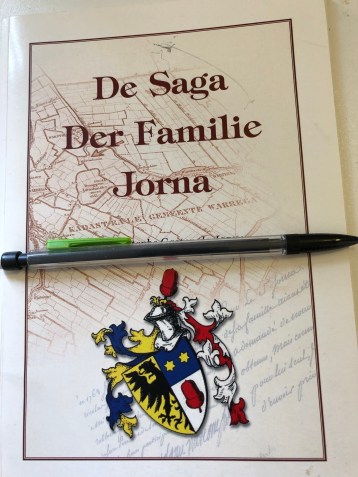
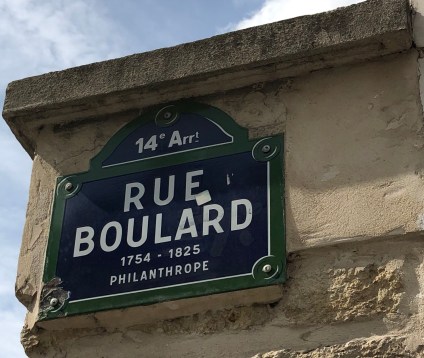
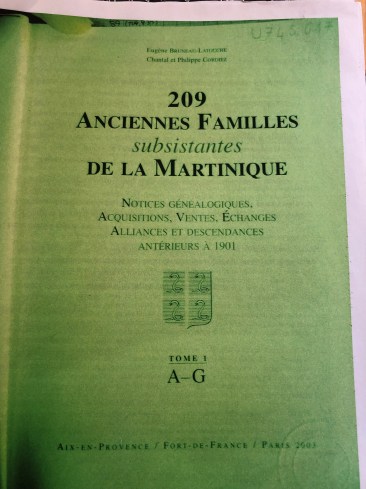
In fact, I spent the rest of the day going down the rabbit hole of de Jorna ancestors searching for my elusive great grandfather, Armand de Jorna.  He’s always just out of reach.  I did learn that one of the de Jorna’s from Martinique, Joseph de Jorna, did return to Paris and lived on Rue Boulard which intersects with Rue Daguerre where I’ve spent so much time looking for Agnes.

469D1D5E-D75B-4D38-A42F-C380E16137AF

Monday April 8

Rebellion in the classroom.  I’ve been unhappy at the Alliance.  I fondly remember last year when the teacher began each Monday by inquiring about our weekends, bringing the class together and making French part of our every day.  This morning a student asked the teacher if we couldn’t do just that.  She didn’t like it but agreed. 

The discussion became quite interesting.  We covered the yellow vests whom the teacher supports.  She told us they are protesting restrictions in their daily lives.  Libraries and post offices have been closed in small villages.  Doctors are few and far between.  Their quality of life has deteriorated just as it has in Britain.  Disturbing.

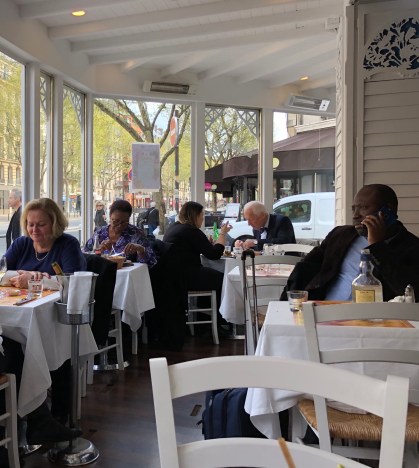
Since I still haven’t heard from the Cultural Director at La Colonie, I decided to go to a creole restaurant, La Creole, not far from the Alliance on Rue Montparnasse and see, as Mr. Micawber said to David Copperfield, if “something will turn up.”  I ate delicious goat stew as I had in Saint Lucia when my daughter and I searched for records of my grandmother, Germaine.

3BA99B94-36BC-43A1-B99C-15C16CAB1FA0

As the atmosphere was friendly, I asked the waitress in my bad French what I had asked the bartender at La Colonie: could she direct me to a Carribbean group that I could talk to?  She went into the kitchen and returned with a name, Les Delices.  My French must have been very bad: it is the name of Carribbean grocery store.

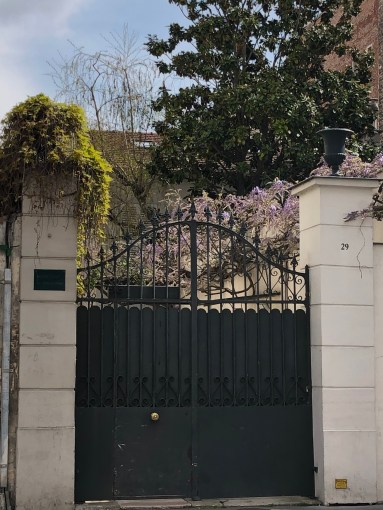
Given I was in the neighborhood, I went to Rue Daguerre and Rue Boulard, home of the ancien Joseph de Jorna.  When I reached the street, I stopped in a book store and a real estate agent asking if they could direct me to the oldest house on the street.  No, they could not.  There are two blocks noted for their age.

A5F53F71-1748-4117-B9BE-AFEAAC404BA4

Joseph de Jorna according to my source, “Il mourut en 1726 en son hotel.”  He died in his hall or townhouse in 1726.  Were any of these buildings here in 1726?  Could this be “son hotel?”

9B47A43E-3AF8-4602-BB3D-73D82D9FFE77

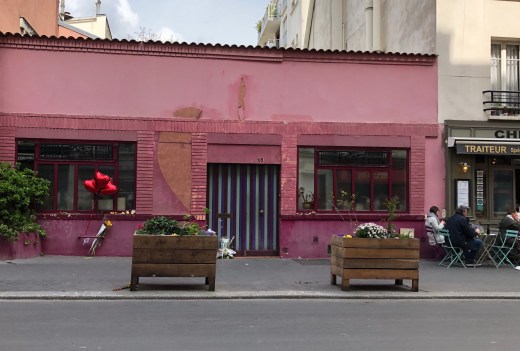
I chose it because my father, who wanted so much to be the ennobled small de in de Jorna, would have approved.

F167CD8A-6267-4DC2-8AC7-E973A6312BC3

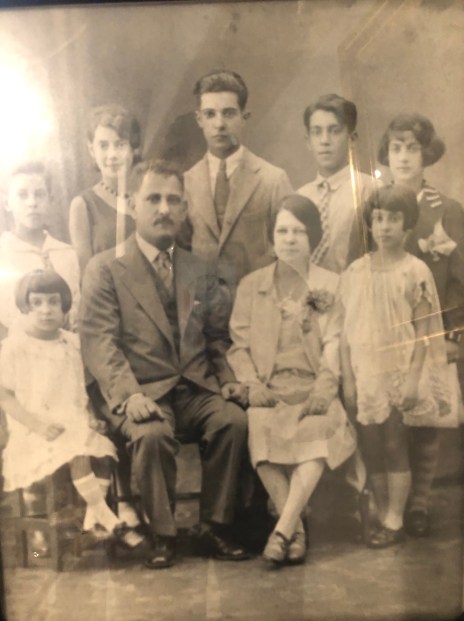
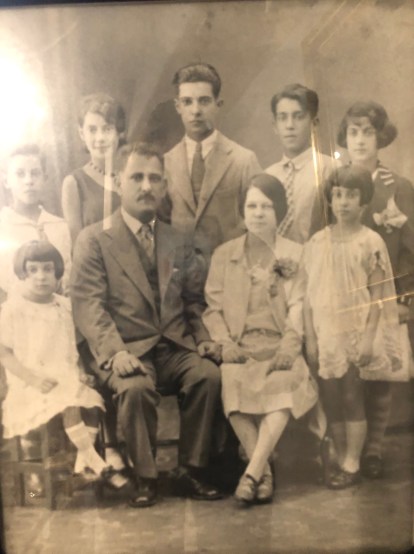
My father, Louis Zinis, second from the right, back row

Then, one last stop on Rue Daguerre, last home to Agnes Varda.

CCEE1506-63E3-499B-82C5-4E9611532BE1


Return to Paris Day 2

Tuesday, April 2

Days of adjustment.  I often travel alone and for extended periods of time.  Yet, I  forget how difficult the first week can be.  My second day began with lashing rain, as the Irish call it, arriving for my first class at the Alliance Francaise bedraggled which aptly describes my understanding of French and my ability to communicate with the instructor, indeed, with the class.

I wonder why am I doing this?  I will never master this language.

I consider my ancestors who landed in New York and had to do just that, master a foreign language and a foreign culture.  They had relatives whom they joined, but each encoutered difficulties patching themselves into the fabric of America.  My Greek grandfather eventually spoke, not fluently, seven languages but when he first stepped off the boat, English wasn’t one of them.

F167CD8A-6267-4DC2-8AC7-E973A6312BC3

Efstadiou (Tom) Zinis and Germaine de Jorna with their children

My “French” grandmother probably  had some English as Saint Lucia, from where she hailed, had been a British colony since 1832.  Yet, she only spoke French with her sisters or her husband, my Greek grandfather, when they didn’t want the children to understand.  What  kind of French?  The French of Paris or the patois of Saint Lucia?

My Irish grandmother came to the states at age 13 and refused to continue her education.  She didn’t want anyone making fun of her brogue.

A27BC410-1DEB-446B-8A7F-98B4C80B05E0

Molly Daly

Here I am, a privileged American, trying to become part of my heritage, the holy land of France and I’m unable to converse with anyone or to even order food.  I forget the importance of “politesse” that is, the polite way of interacting.  I’m more a bull in a china shop.  In the states, we don’t bother with greetings, with leavings when we are doing business.  We get right to the point.  “I want a coffee” instead of “Bon Jour Monsieur.  Je voudrais un cafe, s’il vous plait.”  “Good day sir.  I would like a coffee if you please.”  And always when leaving “Au Revoir or Bonne Journee.”  “Good bye, have a good day.”

Confusion again.  I stopped at the same cafe as yesterday and ordered a cafe allonge, that is an espresso with a pitcher of hot water to elongate it.  This I understood, but what  was I do with the green bottle of cold water and small glass placed on the table?  I maximized my stay by using all the hot water and never touched the other or inquired about their purpose.  Like my Irish grandmother, I wouldn’t risk being the object of a joke.

These small setbacks create feelings of isolation.  So minimum but so heartfelt.  What could my grandparents have experienced when Greeks were called “Dirty Greeks” and Irish faced “No dogs or Irish allowed?”  Although perhaps, being American today is just as unseemly.


Return to Paris Day One

Monday April 1

After spending two weeks in Dublin, feeling at home didn’t happen as easily as last year.  An outsider.  The language deserted me and my fears of offending the French took hold. 

389845D4-B6E4-410D-9B8E-066B99CD4942

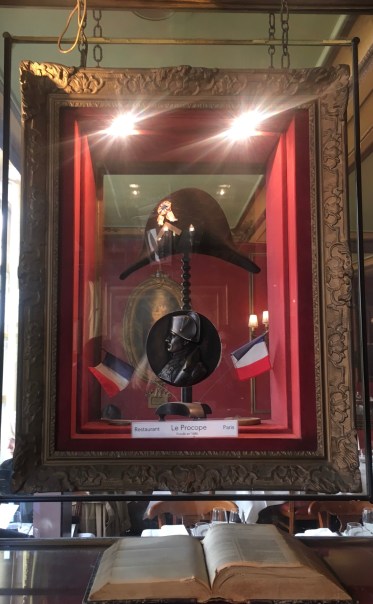
Napoleon’s Hat at Le Procope, Paris

France even Paris was Mecca to my family.  My arriere grand pere was a doctor, kicked out of France or was it Switzerland because he used forceps, perhaps code for abortion.  An earlier relative had an argument with the king of France, not sure which one, about a naval tactic and was demoted from what to what?  Supposedly, we descended from aristocracy as our family name, de Jorna, begins with a small “de” denoting nobility.  

9424F814-18F4-498E-9602-A88921AE97A0

And my grand mere came from France as did my great Aunts and older cousins.   The de Jorna’s did come from France and some did live in Paris, but my branch had lived in the French West Indies for more than 300 years.  Once that truth was uncovered, a second emerged.  My arrriere grandmere’s death certificate listed her as “colored.”  On a ship’s manifest from Barbados to New York, my great aunt was listed as colored.

All their lives in the states and perhaps in France, this branch of the de Jorna’s from the lates 1800’s when Armand de Jorna, my great grandfather,  married  the “colored” Noelline Noel, were passé blanc, passing for white.

60F8C0D0-AD0A-4E58-83A9-4A718AB3BA28

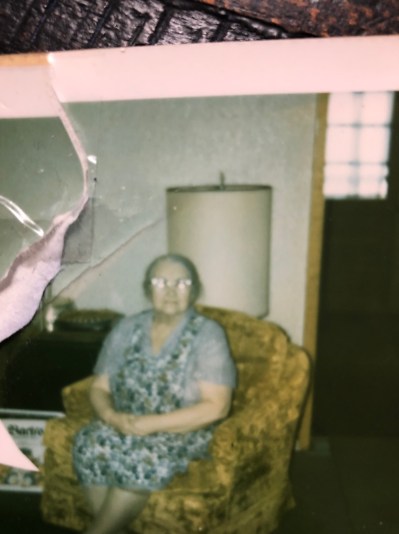
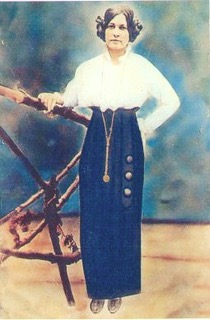
My grandmother, Germaine de Jorna, daughter of Armand de Jorna and Noelline Noel

This time in Paris, I return not as an descendent of an ennobled de Jorna, but as a passé blanc, the daughter of a man who resembled Louie Armstrong and who cautioned me to stay out of the sun lest my skin expose me and him.

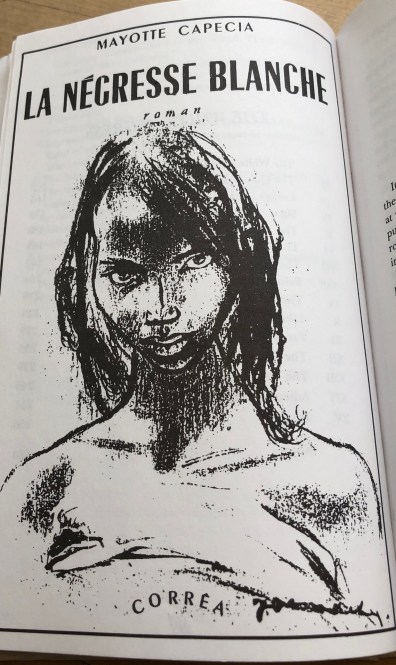
Instead of looking for women artists outside the norm, Margureitte Duras, Agnes Varda, or Sophie Calle, I will look for those who pass and don’t pass, those from the colonies, Mayotte Capecia from Martinique who wrote The White Negress, Jean Rhys a beke, that is a white creole, born and bred in the Carribbean, and others who supposedly are French but are they?

13177FAF-5F02-44ED-AA3B-27548194CD80