Friday March 6
Today was spent at Charleston once the home of Vanessa Bell and Duncan Grant, now maintained by the Charleston Trust. I made the same trip that they and their friends often made from Bloomsbury, taking the train from Victoria Station to Lewes, then, for me, a taxi to Charleston. I almost missed the train: on the one designated for Lewes, people seemed to be getting off rather than getting on. I left the cabin looking for answers and found the driver of the train. The platform had been changed at the last minute. He led me and the other passengers to the correct location and soon after, the one hour trip to Lewes began.
 Victorian Station
Train travel, even short journeys such as this, have been a time of contemplation, even revelation, for me. This morning, I again considered what my son had called the “beautiful struggle,” the attempt to create. Beautiful would not be the term I would use for my particular battle.
Everything has come into question, especially what I once told my daughter: if I don’t write, if I don’t travel, I’ll shrivel up and die. Is that what is happening? I could find outside sources to blame: President Trump, the corona virus, not having a place of my own. Yet, how can I fault the Irish Cultural Center: a large room, a communal breakfast, invitations to events, a courtyard for writing in good weather? No. What about my small hotel room in Bloomsbury? It too looks out on a courtyard, it too gives me breakfast, and it too has an ideal location. Why there is even a cinema around the corner showing interesting films and serving drinks at it’s two bars.
The rosy colored lens through which I viewed life seems to have been replaced by clear or even jaundiced ones.
This worm turning in on me began when I read Deirdre Bair’s Parisian Lives, a memoir of writing Samuel Beckett’s and Simone de Beauvoir’s biographies. Both writers come across as suffering from extreme self-involvement. Suddenly, I couldn’t read them or admire them. Now I’m confronted with my own rigidity. Why should their foibles have anything to do with my own work? Why has de Beauvoir’s or Beckett’s work become tainted by their mean spirited personalities? Rubbish me thinks.
 Simon de Beauvoir Samuel Beckett
Might Charleston rescue my interest in writers, in artists?
After a convivial taxi ride, I entered the front garden- restored. Inside the house, each room filled me with pleasure. So well arranged to enjoy life: the seemingly casual art, the lamps placed just right for reading, the tables for writing, the studios for painting.
 The Garden Room
 Maynard Keynes’s Bedroom
The gardens filled me with wonder and longing. Organized beauty that appears natural, not designed, full of grace. Supposedly, Vanessa Bell and Duncan Grant wrote to each other frequently about such matters.
 A view from the kitchen garde
Beyond the house is a museum, a dining area in a restored barn, and a shop. I was enthralled. I imagined living here: it suited me. I felt at home. I contemplated buying fabric, a direct duplicate of those used on chairs and beds in the house. Duncan Grant’s art fits comfortably inside my eyes, my brain.
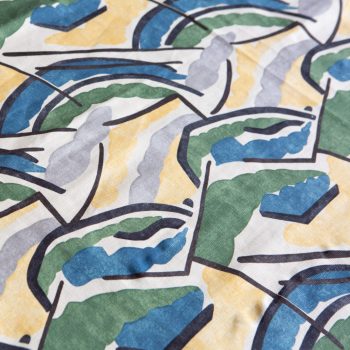 Pamela by Duncan Grant
My taxi driver brought me back to earth when he dropped me off at the station. We had had a lively conversation about his travels throughout the states in the late 60’s. As I was leaving, I told him that, unfortunately, we couldn’t shake hands given the Corona Virus. He laughed and quickly gathered me in his arms. I smiled tightly, horrified that he may have given me the dreaded disease.
At Charleston, I had bought the memoir of Vanessa Bell and Duncan Grant’s daughter Angelica Grant, Deceived With Kindness: A Bloomsbury Childhood which I began reading on the train. Here I go again. All the beloved biographies, letters, diaries, novels of Virginia Woolf pale in light of Angelica’s childhood- ignored or worse, treated as an adored object, not a human being.
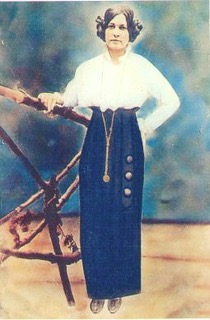
Again, I say to myself, rubbish! Might I be a narrow minded prig?. Or if I’m kinder, one who suffers from too much empathy. A student in a documentary film course I taught commented on the film selection, “You seem to favor the underdog.” Do I want to get submerged by this identification? Yet that seems to be my subject: my French grandmother, a mixed race woman; my Irish grandmother living when “no dogs or Irish” were allowed; and a Greek grandfather, sometimes, called a dirty Greek.
I once said to someone that to be a writer, one had to be ruthless. Am I up to the task? Has the air gone out of my red ballon, the book I’m chasing?
Saturday March 7
I traveled to Dublin without much difficulty, yet anxiety seeped in as more news of the corona virus emerged. My doctor had urged me not to take this trip. Was she right? I considered abandoning Ireland, going straight home from London. But not yet.



 An Itinerant Woman