London Day 5 and 6

Friday March 6

Today was spent at Charleston once the home of Vanessa Bell and Duncan Grant, now maintained by the Charleston Trust.  I made the same trip that they and their friends often made from Bloomsbury, taking the train from Victoria Station to Lewes, then, for me, a taxi to Charleston.  I almost missed the train: on the one designated for Lewes, people seemed to be getting off rather than getting on.  I left the cabin looking for answers and found the driver of the train.  The platform had been changed at the last minute.  He led me and the other passengers to the correct location and soon after, the one hour trip to Lewes began.

Unknown-2Victorian Station

Train travel, even short journeys such as this, have been a time of contemplation, even revelation, for me.  This morning, I again considered what my son had called the “beautiful struggle,” the attempt to create.  Beautiful would not be the term I would use for my particular battle.

Everything has come into question, especially what I once told my daughter: if I don’t write, if I don’t travel, I’ll shrivel up and die.  Is that what is happening?  I could find outside sources to blame: President Trump, the corona virus, not having a place of my own.  Yet, how can I fault the Irish Cultural Center: a large room, a communal breakfast, invitations to events, a courtyard for writing in good weather?  No.  What about my small hotel room in Bloomsbury?  It too looks out on a courtyard, it too gives me breakfast, and it too has an ideal location.  Why there is even a cinema around the corner showing interesting films and serving drinks at it’s two bars.

The rosy colored lens through which I viewed life seems to have been replaced by clear or even jaundiced ones.

This worm turning in on me began when I read Deirdre Bair’s Parisian Lives, a memoir of writing Samuel Beckett’s and Simone de Beauvoir’s biographies.  Both writers come across as suffering from extreme self-involvement.  Suddenly, I couldn’t read them or admire them.  Now I’m confronted with my own rigidity.  Why should their foibles have anything to do with my own work?  Why has de Beauvoir’s or Beckett’s work become tainted by their mean spirited personalities?   Rubbish me thinks.

12RIDING-COMBO-jumbo                                Simon de Beauvoir                             Samuel Beckett

Might Charleston rescue my interest in writers, in artists?

After a convivial taxi ride, I entered the front garden- restored.  Inside the house, each room filled me with pleasure.  So well arranged to enjoy life: the seemingly casual art, the lamps placed just right for reading, the tables for writing, the studios for painting.

Garden-Room-14-Axel-Hesslenberg-245x360The Garden Room

Maynard_Keynes_Room-_4-540x360  Maynard Keynes’s Bedroom

The gardens filled me with wonder and longing.  Organized beauty that appears natural, not designed, full of grace.  Supposedly, Vanessa Bell and Duncan Grant wrote to each other frequently about such matters.

IMG_7607A view from the kitchen garde

Beyond the house is a museum, a dining area in a restored barn, and a shop.  I was enthralled.  I imagined living here: it suited me.  I felt at home.  I contemplated buying fabric, a direct duplicate of those used on chairs and beds in the house.  Duncan Grant’s art fits comfortably inside my eyes, my brain.
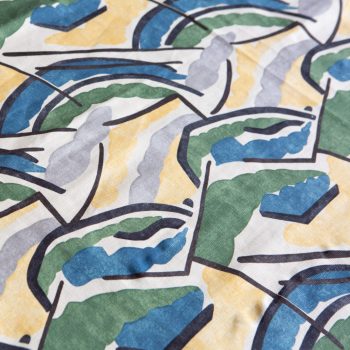
Charleston-10th-September-17-e1576065700402Pamela by Duncan Grant

My taxi driver brought me back to earth when he dropped me off at the station.  We had had a lively conversation about his travels throughout the states in the late 60’s.  As I was leaving, I told him that, unfortunately, we couldn’t shake hands given the Corona Virus.  He laughed and quickly gathered me in his arms.  I smiled tightly, horrified that he may have given me the dreaded disease.

At Charleston, I had bought the memoir of Vanessa Bell and Duncan Grant’s daughter Angelica Grant, Deceived With Kindness: A Bloomsbury Childhood which I began reading on the train.  Here I go again.  All the beloved biographies, letters, diaries, novels of Virginia Woolf pale in light of Angelica’s childhood- ignored or worse, treated as an adored object, not a human being.

Again, I say to myself, rubbish!  Might I be a narrow minded prig?.  Or if I’m kinder, one who suffers from too much empathy.  A student in a documentary film course I taught commented on the film selection,  “You seem to favor the underdog.”  Do I want to get submerged by this identification?  Yet that seems to be my subject: my French grandmother, a mixed race woman; my Irish grandmother living when “no dogs or Irish” were allowed; and a Greek grandfather, sometimes, called a dirty Greek.

I once said to someone that to be a writer, one had to be ruthless.  Am I up to the task? Has the air gone out of my red ballon, the book I’m chasing?

Saturday March 7

I traveled to Dublin without much difficulty, yet anxiety seeped in as more news of the corona virus emerged.  My doctor had urged me not to take this trip.  Was she right?  I considered abandoning Ireland, going straight home from London.  But not yet.


London Day 3 and 4

Wednesday March 4

Today the National Archives- a long haul.  First, a walk to the Russell Square Underground, taking the Piccadilly Line changing at Hammersmith to the District Line and 40 minutes later arriving at Kew Gardens.  Luckily, there were signs directing me to the National Archives and to a street of interesting terraced houses.

IMG_7504

In order to view documents, I was obliged to get a reader’s ticket which took some time.  Then, I worked with a librarian to navigate the databases.  My “French” grandmother whose family had lived in Martinique and Saint Lucia since 1690 had actually been a British citizen.  In the early 1900’s, she attended school in England with several of her sisters.  I was looking for the name of the school and evidence of her citizenship.

The librarian told me those papers if they existed would be in Saint Lucia not in the National Archives.  He suggested I go through Saint Lucian slave records since my relatives, who had been military officers, lawyers, and judges, most likely had slaves.  A bitter pill to swallow.  I spent the afternoon sadly perusing the available information and came across an 1822 protocol for selling slaves:

The slaves attached to any plantation are always to be sold together.  Personal slaves, unattached to plantations are always to be sold in such a manner as that the same person must become the purchaser of all such of the said personal slaves as bear to each of any of the following relations that is to say husbands and wives, parents and children.

Slavery was abolished in England in 1833 but some scholars believe it continued in Saint Lucia, then a part of Britain, until 1838.

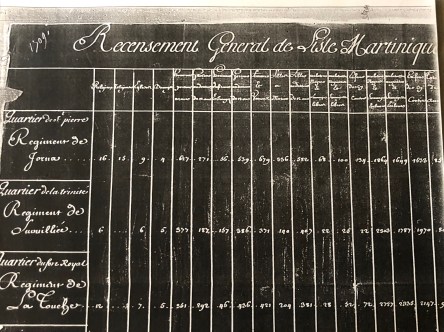
There was no mention of the name de Jorna.  Are they innocent?  I don’t think so.  The 1709 Martinque Recensement (Census) lists slaves held at a fort overseen by one of my relatives.  At the Quartier of Saint Pierre under the de Jorna regiment were 1864 enslaved negresses (Female) and 1649 negres (Males).   These terms were used from the colonial period until WWII after which they became racially charged.

IMG_7805

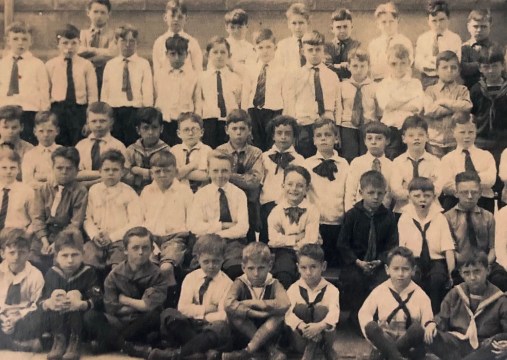
And so the prejudice, the belief that skin color determines value passes down from generation to generation- a diseased legacy.  My father listened to his Aunt Yia deride his darker skinned relatives and assumed the mantle- identification with the colonizers, slave holders, ennobled ancestors while denigrating his other birth right- skin color.  Yet, he was the dark face amongst a sea of white at Saint John’s Grammar School.

IMG_7819My father, Louis Zinis, 3rd row from the bottom, 4th from the left                            Saint John’s Grammar School, Orange. New Jersey, 1919       

My grandmother, his mother, must have been worried when she sent him off to first grade.

He’s in for a hard time even though I dress him better than all the other children in this backwater, cette ville de remous.  He is so charmant in his sailor shirt.  My sister Yia worries.  Sometimes when she looks at him, she shakes her head muttering, comme un negre.   He is the darkest of my children although in summer it’s hard to tell.  The girls could pass the other way, noires pas blanches.  But he must endure all those pasty Irish faces, hear their taunts- darky, jigaboo.  He’s a gentle boy but they will change him.

She was right.  Reinforced by his prep school, Saint Benedict’s in Newark, New Jersey, then a bastion of white males, he took on their racism, perhaps, hoping to distinguish himself from his grandmother, Noel de Jorna, listed as “colored” on her death certificate.  Or did he want to align himself with his Greek father who described his wife to Greek relatives as ” ma femme francaise noire,”  my black French wife?  But like most people of color, there is no real escape.  Years later my five year old son called to me excitedly: his grandfather, Papa Lou, was on television.   But it wasn’t my father: it was Louis Armstrong.

 Thursday March 5

The good weather didn’t hold: a rainy cold day.   Nevertheless, I was determined to walk to Poetry, a clothing store not far from Regents Park.  My umbrella spent more time inside out than it did protecting me from the rain.  After an hour or so, I made it to the Marylebone High Street, a surprising enclave of small winding streets with upscale stores.  As for purchases, no joy.

UnknownMarylebone High Street

Given the weather, I took a bus back to Bloomsbury intending to do some research at the British Library.  After getting a library card, I spent the day in one of the reading rooms looking for information on my Irish grandmother whose family were also British citizens during the 19th century.  I went through ancient (17th and 18th century) records of Roscommon County where my grandmother had lived looking for a familiar name.  Compiled by the British, they listed names as British or Irish.  No luck.

IMG_7547

The librarian directed me to another database where I found a last name I recognized: Beirne.  A Bridget Beirne was my great-great grandmother.   Down the rabbit hole I went.  In 1923, this Beirne had been a doctor in the village of Kilnamanagh where my great grandmother and great uncles had lived.  His correspondence was part of a large collection of Marie Stopes’ letters, the founder of the first birth control clinic in Britain.

He wrote of a client with an intact hymen who had managed to get pregnant.  Is this just a “condition” of rural Catholic Ireland?  But no, it’s possible.  There were other letters asking about a cervical cap she had recommended.  What did Dr. Beirne risk making such an inquiry while practicing in a country that prohibited birth control: to disobey was a mortal sin- and the consequence eternal hell.

Now I have library cards to all the public libraries in Paris, to the British Library, and to the British National Archives.  Overwhelming.  Where to concentrate my efforts?  Nana Daly from Ireland, Grand-mere de Jorna from Saint Lucia?  Pappous Zinis from Greece?


London Day 1 and 2

Monday March 2

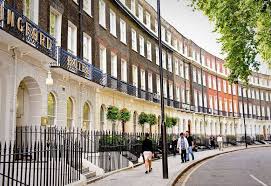
I flew from Charles de Gaulle to Gatewick without a hitch.  I had read that the black cabs of London cost the same as Uber.  Not true.  100 Euros later, I arrived at my hotel, the Crescent, located on Cartwright Gardens in Bloomsbury.   Since the Georgian building has no elevator, once the woman at registration saw my luggage, she opted to change my room to the ground floor overlooking a small courtyard.

Unknown-2Cartwright Gardens

By now it was almost 7: time for dinner.  Luckily Marchmont Street around the corner is home to a number of restaurants.  I settled on the most crowded: the Marquis Cornwallis, named after an 18th century merchantman ship dating back to the 1800’s.   Customers seat themselves, then, place their order at the bar.  When a waiter picked up the remains of my dinner, I asked if I had to return to the bar to order dessert.  “No, love. I’ll get it for you.”  Nothing like being addressed as “love” to feel less alone.

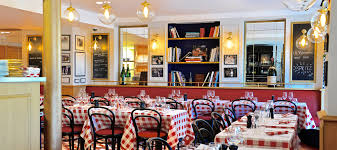
Unknown-3Marquis Cornwallis, Marchmont Street, Bloomsbury, London

Tuesday March 3

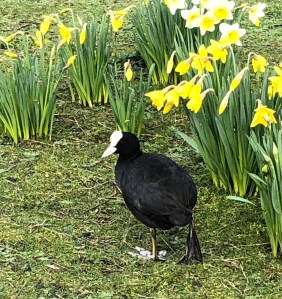
As my son Larry was in England on business, we planned to spend the day together.  And a lovely day it was.  We managed to have a full English breakfast at the Crescent and set off under a blue sky for the 1.5 mile walk to Regents Park which can be a paradise for bird watchers.  We were able to sight common coots and grey herons.

IMG_7488Common Coot

We spent an hour or more meandering through the park, crossing the bridge to the Japanese Garden Island, then on to Queen Mary’s Rose Garden, landing at the Regents Bar and Kitchen where we rested with a cup of coffee.

IMG_7498Weeping Willow at the ornamental lake of Queen Mary’s Garden

We used the Euston Road to return to Bloomsbury and made arrangements to meet at the Charles Dickens Museum later in the afternoon.  He remembered when he was eight that I was member of the Dickens Society in Philadelphia, so a visit seemed especially cogent.

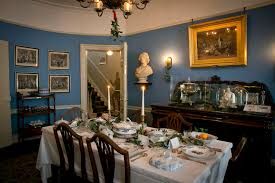
Unknown-4Dining Room, Charles Dickens Museum

We like to be flaneurs, walking and looking, without much planning.   After leaving the Dickens Museum, we set out in search for a coffee shop.  Somehow we ended up at Great James Street a few blocks away and came across Dorothy Sayers’ house (author of the Lord Peter Wimsey novels).  Eventually we made our way to Tutti’s Cafe, a small convivial coffee bar on the charming Lamb Conduit Street.

images-2Tutti’s Cafe, Lamb Conduit Street, London

Dinner was forgettable but the building was charming.  We did have an interesting conversation about writing and about this blog.  Larry calls the urge to create, the beautiful struggle.  He doesn’t think I’m revealing enough of that struggle.  Certainly, you won’t see it on this page.


Paris Day 15 and 16

Saturday, February 29

This morning I woke up exhausted after a good night’s sleep.  Do I have the corona virus or is it the ennui I seem to carry around?  Usually it dissipates after breakfast with the residents.  Today, overwhelmed by fatigue, I spent the day in bed and didn’t join the three women for dinner.

I tell myself there will be days of isolation and loneliness.  But why is it’s happening now?  I have stimulating conversations every morning, gatherings with artists in the evenings.  Although I have dinner alone each night, I’ve been very engaged.

IMG_7479                                                                 The last bouquet

I read my blog on Greece, written five years ago on the verge of a Fulbright.  I describe two days of staying in my Athen’s hotel room emerging only for a meeting one day and and a souvlaki the next.  Ennui is no stranger to me.   My expectations set me up for self-doubt.  I romanticize those that seem to have found their place especially the Bloomsbury group whose work I devoured many years ago, in particular,  Virginia Woolf.   Her country home with her writing shed surrounded by beautiful gardens, long walks along the downs, afternoons with writer’s and painters reading, discussing.  But like Samuel Beckett, she endured days of doubt, of mental anguish and, then, a swing to elation.  Her solution was suicide.  Perhaps, my urge to live on an island is a strategy to force me back on myself, to find my place.

Sunday, March 1

Today I feel alert, confidant, at home in Paris.  God, these extremes are exhausting.  

For my last full day in Paris (I leave for London tomorrow) I plan to have Sunday lunch at La Rotessirie d’Argent.  It faces the Seine two doors away from the famous Tour d’Argent, and next door to it’s bakery, Le Boulanger de la Tour.  I pass by frequently crossing the Pont de la Tournelle over to the right bank.  One day, I stopped to buy mini croissants.  Ils etaient parfaits.  The idea of eating roast chicken on a Sunday afternoon is part of a long tradition of Sunday dinner with Maman in which I long to participate.

UnknownLa Rotisserie d’Argent

On my way to breakfast one of the administrators of the Centre Culturel Irlandais caught up with me and asked if I still planned to attend the book club she had mentioned when I first arrived.  I thought I could  fit it in with my roast chicken.  But this was no intimate group meeting for an hour, this was a formal meeting known as Cercle Litteraire Irlandais (Irish Literary Circle) lasting three hours with drinks, food, a program and over 100 attendees.  There were speakers including Deirdre Farrell, Deputy Head of Mission at the Irish Embassy in Paris, and Lara Marlow, France correspondent for The Irish Times, as well as mediatations, readings, and even a group writing exercise.  It was a celebration of International Women’s Day.

Lara Marlowe in her keynote address discussed three women who inspired her: Iranian Nasrin Sotudeh, French Berthe Morisot, and American Edith Wharton.  All three defied their respective roles: Sotudeh, a lawyer, represented women who refused to wear the hijab, Morisot became a well-respected painter, the only women to exhibit in the first impressionist show in 1874, and Edith Wharton wrote novels becoming the first woman to win the Pultizer Prize for Literature in 1921 instead of being a doyenne in her privileged social circle.  My question to Ms. Marlowe was where are the Irish women of the 19th century without upper class privileges who fought against stereotypes to become artists in their own right.  She and the audience were stumped.

images   Nasrin SotudehUnknown-1Berthe Morisotimages-1Edith Wharton

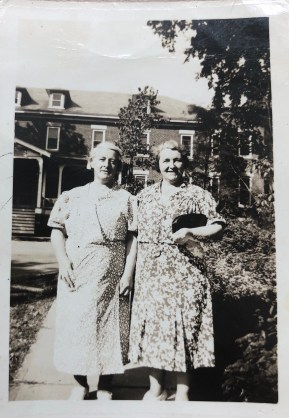
 Then we were asked to write about a woman we admired.  I chose Molly Daly, my grandmother.  She lived in Ireland for 13 years without her mother.  She returned to the United States only to be teased relentlessly about her brogue.  She married an alcoholic whose family thought she was “shanty Irish.”  When he died leaving her with two children to raise, she often brought in family members who had no where else to go.  When her children married, she moved in with them usually with no room of her own, sleeping on a daybed in the dining room.  And she never complained.  Her solace, reading her prayer book and saying her rosary.

IMG_7779

Molly Daly on the right


Paris Day 13 and 14

Thursday February 27

At breakfast, we (the three female artists in residence and I) discussed Freudian and Jungian theory.  Each woman artist found Jung insightful.  I have my doubts: I’m skeptical of theories that have little basis in data but seem to be fabrications of the theorists’ world view.  Considering that Freud and Jung believed women were the lesser sex and lived in a world that supported that notion, how can I subscribe to their ideas?

My breakfast companions observed that many artists find Jung of value.  I know Samuel Beckett who once lived around the corner at Rue d’Ulm found him useful in the writing of his novel Murphy.  As Deirdre Bair, Beckett’s biographer explains,

The patient sinks into the unconscious altogether and becomes completely victimized by it.  He is the victim of a new autonomous activity that does not start from his ego but starts from the dark sphere.  

Beckett found a way to explore the protagonist’s, Murphy’s mind.

I posed the question why there wasn’t a woman analyst with the same recognition as Freud and Jung.  Interesting as men were raised by women.  How does that affect their theories and practices?

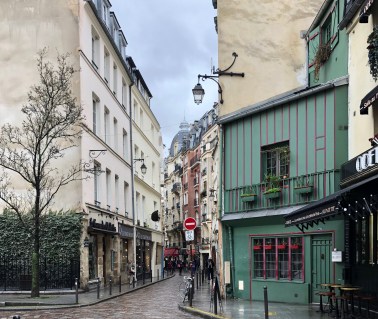
One of the artists mentioned the book, Drive Your Plow Over the Bones of the Dead by the Nobel Prize winner, Olga Tokarczuk.   Her description excited me perhaps because the main character is a reclusive- a life that appeals to me.  I wanted to read it immediately.  The closest bookstore with English language books is Shakespeare and Company which I usually avoid as it’s a tourist trap.  To get there I had to walk down Rue Galande a charming street once an old Roman road, then, inhabited in the 15th Century.

IMG_7443Rue Galande

After I returned to the Irish Cultural Center, I got ready to go out again, this time, to the Bibliotheque Historique de la Ville de Paris located in the Marias.  It has a beautiful reading room where I hoped to spend the afternoon writing.  On my way out, one of the artists asked if I’d like to go to the kitchen and finish off the pastries from the night before.  Mais oui!

While we were feasting, we met a filmmaker, Norah Dineen, who had been living on the third floor for over a month but never seen by any of us.  She can no longer afford to stay and would be couch surfing until some monies “turned up” to finish her film.  It’s subject is love in three cities: Berlin, Athens, and Los Angelos.  Whenever, she makes a film, she lives in the country for a month, immersing herself before writing, casting, and filming.  That’s the way to do it.  I’m just getting settled and I have to leave.  Why do I think I can just drop down in Paris and begin?

The rest of the afternoon was spent in libraries.  At the Bibliotheque Historique de la Ville de Paris,  I had to get a library card in order to use the facilities which entitled me to all the public libraries in Paris.  Magnifique!  However, the woman assisting me decided to go beyond issuing a card: she would help me with my research.  What was I looking for?  What names did I have?  I was unprepared as we went from French to English to French.  All very confusing.  She assured me there was nothing there for me as she quickly went through databases, none of which I understood.

UnknownReading Room  Bibliotheque Historique de la Ville de Paris

Back to the mediatheque (a library with digital access) at the Irish Cultural Center.  As my great grandfather was a physician, it might mean he had attended a medical school in Paris.  I told the librarian I now had a library card and asked if there were records of 19th century medical students studying in Paris.   He found that the National Archives did have such a list which could only be accessed at the Archives themselves.  A plan for tomorrow.  I moved on to my Irish side and took out Social Change and Everyday Life in Ireland, 1850-1922.  It provided some interesting information on clothing, education, farming.

I ended the day with another writer from the center.  We met for coffee at Numero 220 on Rue Saint Jacques.  Her local.  Delicious coffee and a friendly owner.  She thinks someone should write a novel about women of a certain age- their struggle to be independent, that is, from familial demands.  Saying no to requests poses problems.

Unknown-1Numero 220

Friday February 28

Several of the artists have come to the end of their residency, so we arranged for a farewell dinner Saturday night.

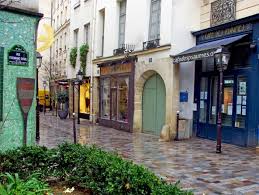
I needed a pair of jeans, and, on my way to the National Archives, went to Cos, a clothing store in the Marais.  Success.   Since it was Fashion Week, the narrow streets were crowded.  Before people entered the shows, they were given an electronic temperature reading to exclude those who might have the coronavirus.  Many Italians were there although there had been were rumors that a travel ban on trains from Italy might be forthcoming.

I saw a small elderly woman and her companion making their way towards me.  I pushed myself against the building to give them room.  As they passed, this “frail” woman elbowed me- hard.  I turned towards her as she walked away, dumbfounded.  Then she cursed me.  I replied “Vous n’etes pas tres gentile Madame.” You are not very nice, Madame.

Unknown-3                                                           Rue des Rosiers

Although I had success buying a pair of jeans, my luck didn’t hold at the Archives. The receptionist informed me that I was at the wrong library.  This library only had records from before the revolution, that is, before 1789.  I asked if the correct library was open tomorrow, Saturday.  Yes, she said but the request for records had to be put in before 3:00 P.M. today.  It was 2:58.  I had forgotten the rules which I had once known by heart when I used the Archives d’outre Mer in Aix en Provence.  A bust.

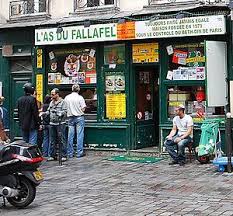
But not completely.  I got the best fallafel in Paris.  No room at the inn, so I leaned against a building and chowed down.  Delicieux.

Unknown-4L’As du Fallafel