London Day 5 and 6

Friday March 6

Today was spent at Charleston once the home of Vanessa Bell and Duncan Grant, now maintained by the Charleston Trust.  I made the same trip that they and their friends often made from Bloomsbury, taking the train from Victoria Station to Lewes, then, for me, a taxi to Charleston.  I almost missed the train: on the one designated for Lewes, people seemed to be getting off rather than getting on.  I left the cabin looking for answers and found the driver of the train.  The platform had been changed at the last minute.  He led me and the other passengers to the correct location and soon after, the one hour trip to Lewes began.

Unknown-2Victorian Station

Train travel, even short journeys such as this, have been a time of contemplation, even revelation, for me.  This morning, I again considered what my son had called the “beautiful struggle,” the attempt to create.  Beautiful would not be the term I would use for my particular battle.

Everything has come into question, especially what I once told my daughter: if I don’t write, if I don’t travel, I’ll shrivel up and die.  Is that what is happening?  I could find outside sources to blame: President Trump, the corona virus, not having a place of my own.  Yet, how can I fault the Irish Cultural Center: a large room, a communal breakfast, invitations to events, a courtyard for writing in good weather?  No.  What about my small hotel room in Bloomsbury?  It too looks out on a courtyard, it too gives me breakfast, and it too has an ideal location.  Why there is even a cinema around the corner showing interesting films and serving drinks at it’s two bars.

The rosy colored lens through which I viewed life seems to have been replaced by clear or even jaundiced ones.

This worm turning in on me began when I read Deirdre Bair’s Parisian Lives, a memoir of writing Samuel Beckett’s and Simone de Beauvoir’s biographies.  Both writers come across as suffering from extreme self-involvement.  Suddenly, I couldn’t read them or admire them.  Now I’m confronted with my own rigidity.  Why should their foibles have anything to do with my own work?  Why has de Beauvoir’s or Beckett’s work become tainted by their mean spirited personalities?   Rubbish me thinks.

12RIDING-COMBO-jumbo                                Simon de Beauvoir                             Samuel Beckett

Might Charleston rescue my interest in writers, in artists?

After a convivial taxi ride, I entered the front garden- restored.  Inside the house, each room filled me with pleasure.  So well arranged to enjoy life: the seemingly casual art, the lamps placed just right for reading, the tables for writing, the studios for painting.

Garden-Room-14-Axel-Hesslenberg-245x360The Garden Room

Maynard_Keynes_Room-_4-540x360  Maynard Keynes’s Bedroom

The gardens filled me with wonder and longing.  Organized beauty that appears natural, not designed, full of grace.  Supposedly, Vanessa Bell and Duncan Grant wrote to each other frequently about such matters.

IMG_7607A view from the kitchen garde

Beyond the house is a museum, a dining area in a restored barn, and a shop.  I was enthralled.  I imagined living here: it suited me.  I felt at home.  I contemplated buying fabric, a direct duplicate of those used on chairs and beds in the house.  Duncan Grant’s art fits comfortably inside my eyes, my brain.
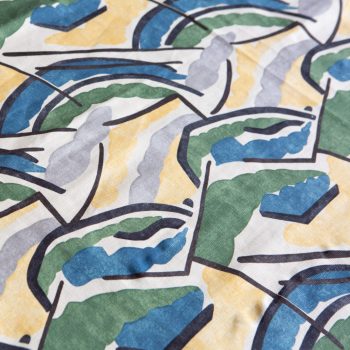
Charleston-10th-September-17-e1576065700402Pamela by Duncan Grant

My taxi driver brought me back to earth when he dropped me off at the station.  We had had a lively conversation about his travels throughout the states in the late 60’s.  As I was leaving, I told him that, unfortunately, we couldn’t shake hands given the Corona Virus.  He laughed and quickly gathered me in his arms.  I smiled tightly, horrified that he may have given me the dreaded disease.

At Charleston, I had bought the memoir of Vanessa Bell and Duncan Grant’s daughter Angelica Grant, Deceived With Kindness: A Bloomsbury Childhood which I began reading on the train.  Here I go again.  All the beloved biographies, letters, diaries, novels of Virginia Woolf pale in light of Angelica’s childhood- ignored or worse, treated as an adored object, not a human being.

Again, I say to myself, rubbish!  Might I be a narrow minded prig?.  Or if I’m kinder, one who suffers from too much empathy.  A student in a documentary film course I taught commented on the film selection,  “You seem to favor the underdog.”  Do I want to get submerged by this identification?  Yet that seems to be my subject: my French grandmother, a mixed race woman; my Irish grandmother living when “no dogs or Irish” were allowed; and a Greek grandfather, sometimes, called a dirty Greek.

I once said to someone that to be a writer, one had to be ruthless.  Am I up to the task? Has the air gone out of my red ballon, the book I’m chasing?

Saturday March 7

I traveled to Dublin without much difficulty, yet anxiety seeped in as more news of the corona virus emerged.  My doctor had urged me not to take this trip.  Was she right?  I considered abandoning Ireland, going straight home from London.  But not yet.


London Day 3 and 4

Wednesday March 4

Today the National Archives- a long haul.  First, a walk to the Russell Square Underground, taking the Piccadilly Line changing at Hammersmith to the District Line and 40 minutes later arriving at Kew Gardens.  Luckily, there were signs directing me to the National Archives and to a street of interesting terraced houses.

IMG_7504

In order to view documents, I was obliged to get a reader’s ticket which took some time.  Then, I worked with a librarian to navigate the databases.  My “French” grandmother whose family had lived in Martinique and Saint Lucia since 1690 had actually been a British citizen.  In the early 1900’s, she attended school in England with several of her sisters.  I was looking for the name of the school and evidence of her citizenship.

The librarian told me those papers if they existed would be in Saint Lucia not in the National Archives.  He suggested I go through Saint Lucian slave records since my relatives, who had been military officers, lawyers, and judges, most likely had slaves.  A bitter pill to swallow.  I spent the afternoon sadly perusing the available information and came across an 1822 protocol for selling slaves:

The slaves attached to any plantation are always to be sold together.  Personal slaves, unattached to plantations are always to be sold in such a manner as that the same person must become the purchaser of all such of the said personal slaves as bear to each of any of the following relations that is to say husbands and wives, parents and children.

Slavery was abolished in England in 1833 but some scholars believe it continued in Saint Lucia, then a part of Britain, until 1838.

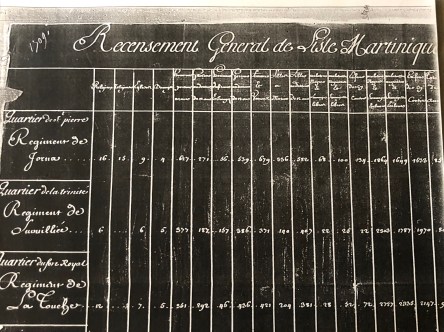
There was no mention of the name de Jorna.  Are they innocent?  I don’t think so.  The 1709 Martinque Recensement (Census) lists slaves held at a fort overseen by one of my relatives.  At the Quartier of Saint Pierre under the de Jorna regiment were 1864 enslaved negresses (Female) and 1649 negres (Males).   These terms were used from the colonial period until WWII after which they became racially charged.

IMG_7805

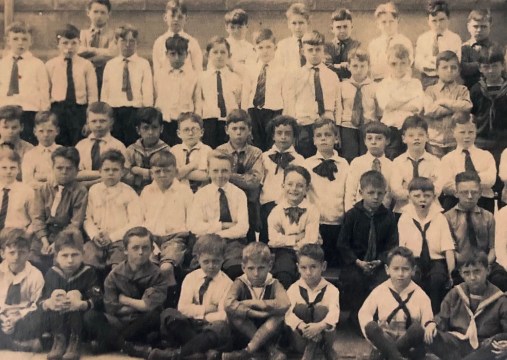
And so the prejudice, the belief that skin color determines value passes down from generation to generation- a diseased legacy.  My father listened to his Aunt Yia deride his darker skinned relatives and assumed the mantle- identification with the colonizers, slave holders, ennobled ancestors while denigrating his other birth right- skin color.  Yet, he was the dark face amongst a sea of white at Saint John’s Grammar School.

IMG_7819My father, Louis Zinis, 3rd row from the bottom, 4th from the left                            Saint John’s Grammar School, Orange. New Jersey, 1919       

My grandmother, his mother, must have been worried when she sent him off to first grade.

He’s in for a hard time even though I dress him better than all the other children in this backwater, cette ville de remous.  He is so charmant in his sailor shirt.  My sister Yia worries.  Sometimes when she looks at him, she shakes her head muttering, comme un negre.   He is the darkest of my children although in summer it’s hard to tell.  The girls could pass the other way, noires pas blanches.  But he must endure all those pasty Irish faces, hear their taunts- darky, jigaboo.  He’s a gentle boy but they will change him.

She was right.  Reinforced by his prep school, Saint Benedict’s in Newark, New Jersey, then a bastion of white males, he took on their racism, perhaps, hoping to distinguish himself from his grandmother, Noel de Jorna, listed as “colored” on her death certificate.  Or did he want to align himself with his Greek father who described his wife to Greek relatives as ” ma femme francaise noire,”  my black French wife?  But like most people of color, there is no real escape.  Years later my five year old son called to me excitedly: his grandfather, Papa Lou, was on television.   But it wasn’t my father: it was Louis Armstrong.

 Thursday March 5

The good weather didn’t hold: a rainy cold day.   Nevertheless, I was determined to walk to Poetry, a clothing store not far from Regents Park.  My umbrella spent more time inside out than it did protecting me from the rain.  After an hour or so, I made it to the Marylebone High Street, a surprising enclave of small winding streets with upscale stores.  As for purchases, no joy.

UnknownMarylebone High Street

Given the weather, I took a bus back to Bloomsbury intending to do some research at the British Library.  After getting a library card, I spent the day in one of the reading rooms looking for information on my Irish grandmother whose family were also British citizens during the 19th century.  I went through ancient (17th and 18th century) records of Roscommon County where my grandmother had lived looking for a familiar name.  Compiled by the British, they listed names as British or Irish.  No luck.

IMG_7547

The librarian directed me to another database where I found a last name I recognized: Beirne.  A Bridget Beirne was my great-great grandmother.   Down the rabbit hole I went.  In 1923, this Beirne had been a doctor in the village of Kilnamanagh where my great grandmother and great uncles had lived.  His correspondence was part of a large collection of Marie Stopes’ letters, the founder of the first birth control clinic in Britain.

He wrote of a client with an intact hymen who had managed to get pregnant.  Is this just a “condition” of rural Catholic Ireland?  But no, it’s possible.  There were other letters asking about a cervical cap she had recommended.  What did Dr. Beirne risk making such an inquiry while practicing in a country that prohibited birth control: to disobey was a mortal sin- and the consequence eternal hell.

Now I have library cards to all the public libraries in Paris, to the British Library, and to the British National Archives.  Overwhelming.  Where to concentrate my efforts?  Nana Daly from Ireland, Grand-mere de Jorna from Saint Lucia?  Pappous Zinis from Greece?


Paris, Day One

Saturday, February 15

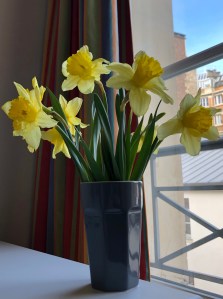
F5E21414-6138-4CFE-9891-3426E2E46EC4                                     My first flowers: Centre Culturel Irlandais
I’ve been busy proclaiming my intention to write a book.  Staying at the Irish Cultural Center in Paris often means people “want to know,” that is, what are you up to?   Not only does the Center have artists in residences, it attracts fellow travelers: writers and would be writers.  I explain to those who ask that I’m working on a “project.”  If more is required, I describe the book I aiming to create.  “It’s an exploration of my grandparent’s experience as immigrants, background history of the times, anthropological theory, and fiction.”  This idea sounds ridiculous to my ears let alone theirs.  But I say it none the less.  As I told one of the administrators who politely inquired, “I admit to what I’m doing as a way of keeping my feet to the fire.”   To another inquisitive writer, I lamented that since the book encompasses vast amounts of material, the notion of sorting through it overwhelms me.  She described her approach as plowing through and seeing where it leads.  I agree.  What choice do I have?

I managed to avoid my nemesis, the blank page, by searching for a set of glasses: one for flowers, one for drinking, one for toothbrush and toothpaste, one for pens and pencils.  But this is Paris where like stores often live side by side: book stores, furniture stores, plumbing stores, sock stores.  I thought I was up to locating the street of houseware “magasins”: this is not my first foray.  But after several turns around the neighborhood, no success.  What to do?   I knew the Monoprix on Boulevard Saint Michel didn’t have them.  Been there, done that.  Then, I remembered the outlet or overstock stores catty corner to the Luxembourg Gardens.   I purchased two which fit the bill and was able to buy L’Official, the weekly bible of goings on in Paris, at the kiosk.  Now I can avoid that blank page by perusing all that Paris has to offer.

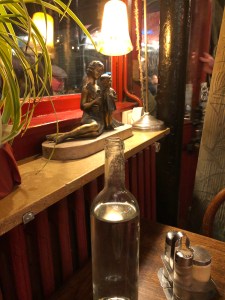
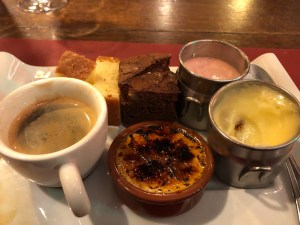
Having walked five miles and been awake for 36 hours, I made it home, had a long nap, and, then, a very good dinner at my old stomping grounds, La Méthode.

CF3E1E7F-C12C-4686-829B-026D05B69378
Finishing with an impressive cafe gourmand.
265E4CF3-1780-499F-A4AF-F9D00778A704
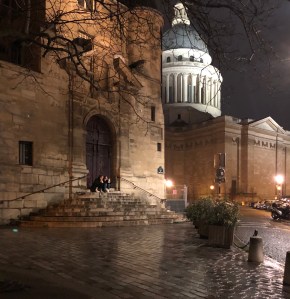
Then, a walk home.  Pas mal.
2F5EE645-EF40-4EA6-B77C-34280FE798A4