February
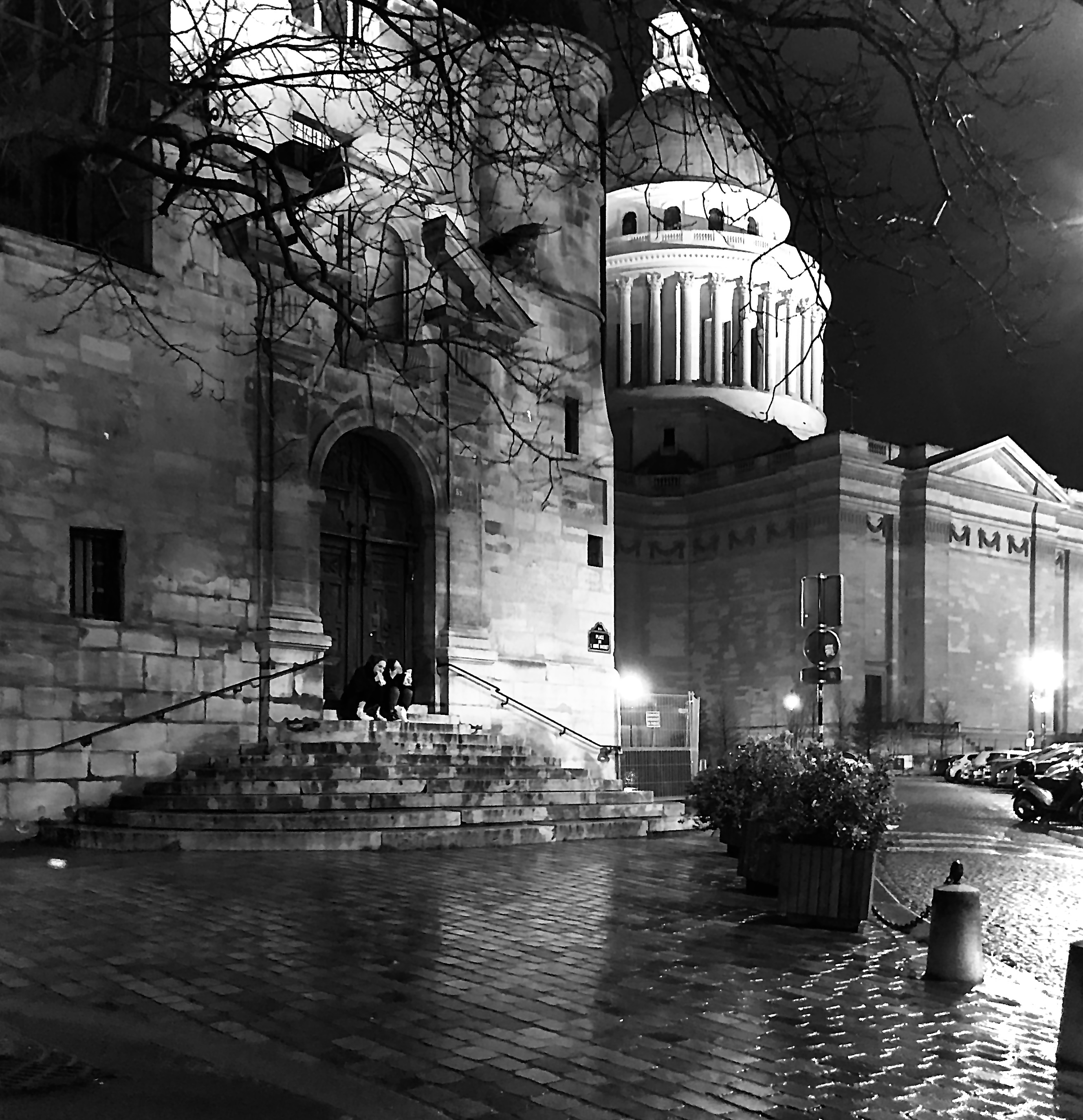
Just a year ago, my doctor warned me not to go to Paris. I ignored her and went anyway, February 14-28 before all hell broke loose and the pandemic took hold.
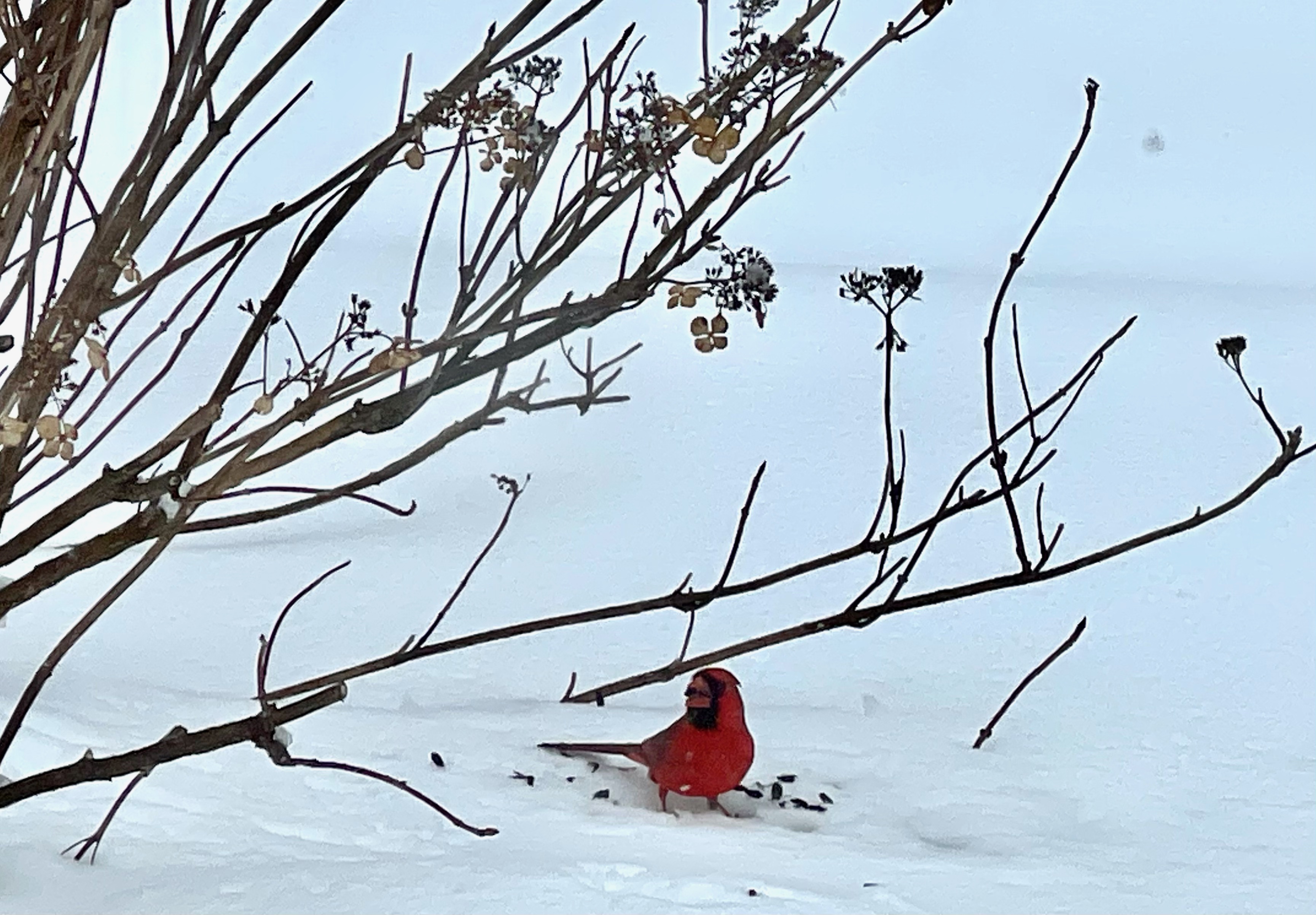
A year later, I look out my kitchen window during a snow storm: a male cardinal searches among the sunflower seeds I broadcasted this morning.
March
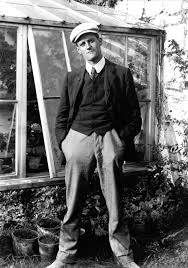
The dilemma of the artist as a monster haunted me this year. Can their art rise above their monstrous behavior? In Edna O’Brien’s brief biography of James Joyce, she proclaims that, indeed, the artist must be a monster.
It is a paradox that by wrestling with language to capture the human condition they become more callous, and cut off from the very human traits which they glisteningly depict.
Vanessa Springora’s memoir Consent portrays her affair at age 14 with the writer Gabriel Matzneff then 49. She poses this question.
If it is illegal for an adult to have a sexual relationship with a minor, why is it tolerated when it is perpetuated by a representative of the artistic elite- a photographer, writer, filmmaker, or painter? It seems that an artist is of a separate caste, a being with superior virtues, granted the ultimate authorization, in return for which he is required only to create an original and subversive piece of work.
Were these so called artists really creating great art or was Joyce’s Ulysses, for example, revered because as Springora asserts, it was original and subversive. Is that enough?
For me there is no question about Woody Allen. His predatory behavior towards young women has made his films unwatchable. Joyce’s determination to create situations that fed his writing seems questionable when applied to his wife, Nora. He tried to maneuver an affair between her and a family friend in order to write authentically about Leopold Bloom, the cuckolded hero of Ulysses.
Of course Joyce didn’t seduce teenagers although one wonders about his attachment to his daughter who later went mad.
I spoke to an Irish friend about Joyce. She believes he rescued Irish literature, stealing it back from the British. Serendipitously, a course on Ulysses was being offered locally. It was time I took him on. And so began my odyssey in search of “sunny Jim,” his family moniker.
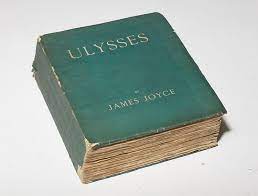
Joyce spends 644 pages following Leopold Bloom as he makes his way through Dublin on June 16 1904. Hard, hard, very hard. I fall asleep after an hour or two of reading. So much in each chapter, each paragraph, each sentence. Latin, German, French, Italian, Irish literature, Irish politics, Irish mythology, literary history, and more and more and more. No detail of Bloom’s day goes unattended from reading a newspaper in the outhouse to pissing with Stephen Dedalus in his back yard. I, sometimes, feel I’m in a storm of words without an umbrella. And yet. And yet.
Dear reader, I was rescued. Reading Ulysses put this past year in perspective. I could spend weeks on one chapter, the layers of meaning as dense as the everyday details of the characters’ lives that fill the novel. Joyce celebrates it’s minutiae, no matter how small- a fart, a smell, the taste of gizzards, the pleasure of walking in “happy warmth.” Humanity in all it’s glory and frailty.
Bloom ends the day somewhat triumphantly. An ordinary man saddened by his wife Molly’s sexual betrayal but raised up by that wife’s very words. Molly has the final say- assessing the day, assessing Bloom, and bringing the novel to a close.
Molly can take a dim view of males.
...itd be much better for the world to be governed by the women in it you wouldnt see women going and killing one another and slaughtering when do you ever see women rolling around drunk like they do or gambling every penny they have and losing it on horses yes because a woman whatever she does she knows where to stop sure they wouldnt be in the world at all only for us…
She takes her husband to task, citing some of his faults: how he eats, how he deludes himself, how he makes love. But she also rises him up.
…he said I was a flower of the mountain yes so we are flowers all a womans body yes that was one true thing he said in his life and the sun shines for you today yes that was why I liked him because I saw he understood or felt what a woman is…
From Joyce’s perspective, like Bloom, we all are heroes in our own lives just by getting to the end of the day. Now we’ve managed to get to the end of the year, at least those of us who are lucky enough to be alive.
Molly’s soliloquy begins with “Yes” and ends with “Yes,” an affirmation of life. I’ve heard the sermon from 7 Eccles Street home to Leopold and Molly Bloom. Yes. I’m taking back what I often ignored or half-heartedly attended to over the years- yard work, house repairs, painting, sewing, cooking, canning, writing. What was I waiting for? Was it Sunny Jim? Literature can do that. Yes!
 An Itinerant Woman