June and July

June

A sensuous month. The peonies have blossomed, the wisteria is climbing, the sour cherries are ripe. Each morning, I monitor the cherry tree. Last year, after a day at the beach, I found the tree picked clean. Had thieves robbed my tree? Yes, birds and squirrels. This year, I keep a vigil over several days as the cherries rippen, gathering bowls until I have picked the tree clean.

Then the real work begins, pitting the cherries for freezing or pie making. Sour cherries are small,: they don’t give up their innards easily. After hours of work, I have just enough for a pie, the chore savored for the yearly pleasure of gathering and eating.

Days later, I manage a peaceful walk on the canal. I arrived late in the afternoon and avoided maskless ramblers. The yellow light of New Jersey’s humid summers penetrated the canal banks. A Great Blue Heron crossed paths with me which bodes well, a much needed talisman.

IMG_7983

Great Blue Heron Delaware and Raritan Canal Kingston, New Jersey

July

Every summer I swim at the public pool 4 or 5 times a week from Memorial Day to Labor Day. This year the virus threatened to close that source of pleasure. Day after day, I anxiously scanned my emails for news as the recreation department debated if and when to open the pool. Finally, they announced the opening date- July 13th. .

I debated whether swimming laps was a good idea, but my love of swimming won out. I swim between 10 and 12 A.M. when the pool is open for seniors and lap swims. During those hours, it is divided into three parts. The center has three lap lanes, slow, medium, and fast. The left side of the pool is open to walkers and swimmers not ready to take on laps. The right side of the pool is used for children’s swimming lessons. Eight swimmers per lap lane was allowed. To my way of thinking, swimming in those lanes would mean close contact with open mouths during a pandemic. I would only swim along the walls of the pool where I wouldn’t risk facing another swimmer.

images

Princeton Community Park Pool

Securing a spot meant arriving 45 minutes early in order to be the first or second person in line. Once the gate were open, I showed my membership card, raced down the lawn, tore off my mask, donned my bathing cap, and stood at the end of the pool, claiming my territory. Often swimming was complicated as I negotiated space with bathers resting against the side of the pool, gathering in groups, or swimming haphazardly with their noodles and finding their way into my lane. But mostly the “seas” parted and I managed my half mile. Swimming consumed my mornings: getting ready to go swimming, waiting in line to go swimming, swimming for an hour, going home to undo the chemical remnants of swimming, and finally sustenance, eating breakfast at noon.

Green lawns surround the pool with oak trees providing shade. One day as I was doing a lap, I glanced at the largest oak and felt it reach out to me, comforting me as it’s leaves slowly swayed in the wind. Was that a smile? Having never experienced interspecies communication, I questioned my loose grip on sanity. But no, my next lap past the oak convinced me I had been consoled. Some might label this experience delusional. Maybe, maybe not. After all trees “talk” to on another sharing information on water and food, helping each other. Perhaps this particular “arbre” chose to help me survive another pandemic day.

I’m making this entry on a dark December evening 272 days since the pandemic began for me. I need the consolation of picking cherries, seeing a Great Blue Heron, swimming daily. I need the solace of a kindly oak tree.

Looking for Rachel Day 6

Friday, September 7

Our last day to explore and a full one.  First, a search for the Rachel Carson Salt Pond Preserve and, then, the Pemaquid Light House.   On Route 32 in New Harbor, we see the sign for the Preserve but no entry point.   After questioning a passerby, we are directed to park on the side of the road.   We walk down to the pond that looks out on Muscongus Bay- a favorite spot of Carson’s and an inspiration for her book, The Edge of the Sea where her description of tide pools waxes poetic:

“The pools have many moods.  At night they hold the stars and reflect the light of the Milky Way as it flows across the sky above them.”

and in the next paragraph,

“By day there are other moods.  Some of the most beautiful pools lie high on the shore.  Their beauty is the beauty of simple elements- color and form and reflection.”

Unlike Rachel, we didn’t see treasures in the pond but did sight a Great Blue Heron.  In an earlier book,  Under the Sea Windshe places birds in the “ebb and flow” of life:

“To stand at the edge of the sea, to sense the ebb and the flow of the tides, to feel the breath of a mist moving over a great salt marsh, to watch the flight of shore birds that have swept up and down the surf lines of the continents for untold thousands of years… is to have knowledge of things that are as nearly eternal as any earthly life can be”.

IMG_4842

We go south to reach Pemaquid Light House located at the entrance of  Musgongus Bay across the sea from Monhegan Island.  We were not alone as we had been at the salt pond.  Many are drawn to the Light House, the store, the restaurant, the Fisherman’s Museum, the art gallery, the dramatic views.   We enjoyed them all.

We took in the view after perusing the store, then explored the light house, finishing off at the museum.   A fisherman was available for questions in one of the rooms where an 80 year old lobster shell graced the wall.  When I told him I preferred the old fashioned lobster rolls made with small bits of lobster, not like what we find today, overstuffed with giant pieces of meat, he looked stunned, then smiled wryly.  “Well, we’re just happy to have something good to eat. The more the better when you’re hungry.”  Put me in my place where I deserved to be.

IMG_4869


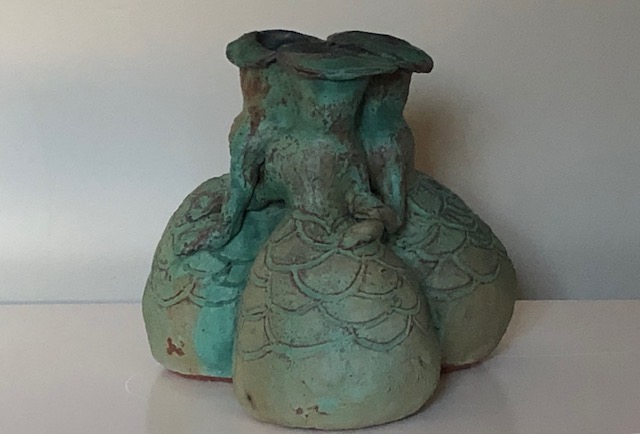
My friends surprised me with a piece of pottery or is it sculpture bought at the Pemaquid Art Gallery.  It is surely art, made by Trudi Curtis.  The person managing the gallery called her so I could thank her personally.  Ms. Curtis is in her 90’s and was pleased I was so taken with her piece.  She explained that she can’t see as well or be as active as she once had been, but her work which she can do makes most days worthwhile and perhaps joyful.

IMG_5300

We return to the house, our last night.  We pack and clean.  Karen and I decide to make one more attempt to reach the shore below the house, the shore Carson treasured and where she spent so much time.  In her dedication to Dorothy and Stanley Freeman for The Edge of the Sea, she wrote,

“To Dorothy and Stanley Freeman who have gone down with me into the low tide world and have felt its beauty and its mystery.”

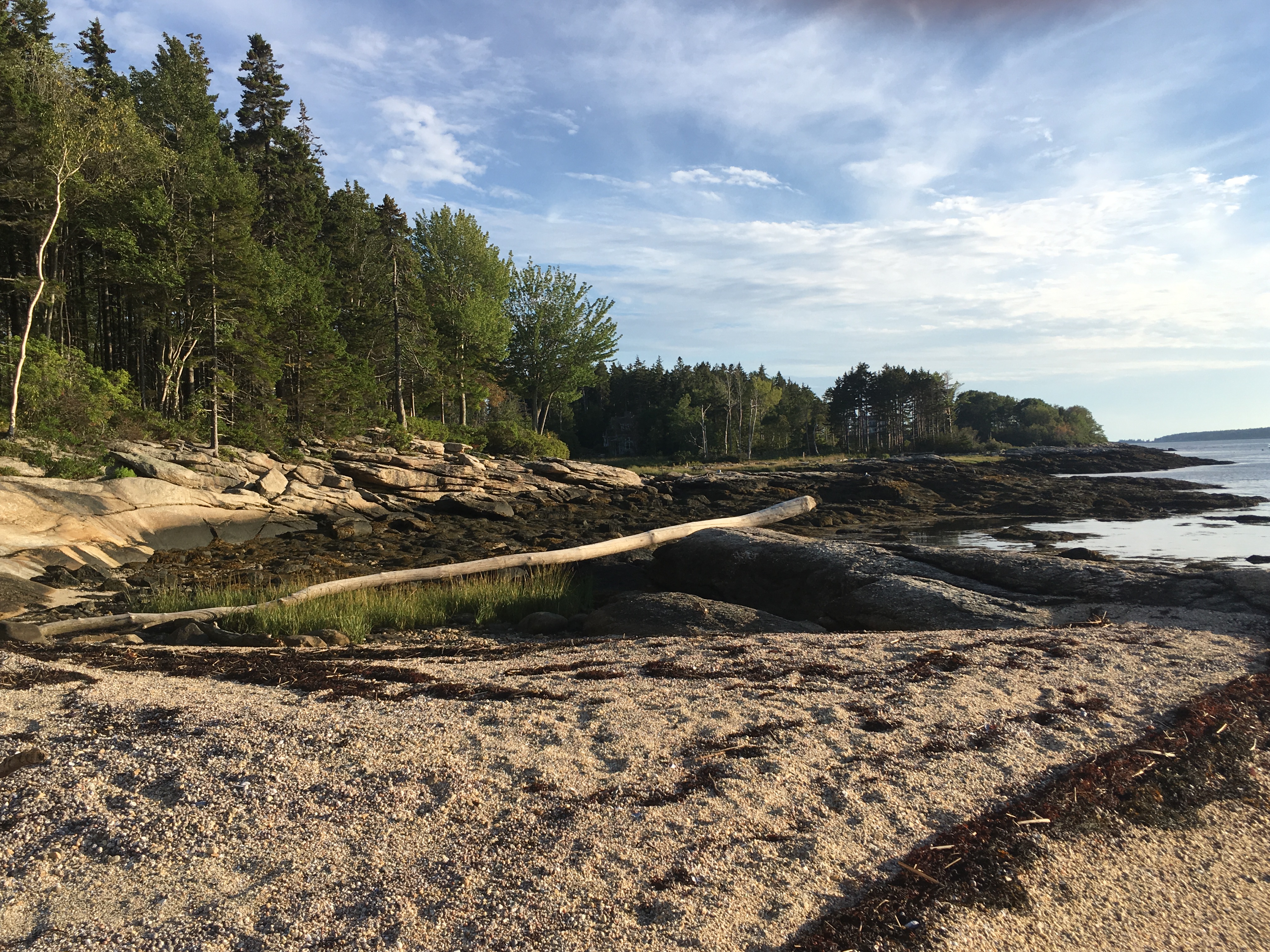
We made our way cautiously, carefully, holding on to tree limbs, sometimes walking sideways, sometime sliding on our backsides.  We were rewarded; the drama of the terrain, the light off the water, the hundreds of periwinkles.

IMG_4912

Periwinkles on Rachel Carson’s beach

In Lear’s biography she mentions a letter to Curtis and Nellie Lee Bok where Carson describes the lost woods, that piece of land she and Dorothy hoped to preserve, mentioning periwinkles perhaps seen on this very beach .

“It’s charm for me lies in its combination of rugged shore rising in rather steep cliffs for the most part, and cut in several places by deep chasms where the storm surf must create a magnificent scene.  Even the peaceful high tides explore them and leave watermark of rock weeds, barnacles, and periwinkles.  There is one unexpected, tiny beach where the shore makes a sharp curve and there is a protective jutting out of rocks….

IMG_4921

Another gift from Rachel.