I am a professor of film and literature in the United States as well as being part Greek. My grandfather was born in Kastellia, north of Delphi. The first time I visited his village, my uncle, his brother, said that the night before he had dreamed that the moon had told him I would be visiting. Although I speak little Greek, I feel at home in Hellas.
Presently, Greece is in crisis. As I travel through the country this month and next year when I will be a Fulbright scholar, I want to know how the Greeks are managing their lives.
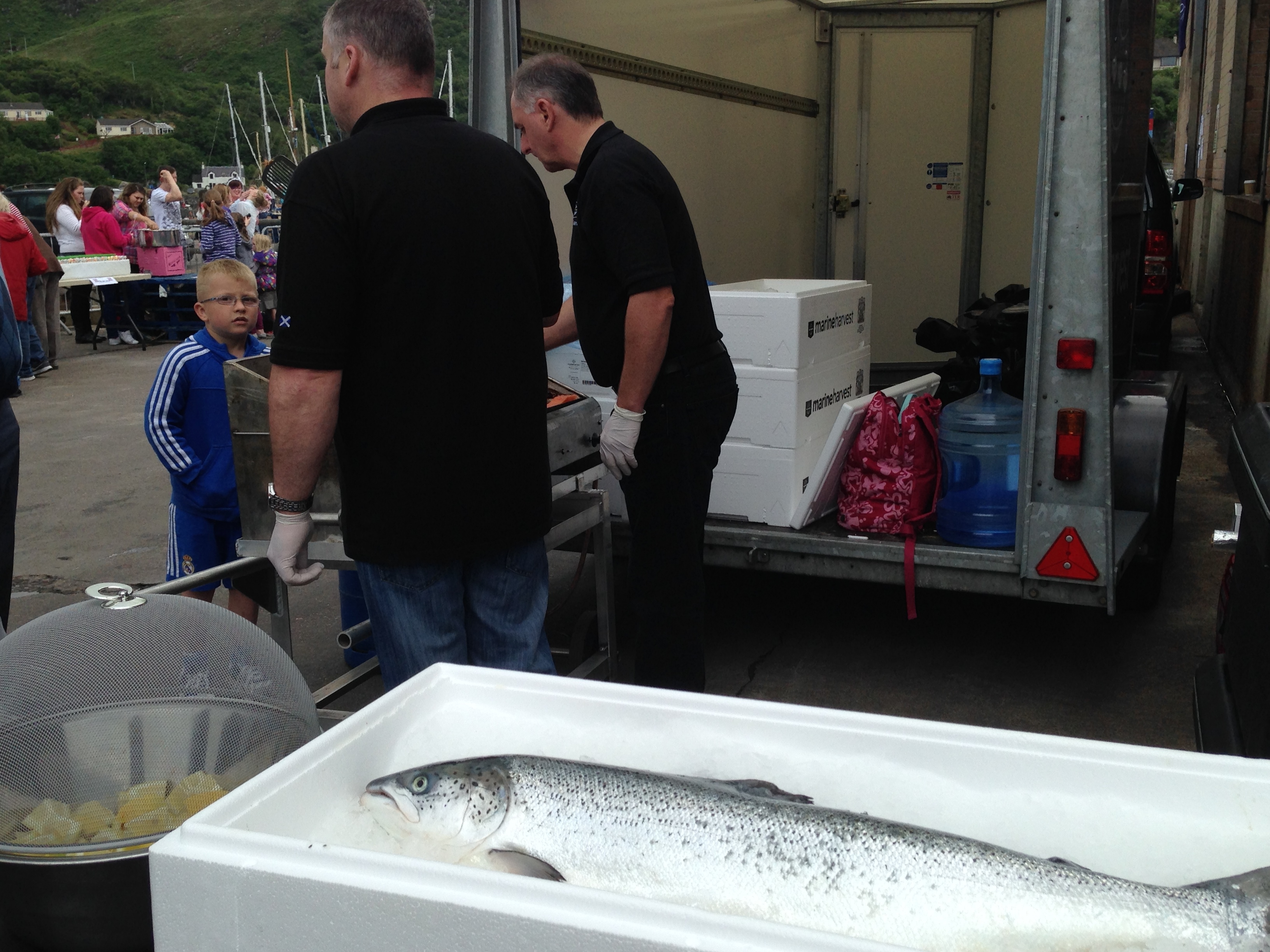
My last day in Mallaig coincided with the Fishermans Mission Gala Day. The small port filled with a model steam train, baked goods, crafts, grilled salmon, and Irish Step Dancing. The briny taste of the salmon, the music accompanying the dancers, and the bustle of locals made a fitting departure.
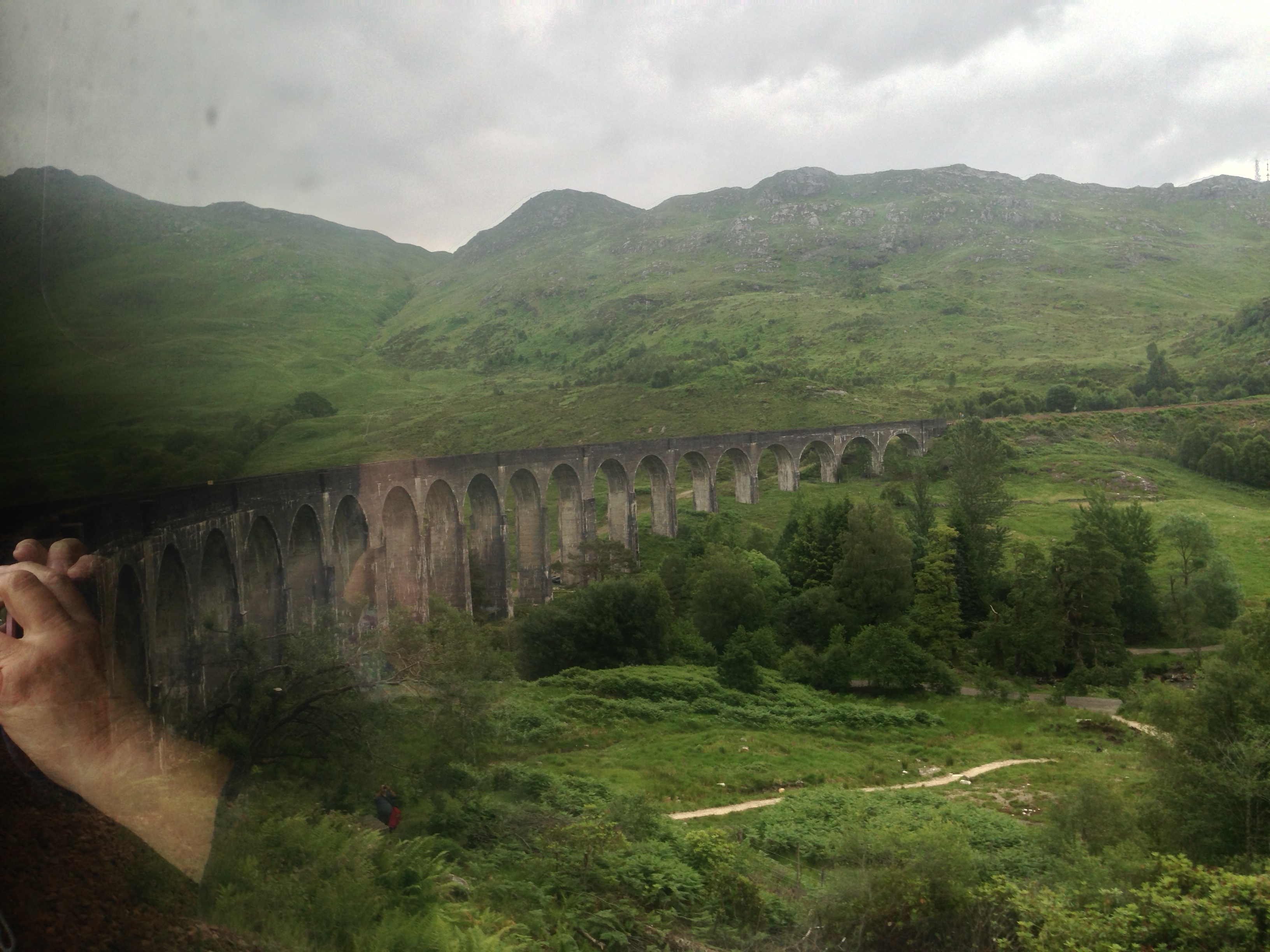
Part of that departure included a ride on the Jacobite, a steam train that runs twice a day between Mallaig and Fort William, making for a complicated journey: Mallaig to Fort William, Fort William to Glasgow, Glasgow to Edinburgh arriving at 10:00 P.M. The trip was disappointing in part and harrowing at the end. I had been warned that the Jacobite train was a tourist rip off. The warning was somewhat accurate. First of all, my seat was facing backwards, so seeing or photographing the Glenfinnan Viaduct, known to anyone who has seen a Harry Potter movie, was difficult. Then, the authenticity of the train amounted, for the most part, to engine debris floating through the cabin and the wail of that same engine.
I thought I had arranged my itinerary so the connection in Glasgow would be seamless. Not true. The train from Fort Willam to Glasgow ran late and I only made the train to Edinburgh by running from one quai to the next dragging my luggage and cheered on by conductors. The door literally closed on my backside.
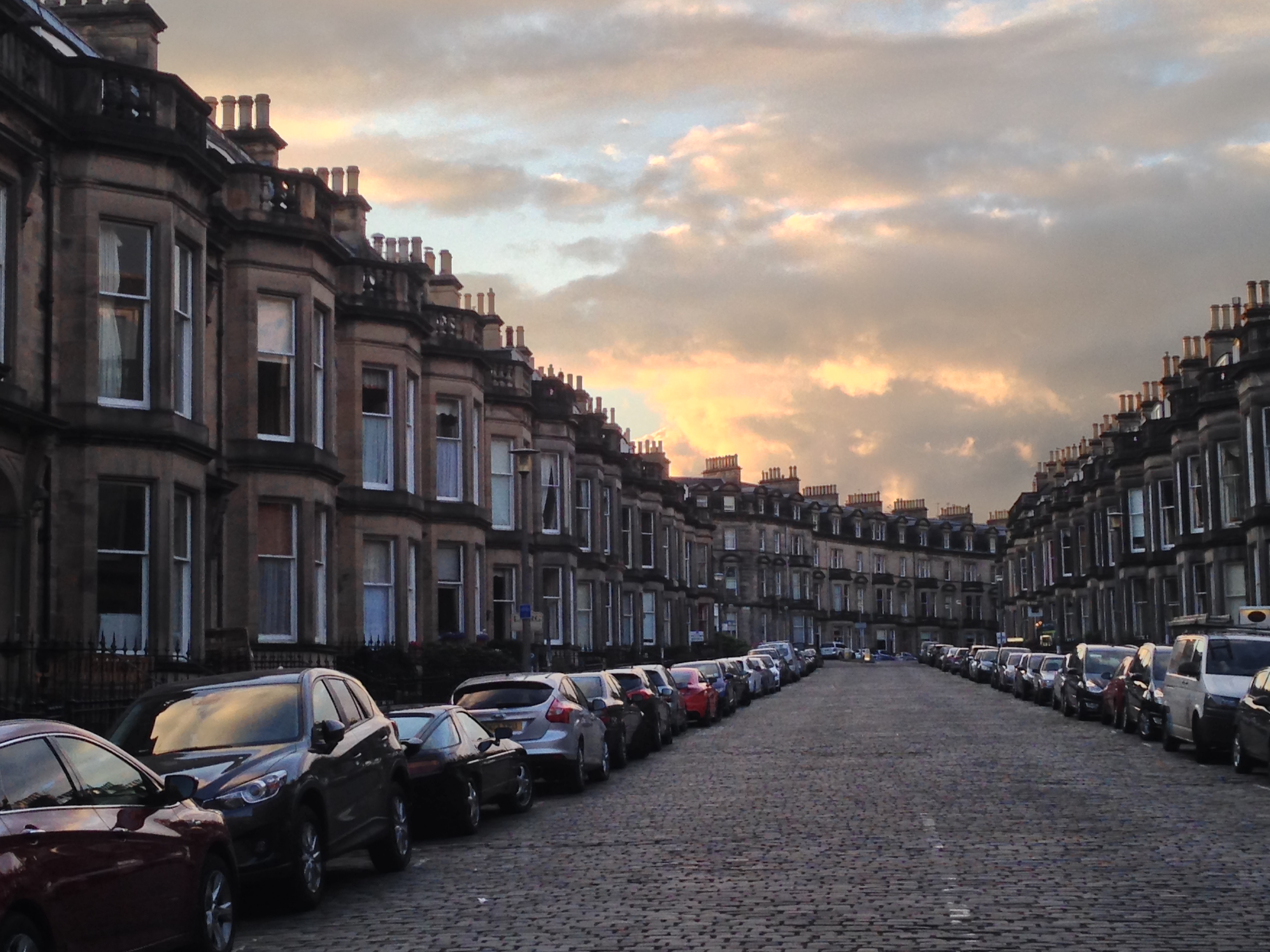
Luckily, a stop dropped me off just two blocks from the Haymarket Hotel where I was rewarded with elegant furnishings and 13 foot ceilings. I hadn’t eaten since the morning and hurried to find a restaurant. The only one open was closing it’s doors but when I begged, the waiter at La Bruschetta graciously relented. I settled in for a good Italian dinner, several glasses of red wine, and savored it’s old fashioned charm.
The day began with another charming breakfast, but this time, I didn’t dine alone: I was joined by a Dutch couple. An interesting conversation about health care ensued as they assumed that “Obama Care” would provide the same benefits to Americans that they enjoyed in Holland. I had to educate them about the long reach of capitalism and medical insurance lobbies.
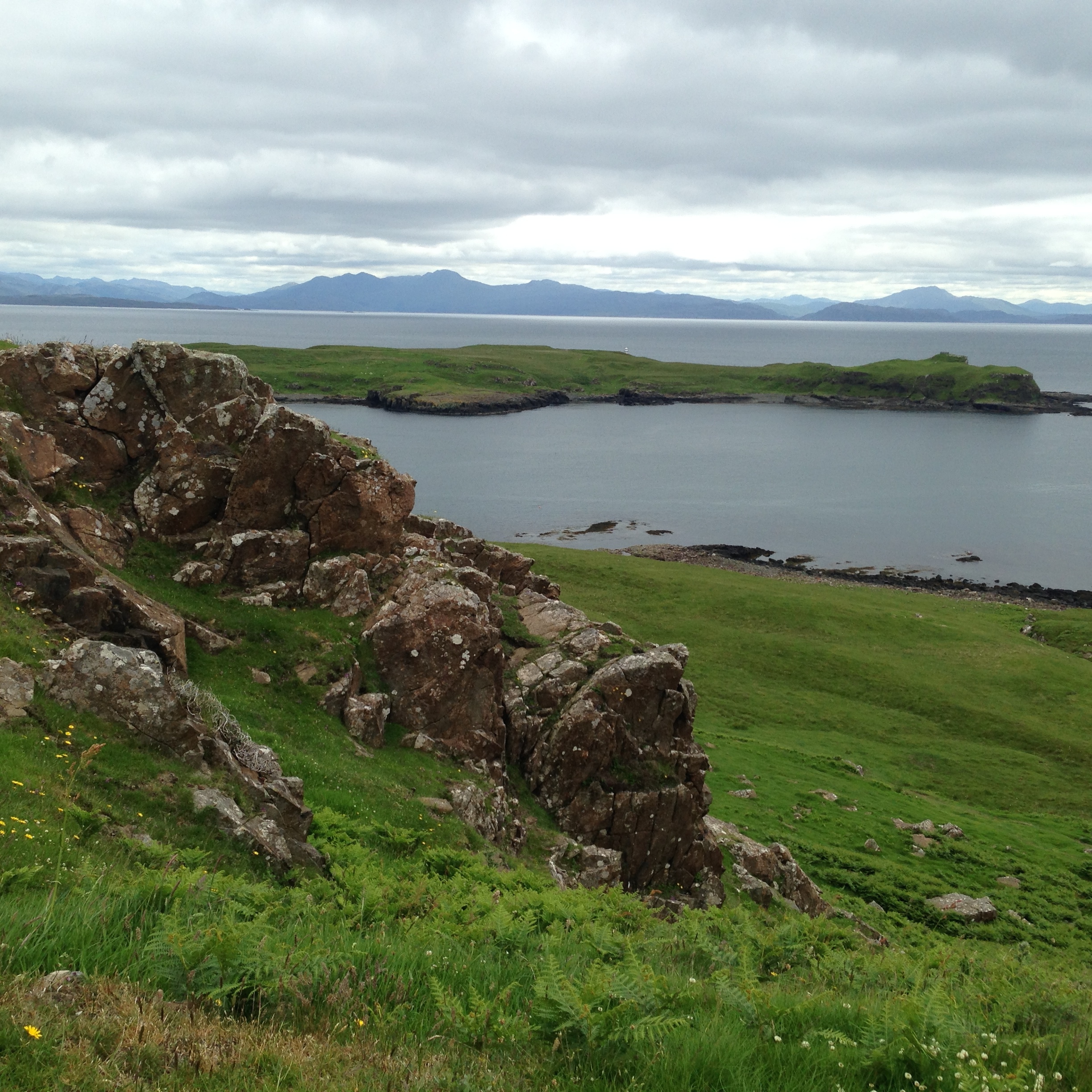
Not long after, I boarded the same ferry as yesterday. The ride to Eigg took longer, but the wait was worth it. The island is even less inhabited with only 20 or so residents. I walked away from the harbor and climbed until I reached a low cliff overlooking the sea. Above me was a hill where a shepherdess directed sheep with the help of a border collie.
My eyes filled with the sea, my ears with the lolling of sheep and the occasional call of the shepherdess.
Isle of Eigg
From a knoll surrounded by wildflowers, I looked across to the Isle of Skye, as blue as the heavens above it. Closing my eyes, I tried to etch the scene on my neurons hoping to carry it back to New Jersey where a flat landscape and subtropical atmosphere would greet me.
When I was 21, I lived in Paris for six months. Back home, I could conjure up every day of my stay. I wanted the same access to these islands, not just recall but reliving these moments. Yet, I don’t have a narrative of daily activities on this trip as I did in France. Here, I walked, looked, wallowed in beauty. That kind of living is more difficult to recreate. Will I lose the peace, contentment, and exhilaration as well?
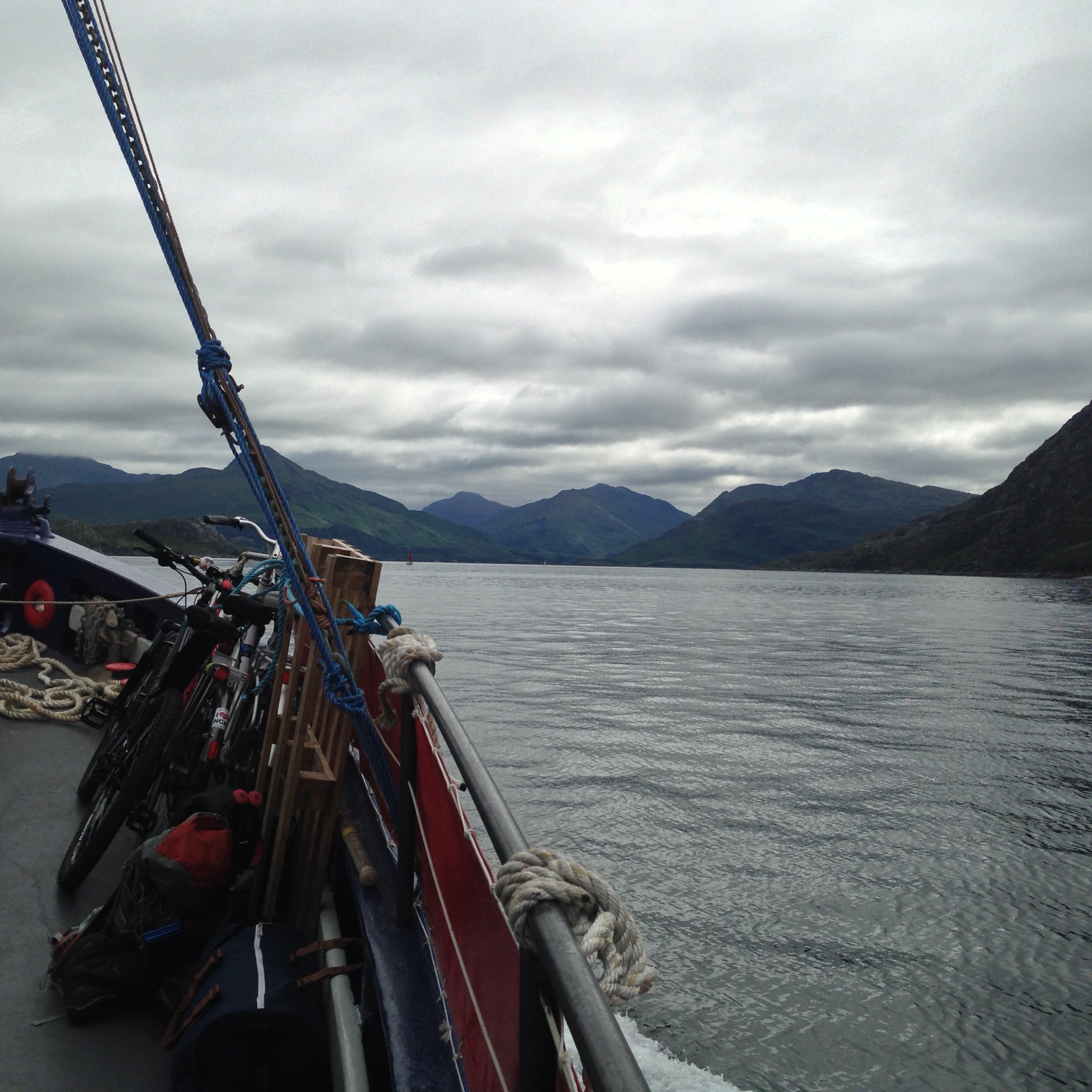
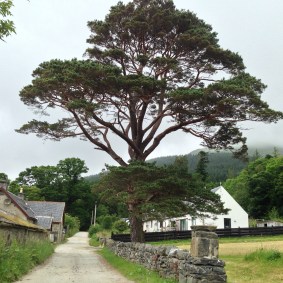
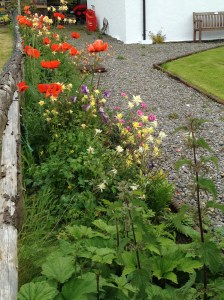
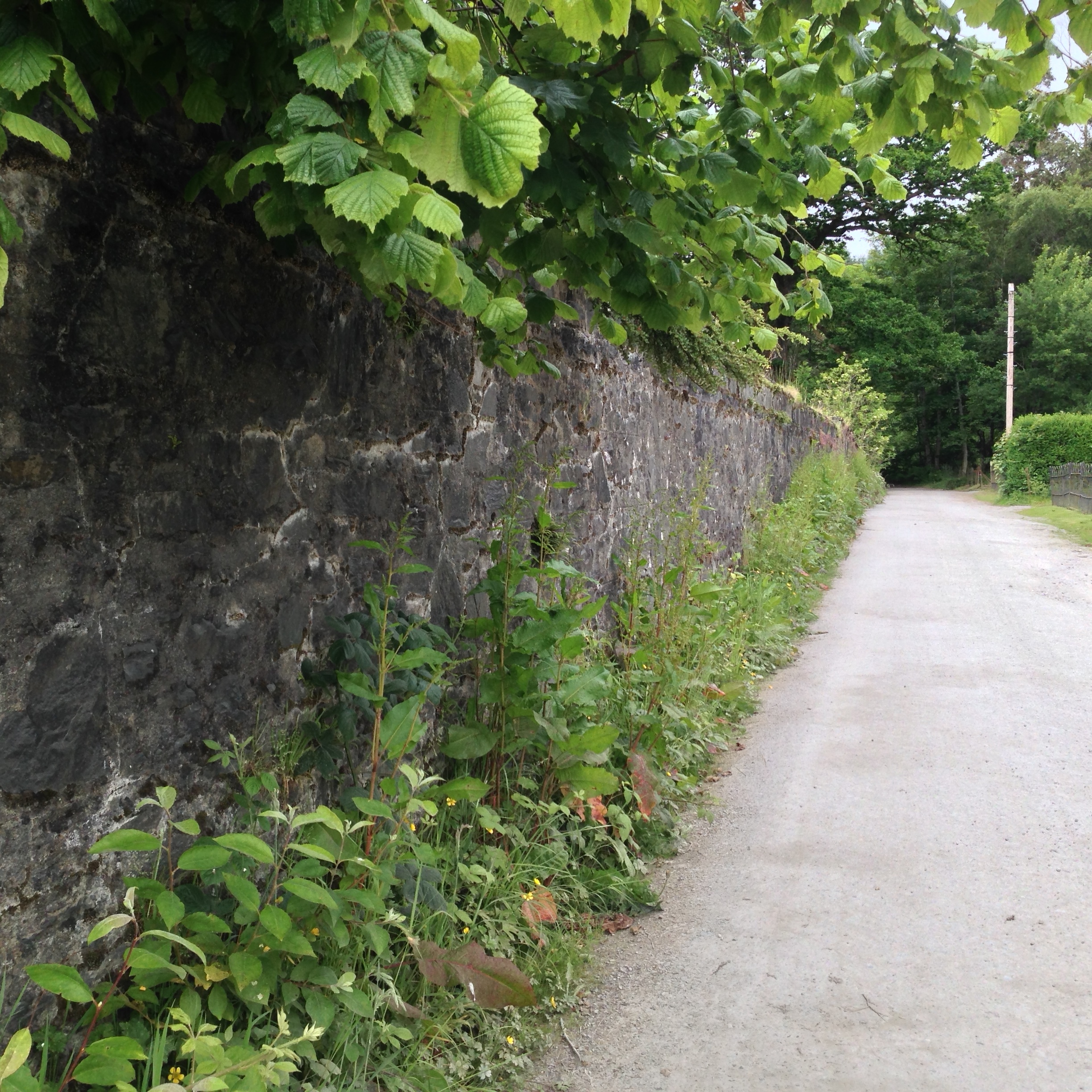
The next day, I had another chance to bottle the natural sights of the west coast of Scotland. Instead of going to the last two Inner Hebrides isles, Muck or Canna, I went to Inverie, on Knoydart the most westerly peninsula in these parts and only reached by boat or foot. The ferry drops passengers off at Inverie for several hours and then tours the environs for another hour or so. Strangely my focus seemed more on the inhabited areas both at Inverie and on the boat tour . There was a stand of trees against a blue sky in the village, a garden dominated by Oriental Poppies, and a stone wall stretching along the road.
Yet, fog circling hills and seals relaxing on rocks penetrated.
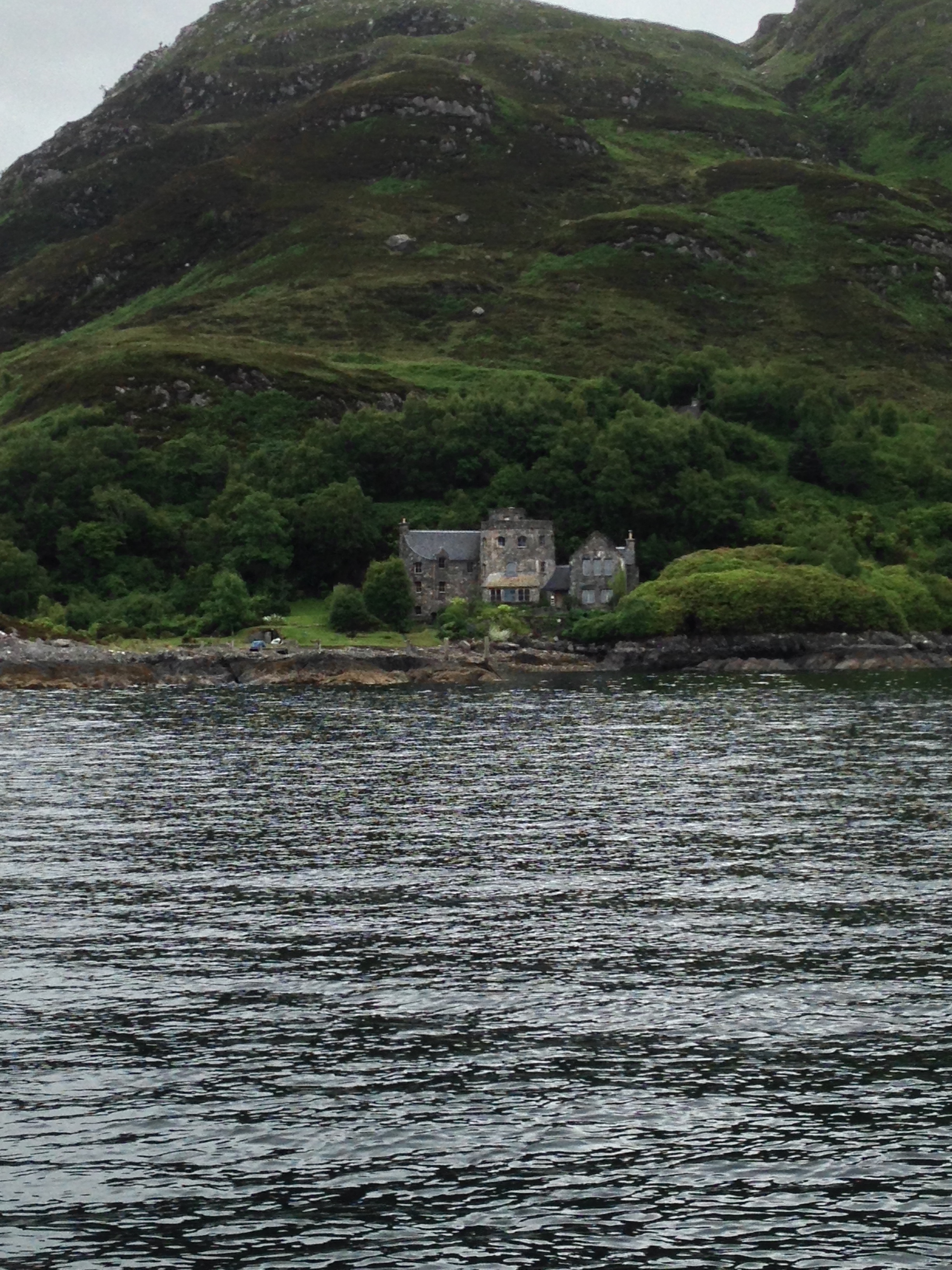
On our way to drop passengers off at location close to our destination, we passed a mansion that seemed so unreal as to belong in a snow globe. Where were they going, where would they stay, would they be joyous?
My last night in Mallaig included Irish music in the pub below my room. I got there early and found a seat at the bar next to me to a middle aged woman and her mother. We soon exchanged information about ourselves. The daughter has a daughter of her own who works in a government office. Once more, I asked “What do you think about the vote for independence.?” I expected to get the same responses I had heard over the last few days, that is, ambivalence and economic concern. I did get that answer from the daughter, but her mother spoke up with surprising vehemence. “I hate the British! They’ve done nothing but oppress us. Kick them out.” She would have said more, but her daughter intervened. “Mother that is in the past.” Is it?
The next day, another Scot charmed me, one of the owners of the Chalchain Inn, who does the breakfast as well. This morning he produced scones and, after serving me, peeked into my soft-boiled eggs making sure they were just right. I assured him they were perfect and the scones were light as a biscuit. He looked at me skeptically and said, “I’m not sure that’s a compliment.” Once I left the breakfast room, I realized our definition of biscuit differed. His biscuit is what I consider a cookie of sorts, mine is a fluffy non-rising bun.
As I made my way to the ferry to Eigg, one of “small isles,” as those islands south of the Isle of Sky are known, I saw him coming down the street. I explained our different notions of biscuits. He asked me if I was an American. I answered in the affirmative. He told me, “I thought you were from Australia. You seem like an Australian.” When I asked him if being an Australian was good or bad, he just smiled.
At the ticket office, I was told the ferry didn’t go to Eigg on Wednesday, so I changed my destination to Rum, the closest of the islands. Waiting in line to board the ferry, the feeling of well-being, of being on the right path returned in spades as it has over and over on this journey. Aloneness is not only embraced but treasured.
I found a seat on the deck where food is served and placed myself next to a window in a booth seating six. In front of me was a large group of all ages and one asked if some could sit with me. I was joined by a nice group of Scots who welcomed me into their flock. We got friendly enough so that I felt comfortable asking how they felt about the Scotland’s vote for independence. Just as my train companion from Glasgow to Scotland had mixed reactions to the question, these folks also were unsure about what to vote. However, they did seem to lean towards the idea of “if it’s not broke, don’t fix it.” Their concerns were economic, that is, whether Scotland’s economy would flounder without it’s ties to England. One fellow believed that mostly young people would be voting for independence. He said, “They’ve seen too much Braveheart. They aren’t thinking with their heads.”
After disembarking on Rum, we passengers were greeted by a Ranger offering a 2 hour guided tour for a fiver. I almost walked away but quickly changed my mind and joined the group, thinking I should be more social and that, most likely, I would learn more about the island than if I just wandered around by myself. I definitely did learn more about flora, fauna, and lore.
The Isle of Rum
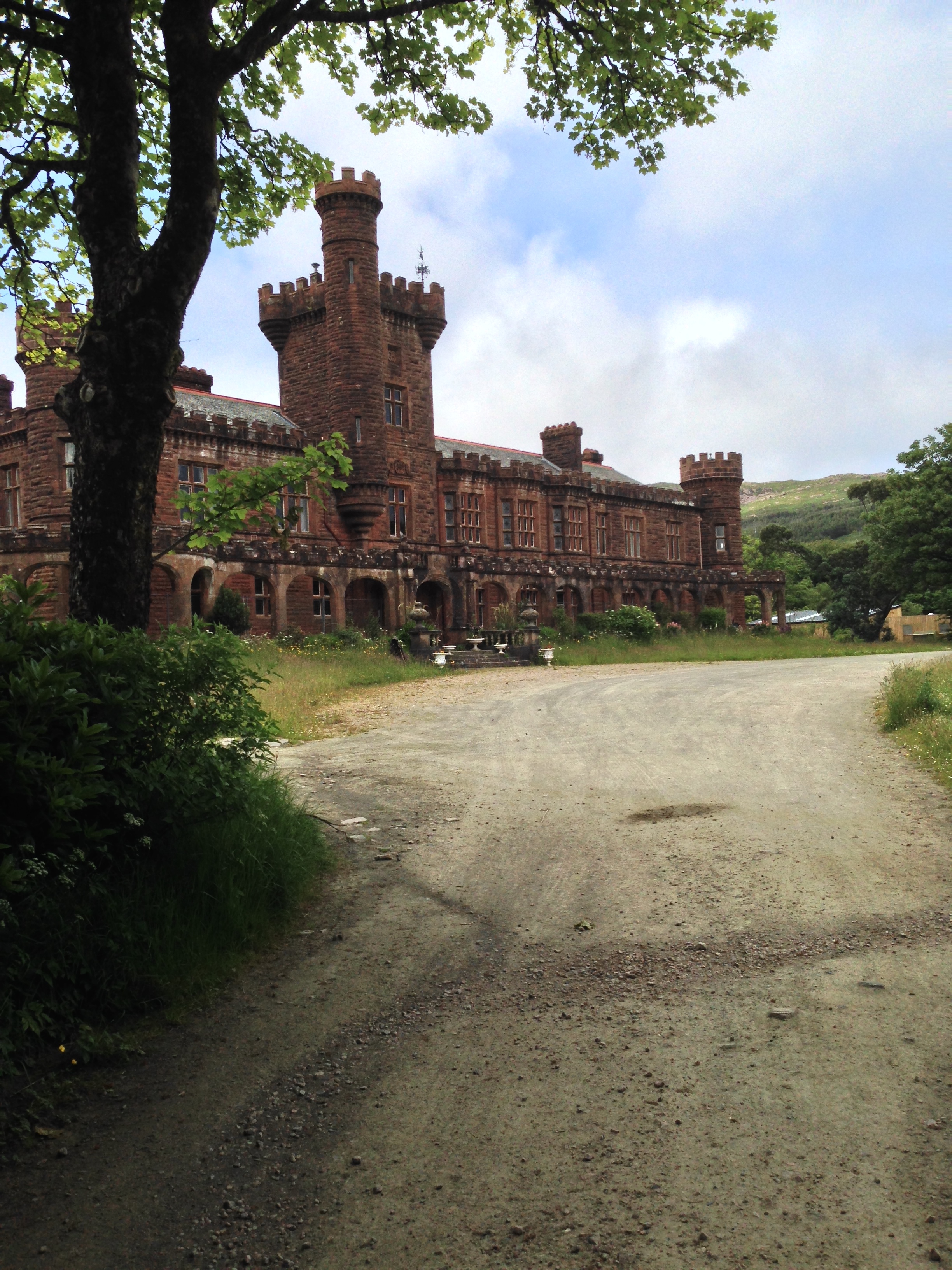
Rum had been owned by one family that had used it for hunting vacations given the abundance of red deer that inhabit this part of Scotland. They built a Victorian monstrosity made of local sandstone known as Kinloch Castle. When the last member of the family died, the island was purchased by the Scottish National Trust; as the island had never been developed, Rum remains as it was, wild and naturally beautiful.
Kinlock Castle
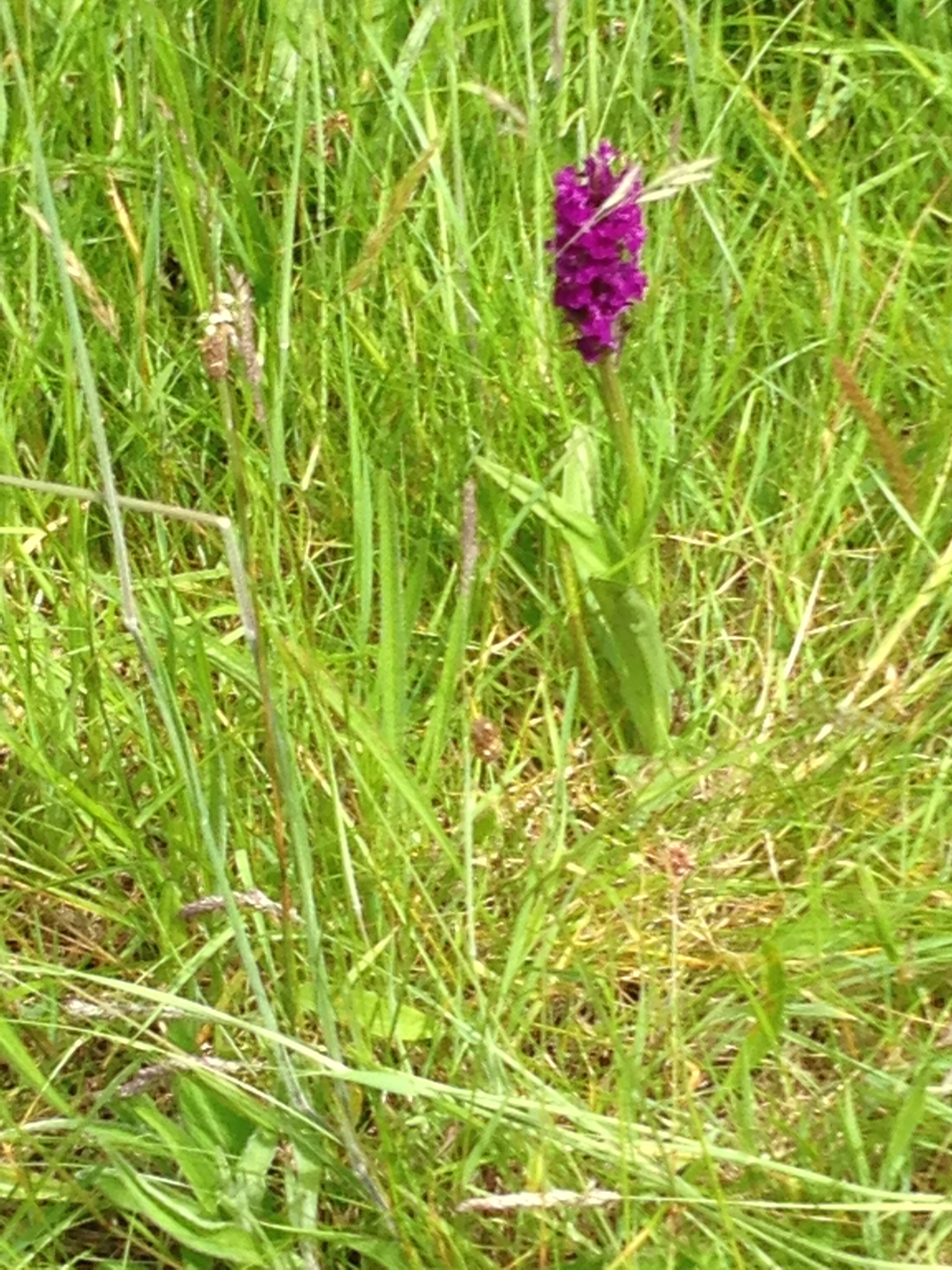
Many of the birds sighted on the island were the same species I’ve found in New Jersey except with slight variation: instead of a great blue heron, I saw a great “grey” heron as well as oyster catchers, a female eiderdown with her chicks, and a family of willow warblers. The parents stayed in the tree while the fledglings searched for insects in the grass, the parents calling out to them so they would know where the adults were located. We were also introduced to local fauna: marsh orchids, yellow broom just finishing blooming, their dripping seed pods resembling snow peas.
Marsh Orchid
I began fantasizing of living the life of the ranger, being on this island of 41 people all year round. She said she wasn’t too worried about the winter as she likes to read and write. Would work for me. After an hour into the walk, I longed to be alone, exploring as I had on Inish Mor. I was impatient to be moving at my own pace. There was too much nattering on about subjects unrelated to Rum. Perhaps, I’m becoming a cantankerous hermit of sorts. I bid good-bye and struck out on my own.
My first stop was the village. There are several whitewashed cottages with wood shingled roofs and even a schoolhouse for the two elementary school students living on Rum. Afterwards, they go to Mallaig for their education, staying the week and returning for the weekend, a bit of a hardship; however, the arrangement appeals to me. As a 10 year old, I desperately wanted to go to boarding school, all my clothes neatly marked with my name. One of the buildings in the village is a community center, a large room with a piano, pool table, internet hookup, a table offering local crafts, comfortable seating, and a café with tables inside and outside on a small porch. It resembles a camp building from the fifties with the craft table reminiscent of home made goods of hippie origin. Outside a small shack attached to the building functions as the local convenience store but this one sells venison from the herds of red deer.
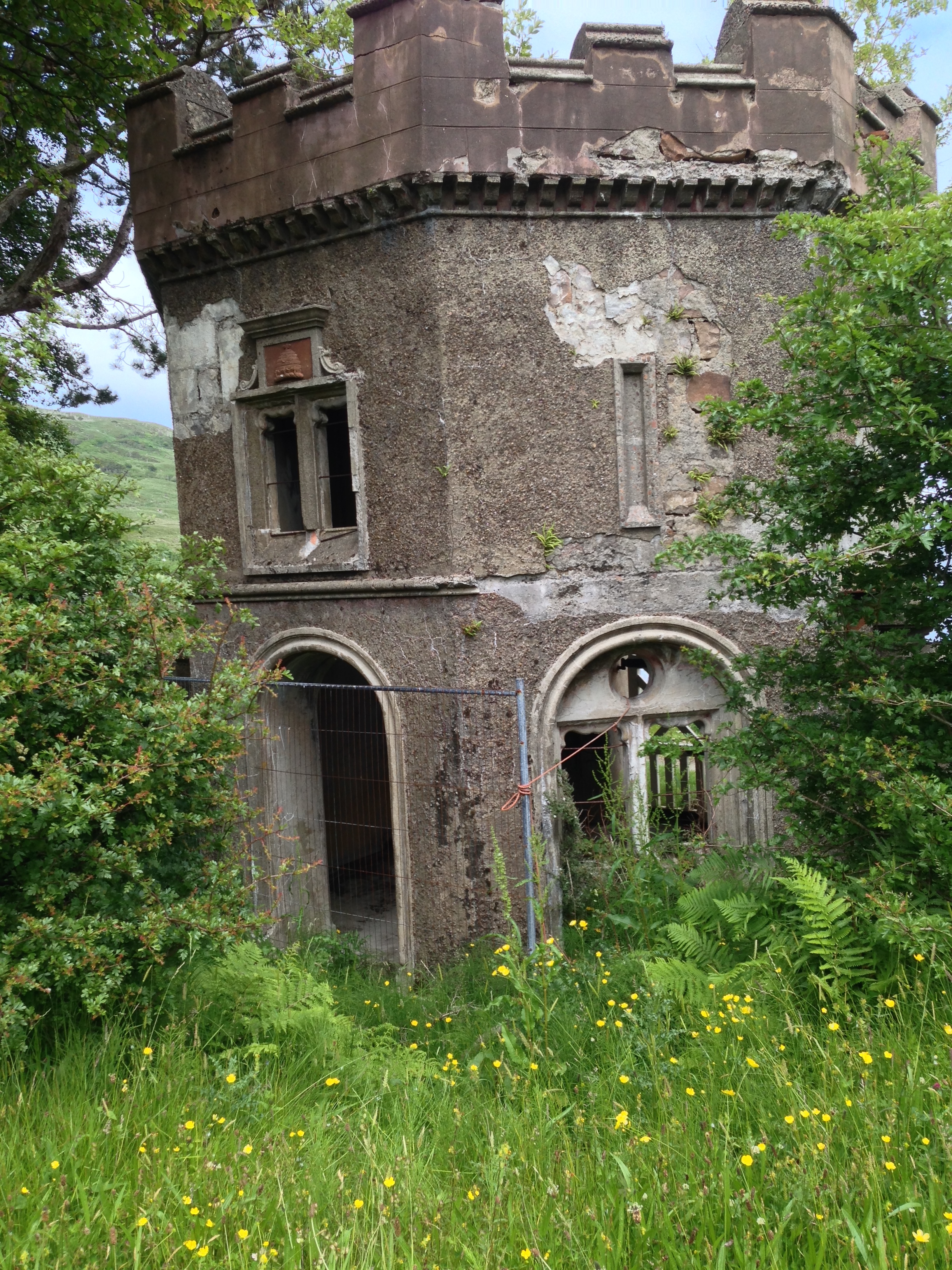
Although the castle had been used for a time as hostel, it seems, except for the tours, abandoned, all its formal gardens allowed to return to a meadow of grasses and wildflowers. The sight excites and frightens me. After a peek in the windows of the castle, I take a walk through the meadows with grasses hip high, pleasure and peace fill me up as I walk towards the sea.
On Inish Mor and now here, the notion that humans are unsuited for living on earth returns. Keeping us alive requires so many resources and our arrogance and ignorance create places like the castle which once abandoned are sores on the landscape. We don’t seem to know how to be one with our environment. Yet, Rum is trying to do this, it’s residents attempting a sustainable existence where architect and nature fit well together, quite different from the folly at Kinlock Castle.
Almost three weeks into the trip and I have yet to see another woman traveling on her own. This trip is something of a test to see if I can embrace being alone. In the past, traveling, living day to day involved being connected usually by writing to a loved one, but now that loved one is gone. So far, I’m passing the “test.” Yet, each time I move locations, from Inish Mor to Glasgow and now to Mallaig, I doubt this trial will come up roses. Then 10 or 12 hours later my fears are not realized and all is well.
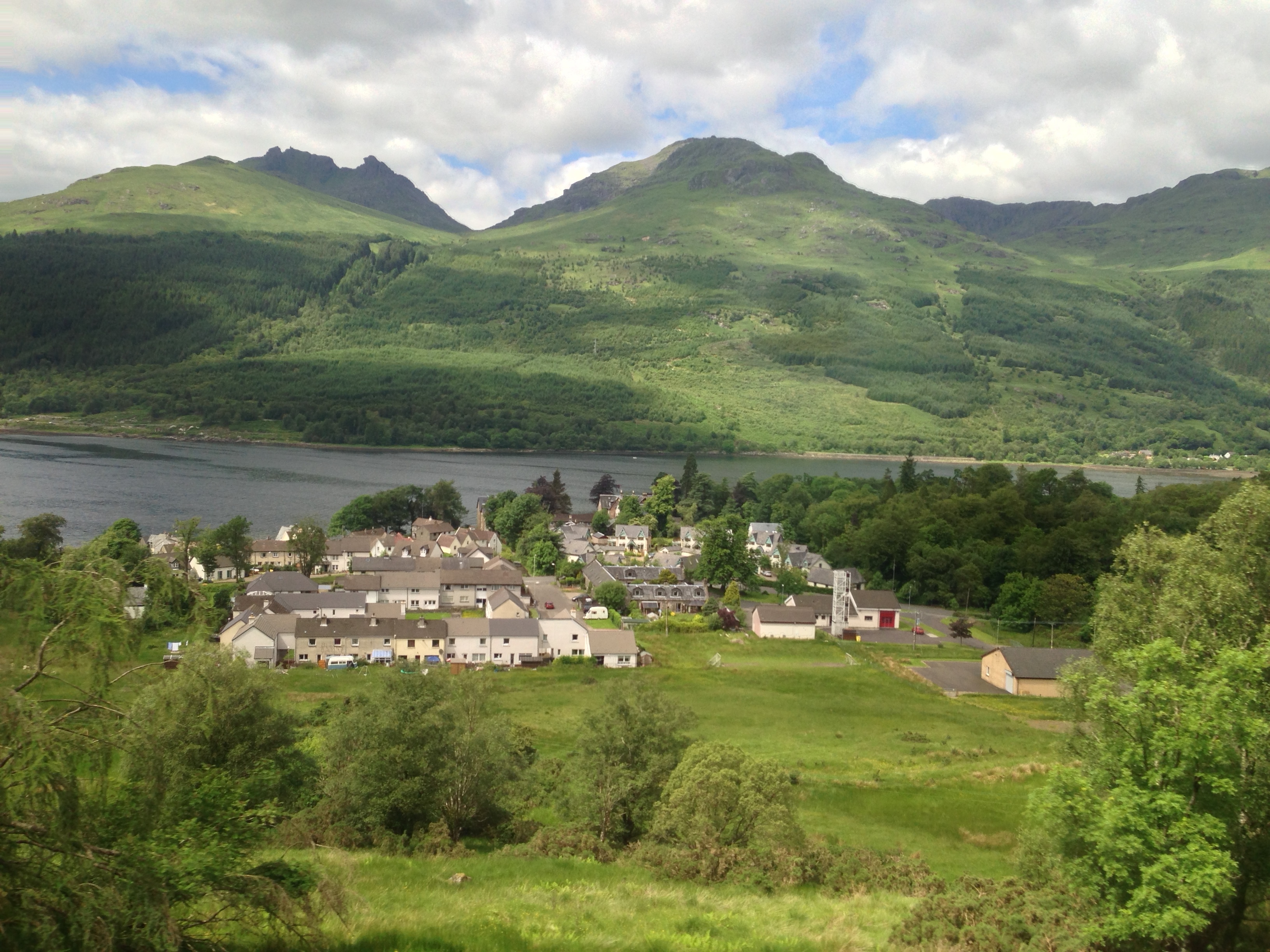
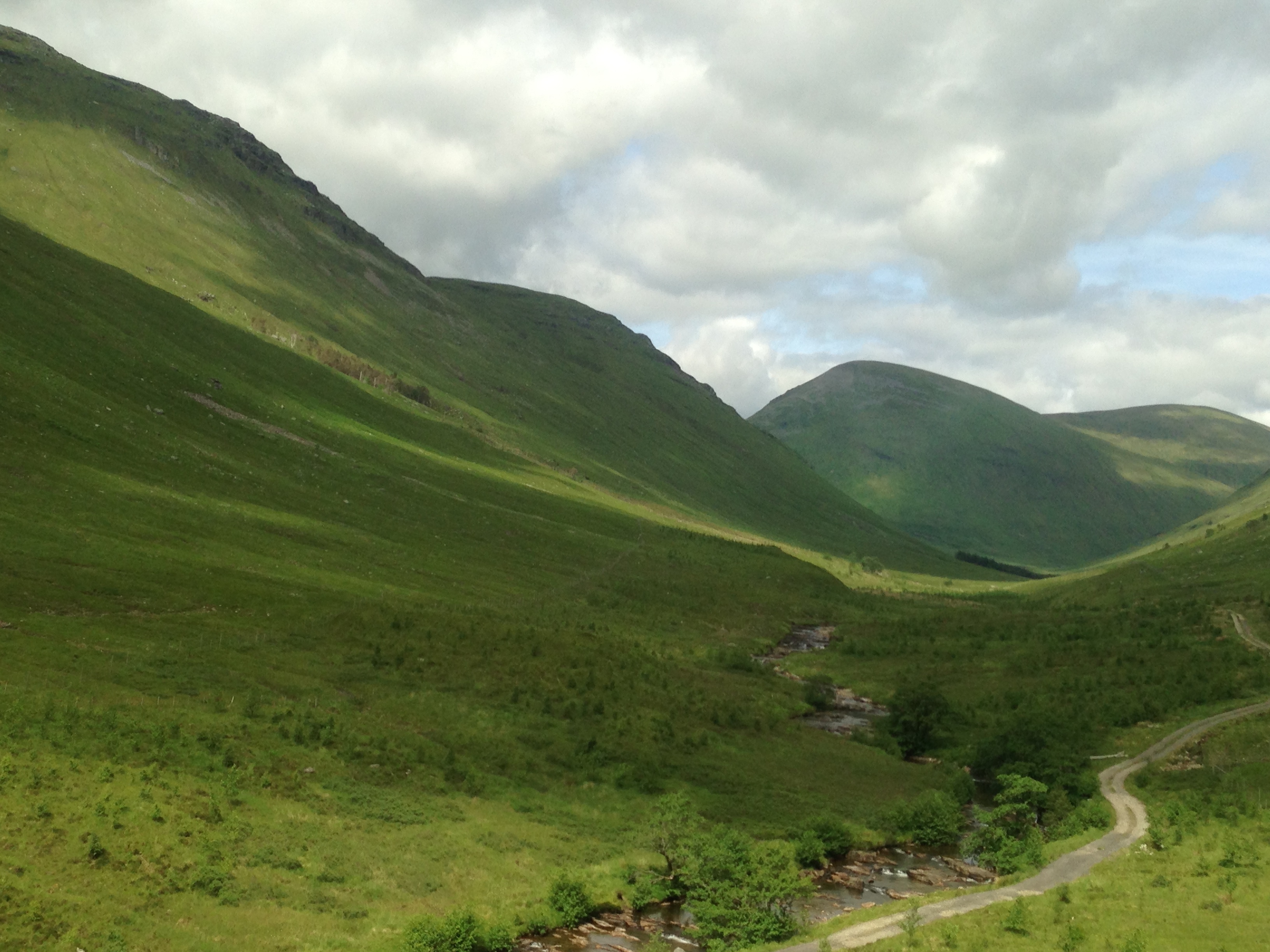
The train ride from Glasgow to Mallaig often described as a rail journey with spectacular vistas didn’t disappoint; instead, it surpassed my expectations. The start of the journey, however, proved to be stressful. I had been assigned the “F” Carriage, Seat “A17.” Unfortunately, the carriages were not marked on the outside. Inside, they were labeled A-D, no F. Back and forth I went, pulling my luggage through each carriage and sweating profusely as I searched for my reserved seat. Finally, I found a conductor who informed me that the cars marked “A” and “B” were the “F” carriage. I found my seat but it was occupied. I let the couple stay in place and moved to one across the aisle. For the next 5 hours, apart from exchanging pleasantries with Liz from Mallaig who sat opposite me, I mostly “oohed” and “aahed” at the stunning landscape outside my window: Loch Lomond so large it looked more like a sea than a lake, rolling green hills, and finally the sea lapping against beaches set against blue-green hills, a filter through which I would see Scotland.
Beauty from the TrainThe Sea Amongst the Hills
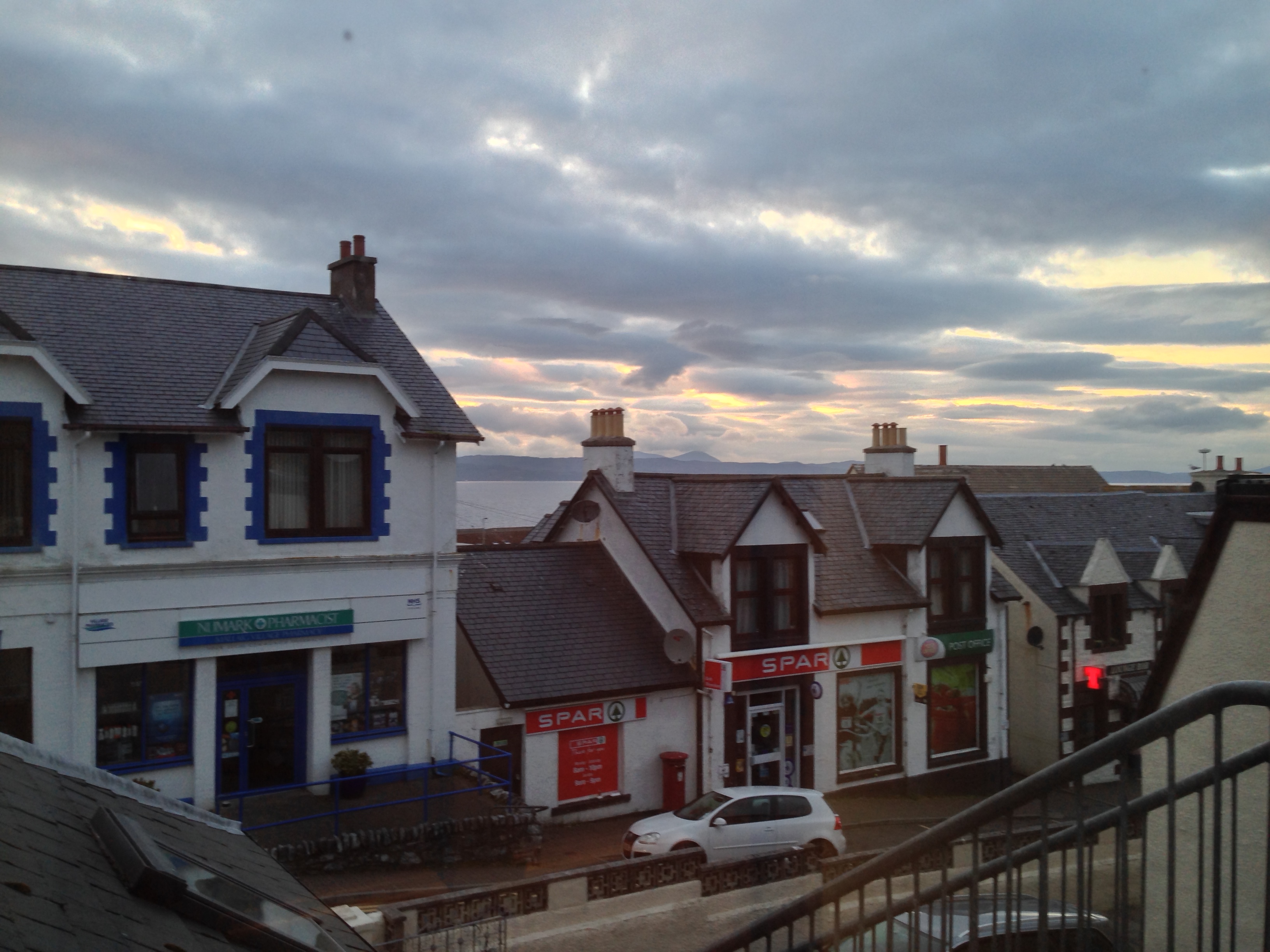
As the train pulled into Mallaig, Liz told me how to get to my hotel. The train station swarmed with tourists, day-trippers who take the Jacobit, a steam train running between Fort William and Mallaig twice a day. Disappointed, I conveniently forgot, I am one as well. The next reaction was “I miss Inish Mor, it’s emptiness, big sky, and a sense of freedom that didn’t match this small enclosed fishing village.
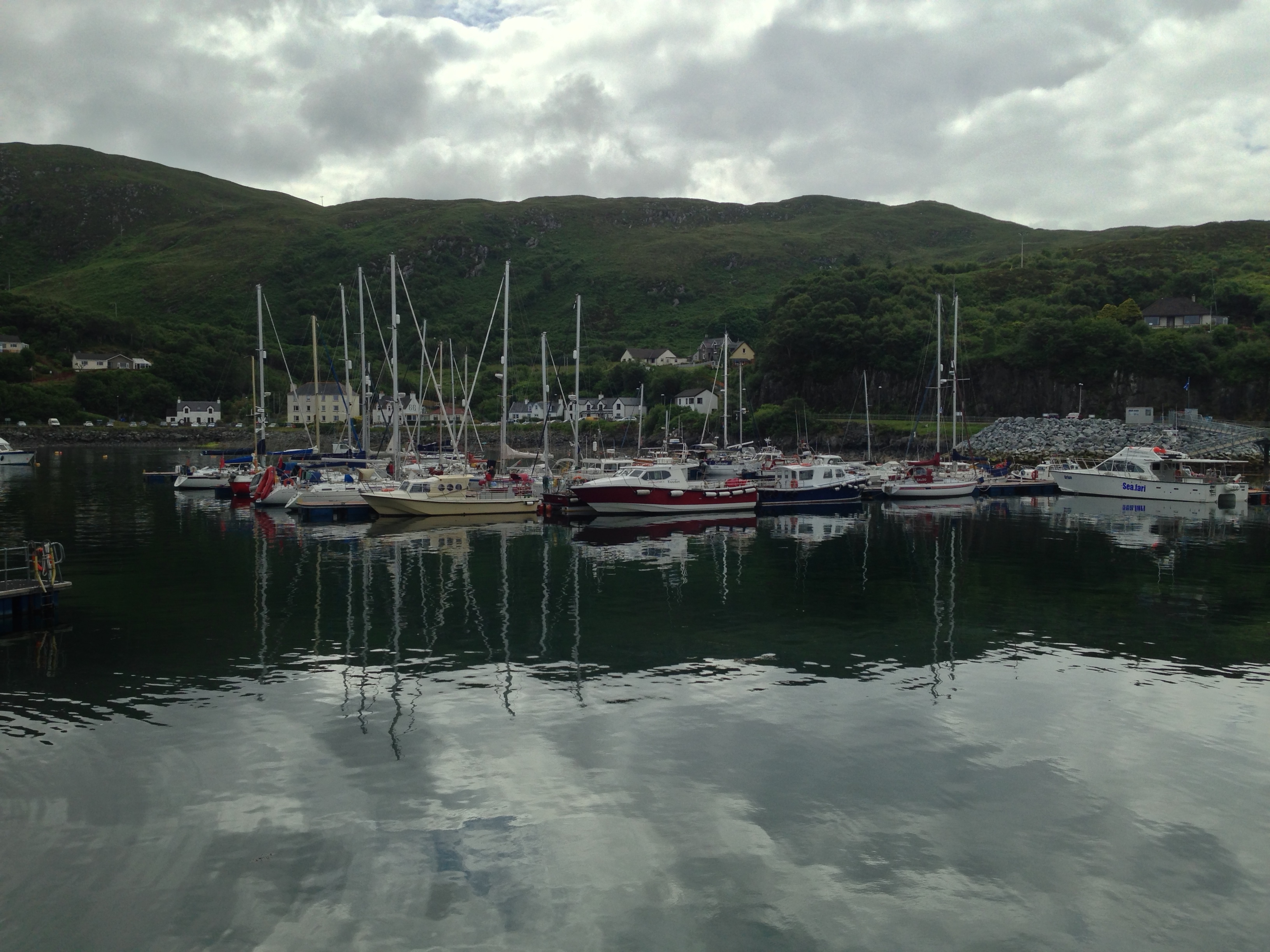
Mallaig, Scotland
After settling into my room located above the owner’s pub, a walk about the town didn’t improve my outlook. I made my way to the small harbor, claustrophobia as a companion. However, a cheerful talk with an older woman about her young border collie, Gilly, helped. “He is in training” the woman told me. “My husband died two years ago and so I must manage the croft on my own.” “All alone?” I asked. She shrugged her shoulders and said, “Well, people come from time to time, but its up to me.” She didn’t appear to be feeling sorry for herself, but rather, resigned to the situation. Does she have to wait those 10 or 12 hours for all to be well?
I am not sure what I expected from Glasgow but good food wasn’t necessarily it, yet its what I got beginning with the excellent sea bass my first night.
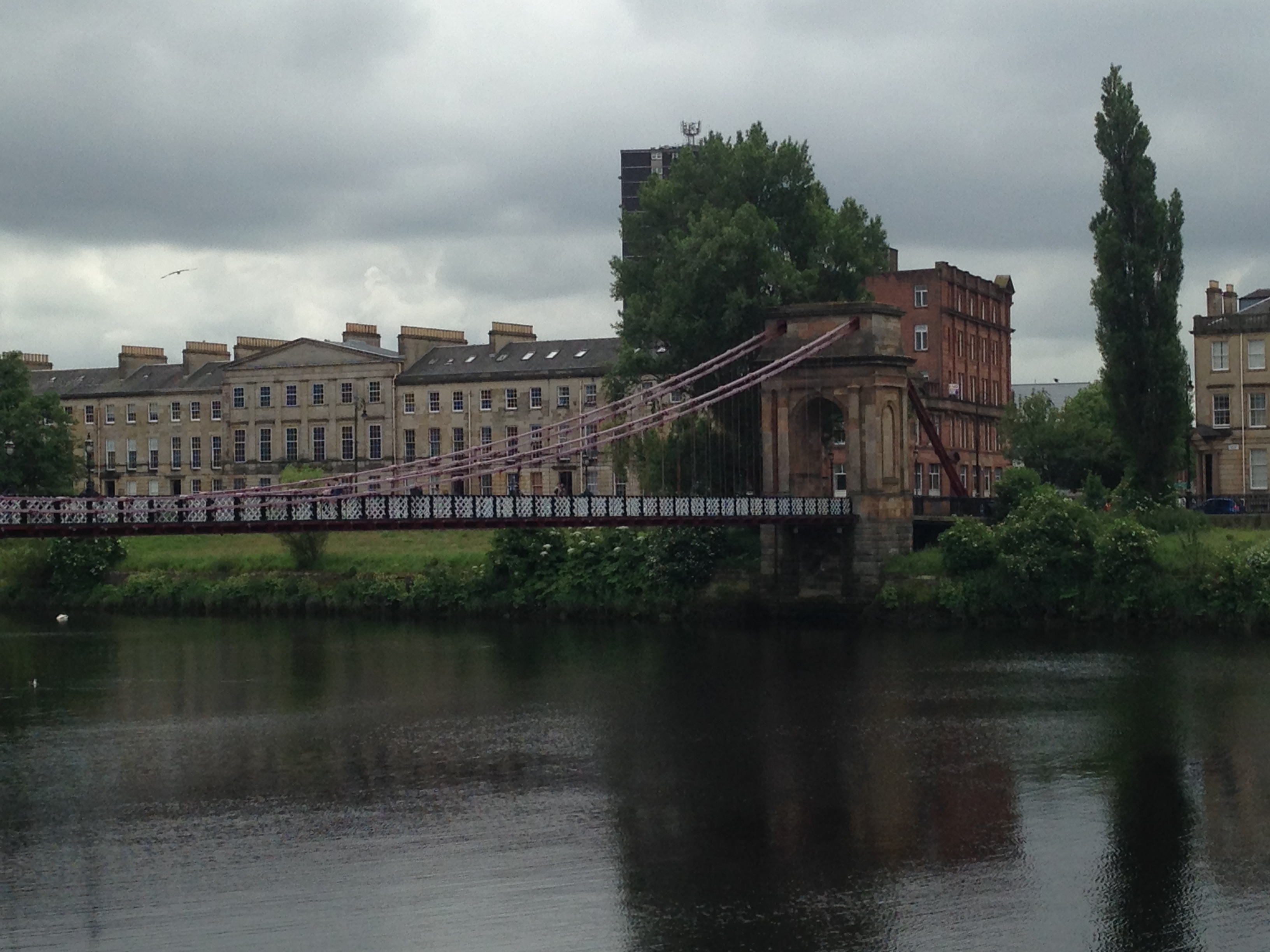
The next day, I made my way to Buchanan Street in search of an Apple store as my iPad went belly up or as it said on the screen “iPad disabled.” The store is an impressive Victorian building and the Ipad was put to rights quickly. I used this first day to get oriented, walking down the pedestrianized Buchanan Street, peeking down alleys at interesting looking pubs, exploring the Royal Exchange Square, and finally ending up at the Clyde River which has a promenade along the its banks reminiscent of the Seine in Paris.
Buchanan StreetThe Apple Store
My one plan for the day was to visit the Center for Contemporary Art which I would pass on my way back to the hotel. The exhibit consisted of various forms of animation that switched from one screen to another in a long room strewn with hassocks. It didn’t captivate me; however, the café located in the center did interest me. It was a long room with tables, chairs, and banquettes along one wall. I was tired, hungry, and anxious to take up my blog now that my Ipad was fixed. The café offered free Wi-Fi and seemed ideal. It was.
As I didn’t want to spoil my appetite for dinner, I ordered a warm kale salad. “Oh, that’s very small,” the waitress assured me. “You should order another dish.” I figured she knew best, so I added root vegetable fries. She was wrong. The salad was large and delicious with garlic and ginger lingering on the palate. However, the root vegetable fries of turnips and beets were another happy surprise. The bigger surprise to me, a dedicated carnivore, was that the café is a vegan restaurant which can hold it’s own against any fine eateries.
My last stop before was the Willow Tea Room designed by Glasgow’s renowned architect, Charles Rennie Mackintosh, known for his arts and craft and art nouveau association. At the time, I didn’t know of its fame. I just liked the way it looked.
I ended my second day in Glasgow eating at a well-respected restaurant called The Sisters, an interesting experience in contrasts. Reviews of the restaurant declared it was the “best restaurant in Glasgow.” I put aside my jeans and Birkenstocks, donning a skirt and heels. I was dressed appropriately but was unprepared for the décor and the background music. The dining room was a study in l980’s elegance, all black and white. Although there were white tablecloths and silver place settings, the music demanded a disco ball. Throughout the meal, disco music hummed merrily in the background, irritating to eat by and at odds with the formality of the setting.
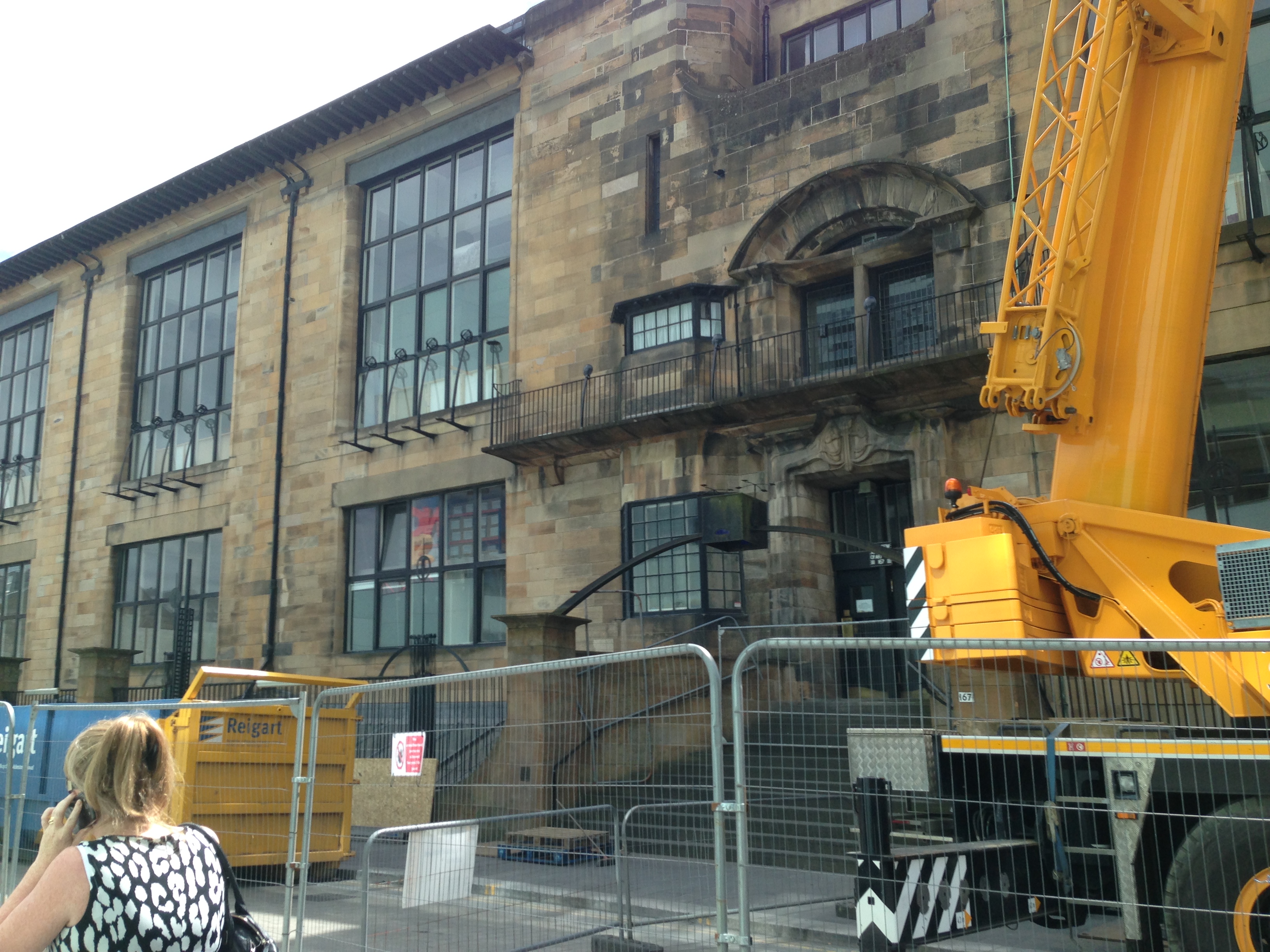
I had no plan for my last day, but after a friend made me aware of Charles Rennie Mackintosh, I decided to devote my day to his accomplishments which I almost did. I visited the Glasgow Herald Building which he designed and is now a center for architecture with a tower that gives a panoramic view of the city; however, the staircase to the tower was closed. I made my way to another of the buildings he designed, the Glasgow School of Art: unfortunately, the front was covered in scaffolding. I had two more opportunities: the Mackintosh House recreated at the Hunterian Museum and Art Gallery at the University of Glasgow and an exhibit at the Kelvingrove Gallery and Art Museum.
Glasgow School of Art
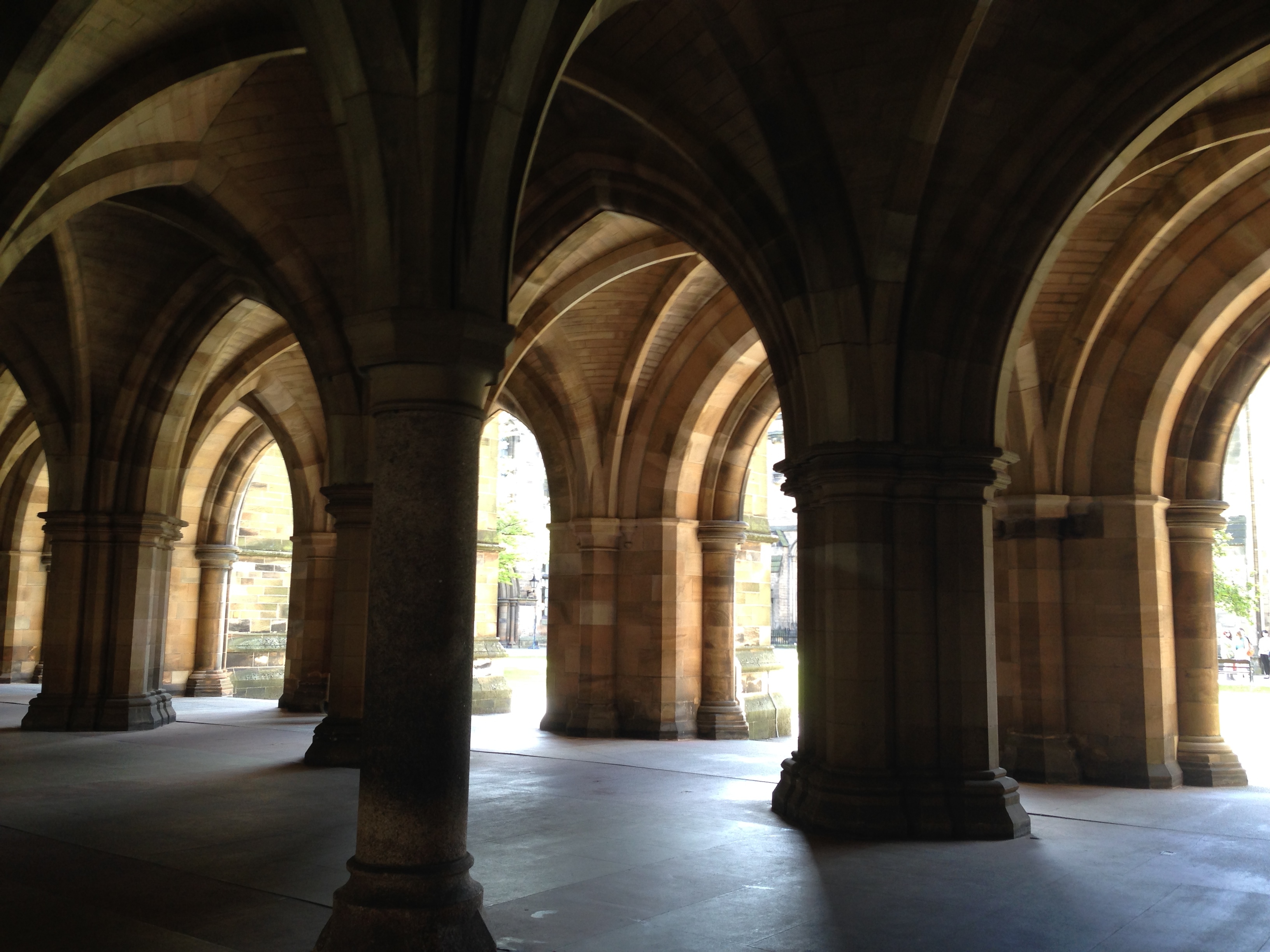
I spent too long at a second visit to the Willow Tea Room, swooning over replications of Mackintosh’s botanical watercolors. I had to have them. I couldn’t make up my mind which three to get as none of them seemed to fit together. Finally, I gave up as it was already 2:30. I sweated my way to the University of Glasgow and was immediately smitten. The buildings, the enclosures, the views over Glasgow were breathtaking.
The Cloisters, University of Glasgow
I forced myself to move inside and get to the museum. The door wouldn’t open. I said to the guard, “But it should be opened until 5.” He told me, “The museum is never open on Tuesdays.” Defeated again. By now, I didn’t think I could make it to the Kelvingrove Gallery and Art Museum, so I decided to go to Ashton Lane, recommended by my taxi driver as a street that hadn’t changed in 200 years. It, too, was within the boundaries of the university. Perhaps it hadn’t essentially changed, but like many restored areas I encountered including the Royal Exchange Square, it worked mostly as an opportunity to eat and drink. The tops of the buildings hinted at history. The bottoms were filled with cafes, pubs, and students drinking.
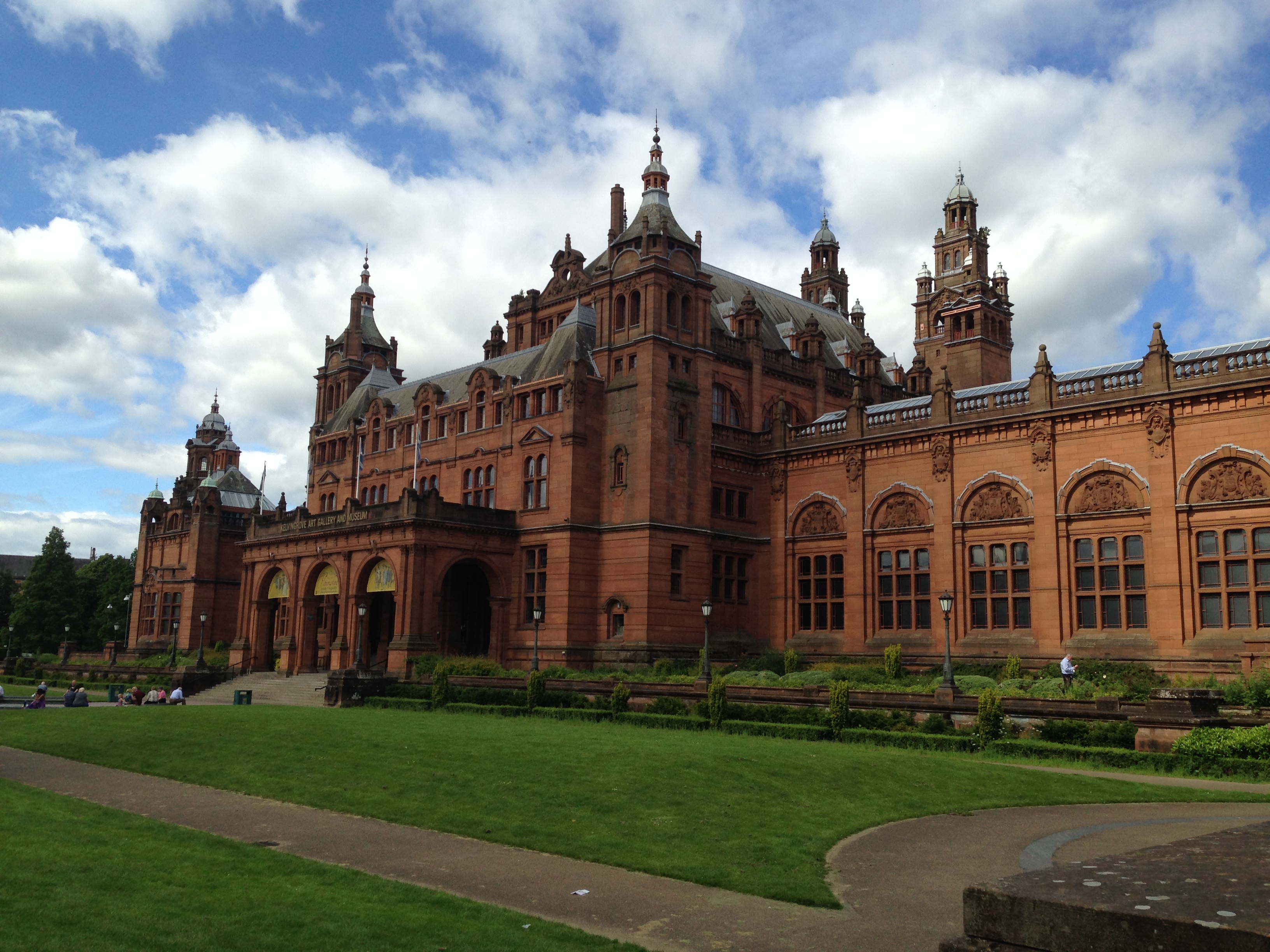
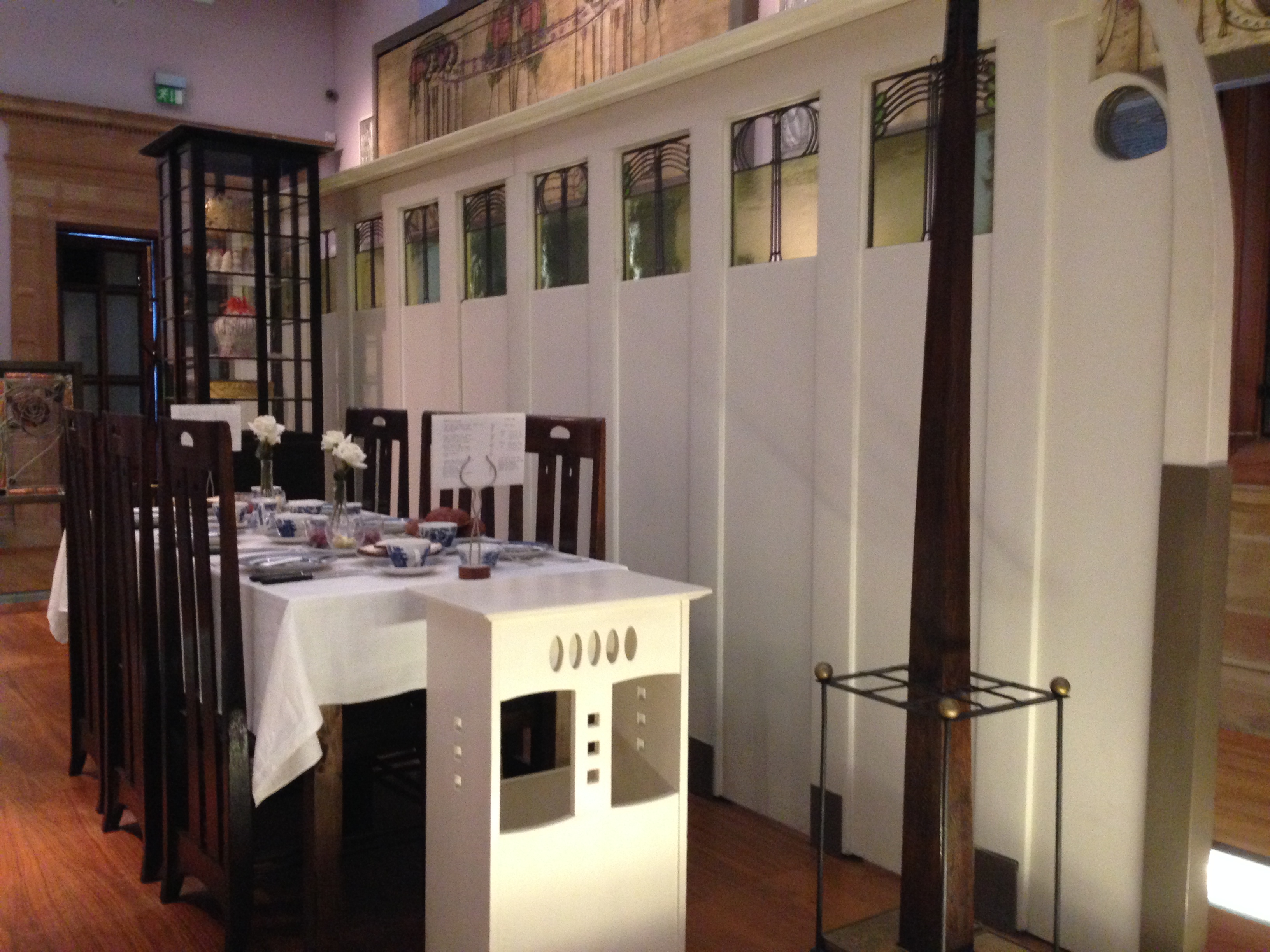
I turned away, walked past the University, down the hill through the Kelvingrove Park, and realized I had a half hour to spend at the Kelvingrove Gallery and Art Museum. Having a limited time in such a vast institution was liberating. I made my way to the rooms devoted to Mackintosh in time to see recreations of the Willow Tea Room and excellent arts and crafts furniture he created.
Kelvingrove Art Gallery and Museum
Willow Tea Room
After a hectic and mostly unsuccessful afternoon, I wanted a leisurely meal. As I did for the rest of my trip, I limited myself to restaurants that were within walking distance of my hotel. Two blocks from my hotel was a tapas style restaurant, The Ox and the Finch. I had a good seat with a view outside as dusk set in; the street was lit in a golden pink reflecting off the brick buildings.
The atmosphere pleased me and would have been good enough; however, the food surpassed my expectations. With a glass of peaty whiskey know as “old salty” straight from the barrel, I had a bowl of large green olives, more than I could finish. Lemon orzo with broad beans and courgette followed. The orzo had bite to it, lemon infused the pasta but didn’t dominate, and the broad beans’ nuttiness complemented the dish. I finished with bass that was firm and sweet like Glasgow, like Mackintosh.





 An Itinerant Woman